Commercial Roof Repair, Replacement & Maintenance
Standing Seam Metal Roofing in Everett, WA
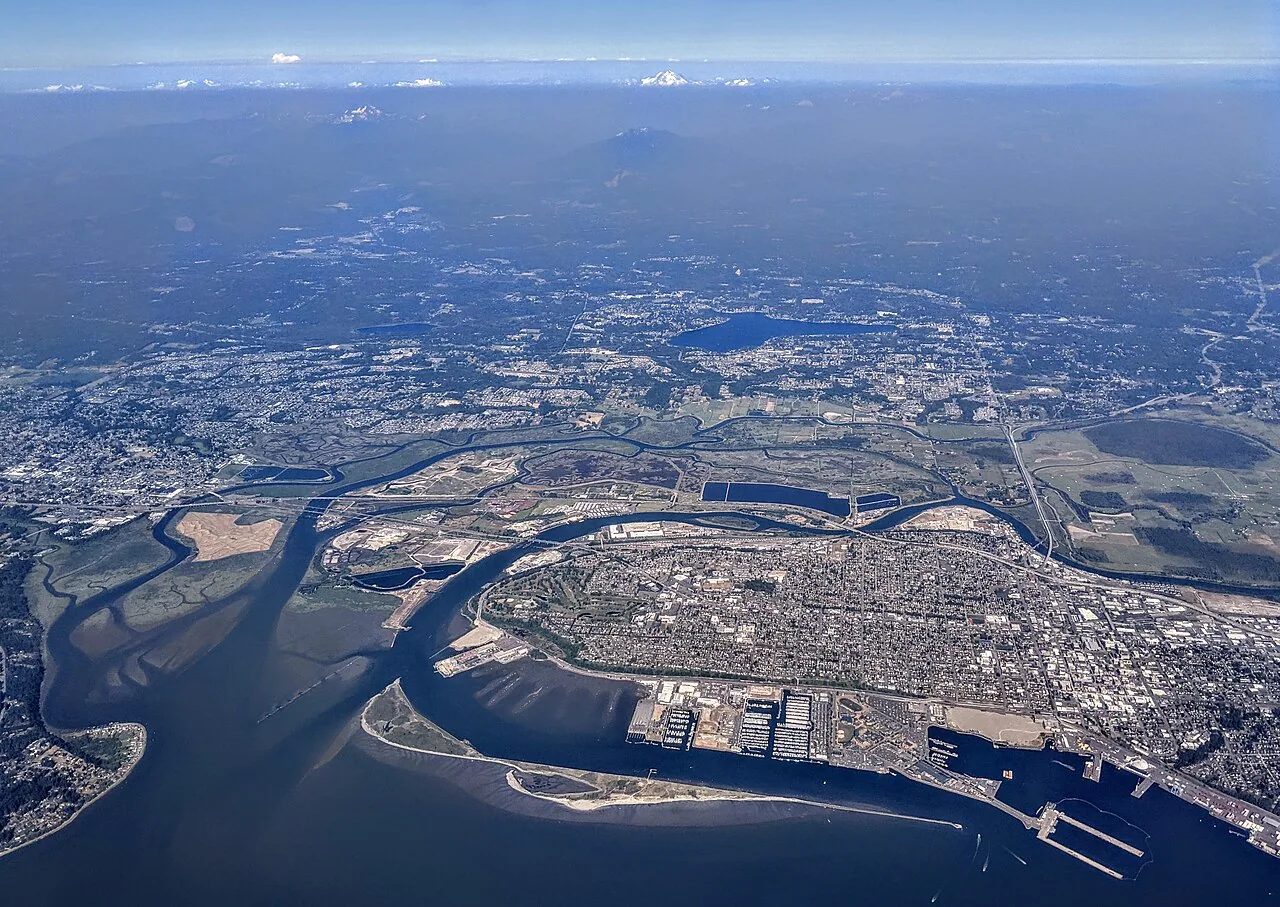
A standing seam panel can look continuous while a clip, end lap, or penetration detail allows water behind the metal. We inspect seam engagement, panel movement, clips, fasteners, closures, underlayment, and roof-to-wall transitions before identifying a repair. The raised seams keep many panel fasteners concealed, but the system still depends on secure attachment and details that accommodate thermal movement. Everett's wet season brings substantial rain, so laps and penetrations need to shed water across the panel plane. The city also has industrial, maritime, aerospace, and aviation buildings whose roof spans and operating constraints differ. We confirm panel profile, material, attachment, and substrate at the property rather than assuming they are uniform. Washington's adopted building code applies to construction scope, with project criteria confirmed for the building. For a broad condition baseline, request a metal roof inspection; if the existing exposed-fastener panels need broader work, compare a metal retrofit evaluation.
Check seam engagement and panel ends
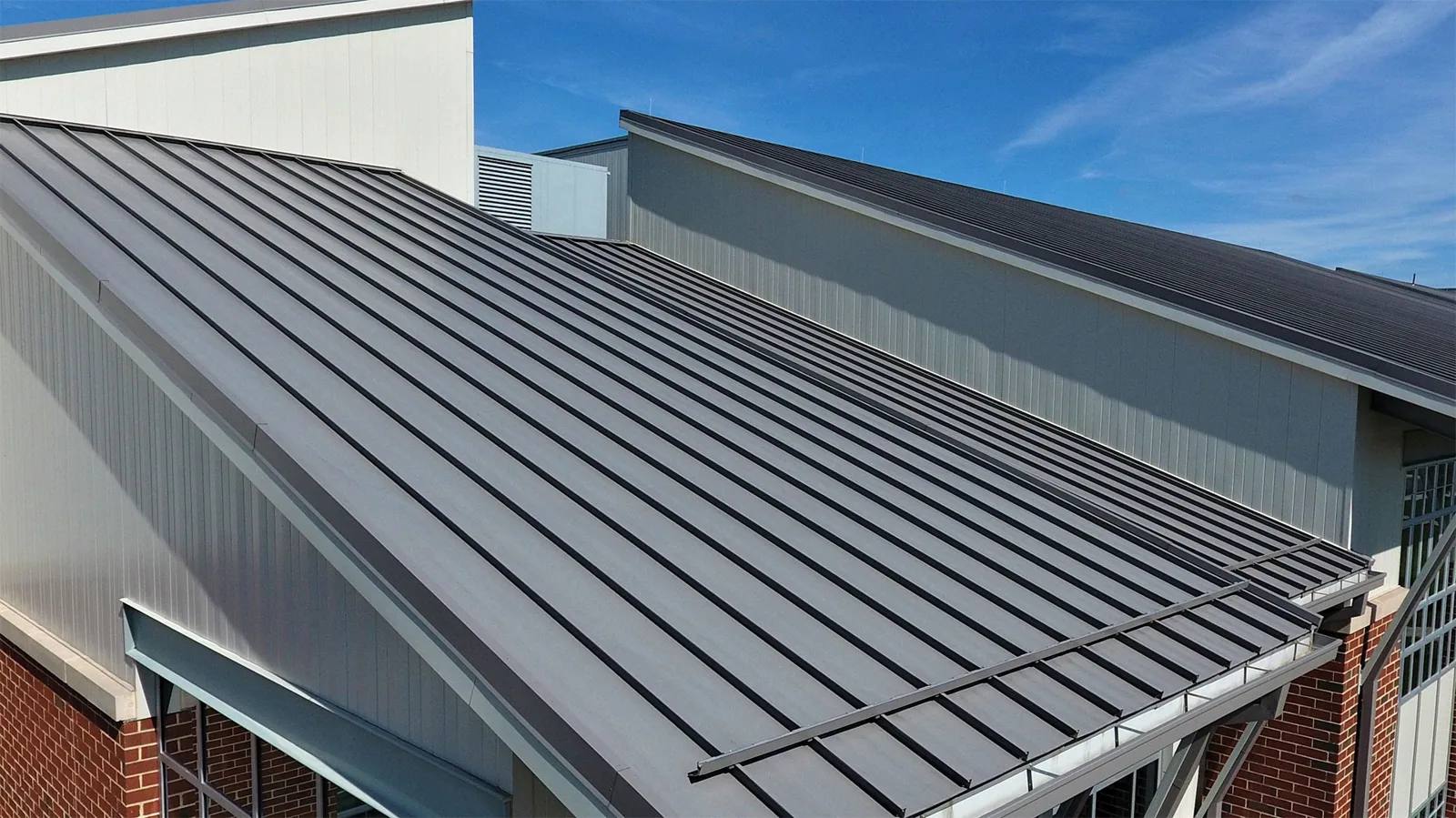
We examine raised seams for disengagement, distortion, split sealant, and movement that differs from adjacent panels. Panel end laps, ridge closures, eaves, valleys, and transitions may require sealant or mechanical details that are not visible from the ground. A seam that has opened can let water travel along the panel before reaching the interior. We mark its length, profile, and position relative to the slope and drainage outlet.
Standing seam systems use different seam geometries and locking methods. A repair must match the panel profile and material; flattening or coating over the seam can interfere with movement or prevent future inspection. We identify whether the seam can be reset, needs a compatible closure, or indicates attachment movement below. Panel length, slope, and end-lap position affect how runoff reaches the eave, so the repair record notes those relationships where they contribute to the observed leak. We also check whether closures at ridge and eave remain seated and whether a prior fastener penetrates the panel field. Where access allows, we photograph both the defect and the full panel run.
Review clips and thermal movement
Panels expand and contract as temperature changes. Clips and concealed attachments hold the roof while allowing the movement designed for the system. We inspect for panel buckling, oil canning associated with restraint, fastener pullout at exposed edges, and deformation around fixed points. The observed condition determines whether a panel is restrained, a clip has moved, or another source such as substrate variation needs investigation. We compare panel movement at the eave, ridge, and fixed penetrations so a correction does not lock the panel at one point and transfer stress to another. If a seam has opened after several seasonal cycles, the scope records whether adjacent clips and end laps show the same pattern.
Everett's seasonal temperature variation makes movement a practical inspection consideration, but a visible wave does not prove a clip failure. At long roof runs on industrial facilities near the Port or at a Paine Field hangar, we compare the affected section with panel ends, ridge, eave, and clip access. A wind damage assessment can help evaluate displaced metal after an event; an edge-metal review can inspect eaves and perimeter transitions.
Trace water around curbs and penetrations
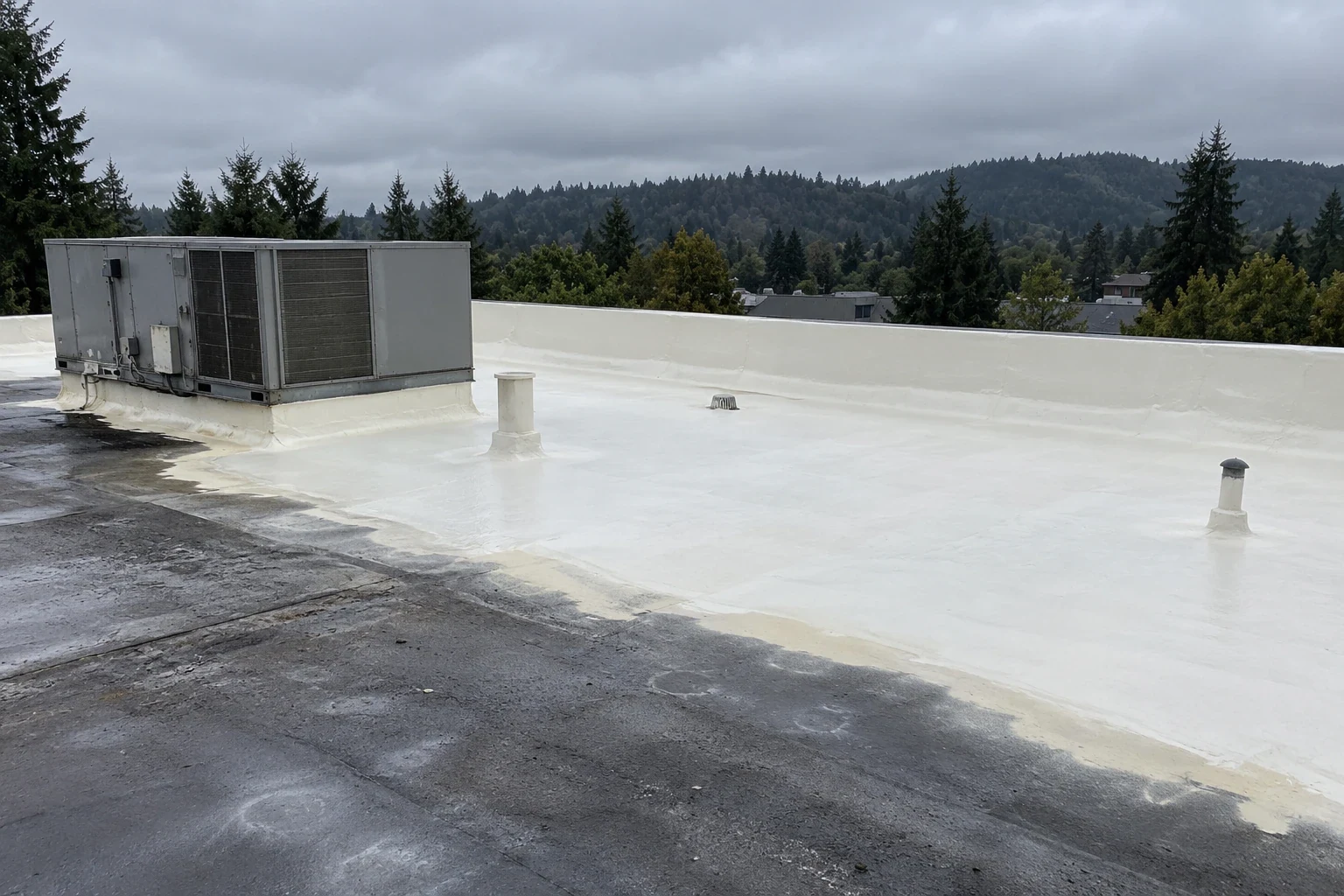
Skylights, pipes, exhausts, curbs, and snow guards interrupt a metal panel's drainage path. We examine closures, flexible boots, curb flashing, sealant joints, and panel cuts for gaps or cracking. A repair must preserve movement while keeping water on the exterior side of the assembly. Rigid sealant across a moving rib may split, while a boot sized for a different profile can leave a channel.
We also inspect valleys, gutters, and roof-to-wall conditions for debris and water backup. Everett's wettest normal months arrive in the colder season, when debris or a blocked outlet can prolong water exposure at a panel end. A penetration review can inspect a curb or pipe interface, while a drainage check can address outlets where the roof configuration uses them.
Separate coating wear from metal loss
Finish chalking, scratches, corrosion, and water staining need different responses. We inspect the metal surface, cut edges, fasteners, laps, and locations where dissimilar metals or retained moisture could affect the panel. Surface discoloration does not show whether corrosion has reduced the panel section. If the metal is perforated or fastener holes are elongated, the repair may require panel replacement or a designed reinforcement rather than paint.
We map the affected area and compare it with the roof exposure and maintenance history. At marine and industrial properties, the facility should identify process emissions or wash-down conditions if they reach the roof; proximity to the Port alone does not establish a corrosion cause. The scope records observed metal condition and any test or material review needed before coating or replacement is selected.
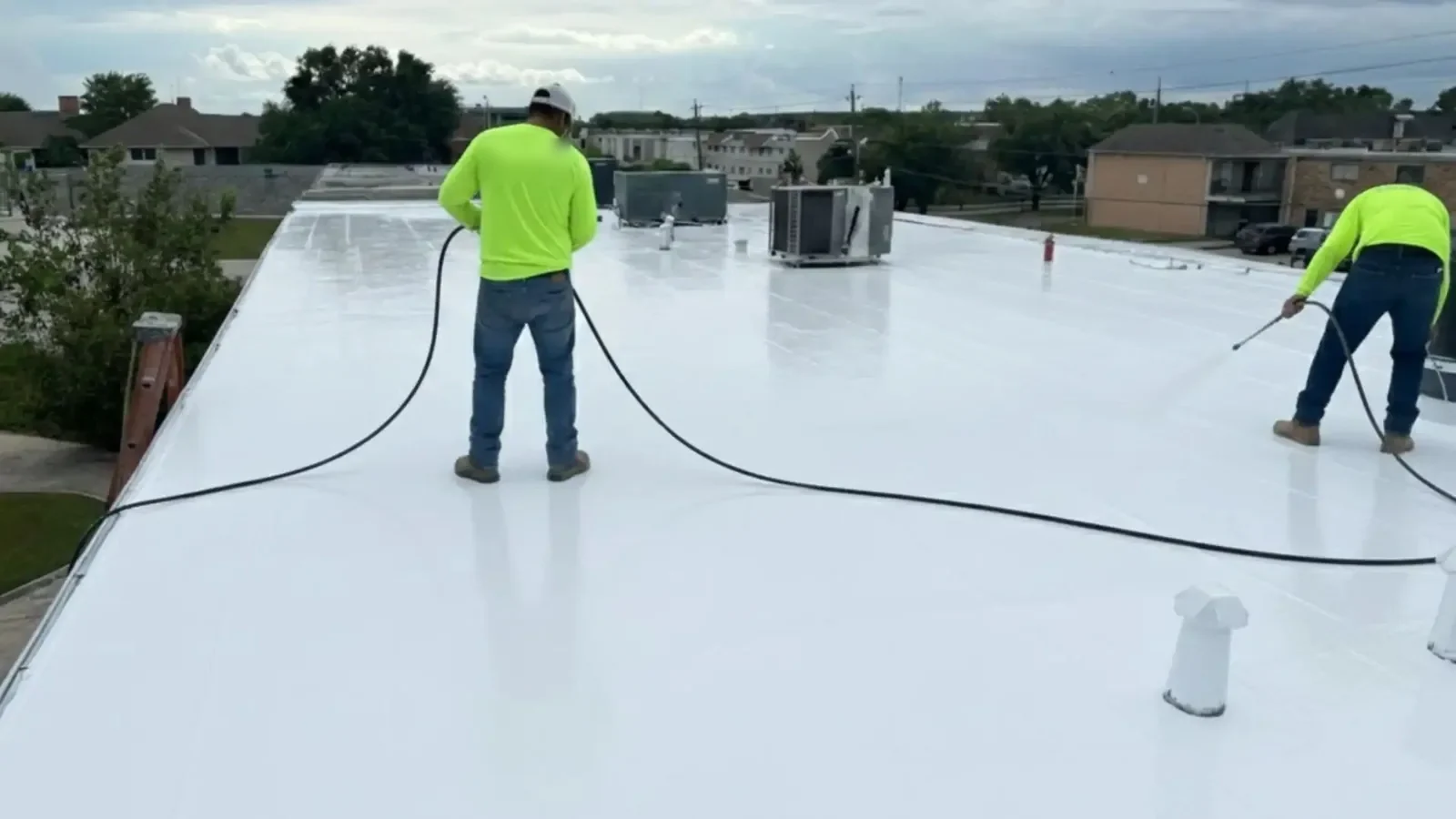
Repair or replace the panel detail
A loose clip, failed closure, or limited penetration boot may support a targeted correction when the panel and substrate remain sound. Wider corrosion, repeated seam separation, concealed attachment damage, or leaking end laps can require replacement of a panel run. We identify how the repair ties into adjacent ribs, underlayment, and flashing and whether interior protection is required during removal.
For a building with exposed-fastener metal, a retrofit assessment may compare a new over-roof assembly with panel repair. A replacement plan can also review full roof renewal when the support or panels have broader defects. Standing seam work must preserve profile, attachment, and movement rather than conceal the issue beneath an unrelated coating.
Record profile and movement points
Closeout identifies panel profile, metal condition, seam or clip repair, penetrations addressed, and any adjacent area excluded from work. Photos show the seam or transition and enough of the panel run to locate the detail later. We record whether movement was observed and whether clips or concealed fasteners could be accessed. If the repair depends on a manufacturer-specific profile, the documentation notes the product used.
For Everett commercial buildings near the industrial waterfront or Paine Field, work timing may require coordination with operating facilities. Metro Everett is a commercial and civic center with offices, shops, residences, and transportation activity, so roof access there may need to separate tenant routes from service work. A condition report can preserve inspection and repair evidence. For exposed-fastener roofs being considered for an over-roof assembly, a second metal retrofit review can compare panel repair with a secondary roof system after attachment and drainage are assessed. Request a standing seam assessment with panel drawings, leak history, and prior service notes so the repair boundary follows the installed metal system.
Commercial Roofing Questions
Can a standing seam roof be resealed at every joint?
No. Seams need to remain engaged and move as designed. The inspection checks profile, closure, and attachment before deciding whether sealing or panel work is suitable.
What causes a standing seam panel to buckle?
Movement restraint, clip condition, panel length, substrate, or a fixed point can contribute. The observed profile and attachment details guide the investigation.
Can a metal panel leak far from the interior stain?
Yes. Water can travel along a rib, underlayment, or framing before entering. We trace the path rather than assuming the closest panel cut is the source.
Does surface rust mean the panel needs replacement?
Not always. We assess coating wear, metal loss, perforation, and fastener condition to determine whether cleaning, coating, repair, or panel replacement is appropriate.
Can you retrofit exposed-fastener metal with standing seam?
A retrofit may be possible, but the existing panel, purlins, attachment, drainage, and structural design must be evaluated before a new assembly is specified.
Questions Owners Ask
Can a standing seam roof be resealed at every joint?
No. Seams need to remain engaged and move as designed. The inspection checks profile, closure, and attachment before deciding whether sealing or panel work is suitable.
What causes a standing seam panel to buckle?
Movement restraint, clip condition, panel length, substrate, or a fixed point can contribute. The observed profile and attachment details guide the investigation.
Can a metal panel leak far from the interior stain?
Yes. Water can travel along a rib, underlayment, or framing before entering. We trace the path rather than assuming the closest panel cut is the source.
Does surface rust mean the panel needs replacement?
Not always. We assess coating wear, metal loss, perforation, and fastener condition to determine whether cleaning, coating, repair, or panel replacement is appropriate.
Can you retrofit exposed-fastener metal with standing seam?
A retrofit may be possible, but the existing panel, purlins, attachment, drainage, and structural design must be evaluated before a new assembly is specified.
Inspect the seam, clips, and water path
Schedule an Everett standing seam roof inspection. We will document profile, movement, attachment, flashing, and the repair limits for the installed system.
Related Roofing Work
- Commercial Roof Inspection
- Metal Roof Retrofit
- Wind Damage Roof Repair
- Commercial Roof Edge Metal, Coping and Gutters
- Commercial Roof Drains and Scuppers
- Commercial Roof Replacement
- Everett Industrial Waterfront
- Paine Field and Boeing Manufacturing Center
Browse every page in Roof Systems, or request a roof assessment and we will walk the roof with you.
Questions about this roof? Call 555-555-5555.