Commercial Roof Repair, Replacement & Maintenance
PVC Roofing in Everett, WA
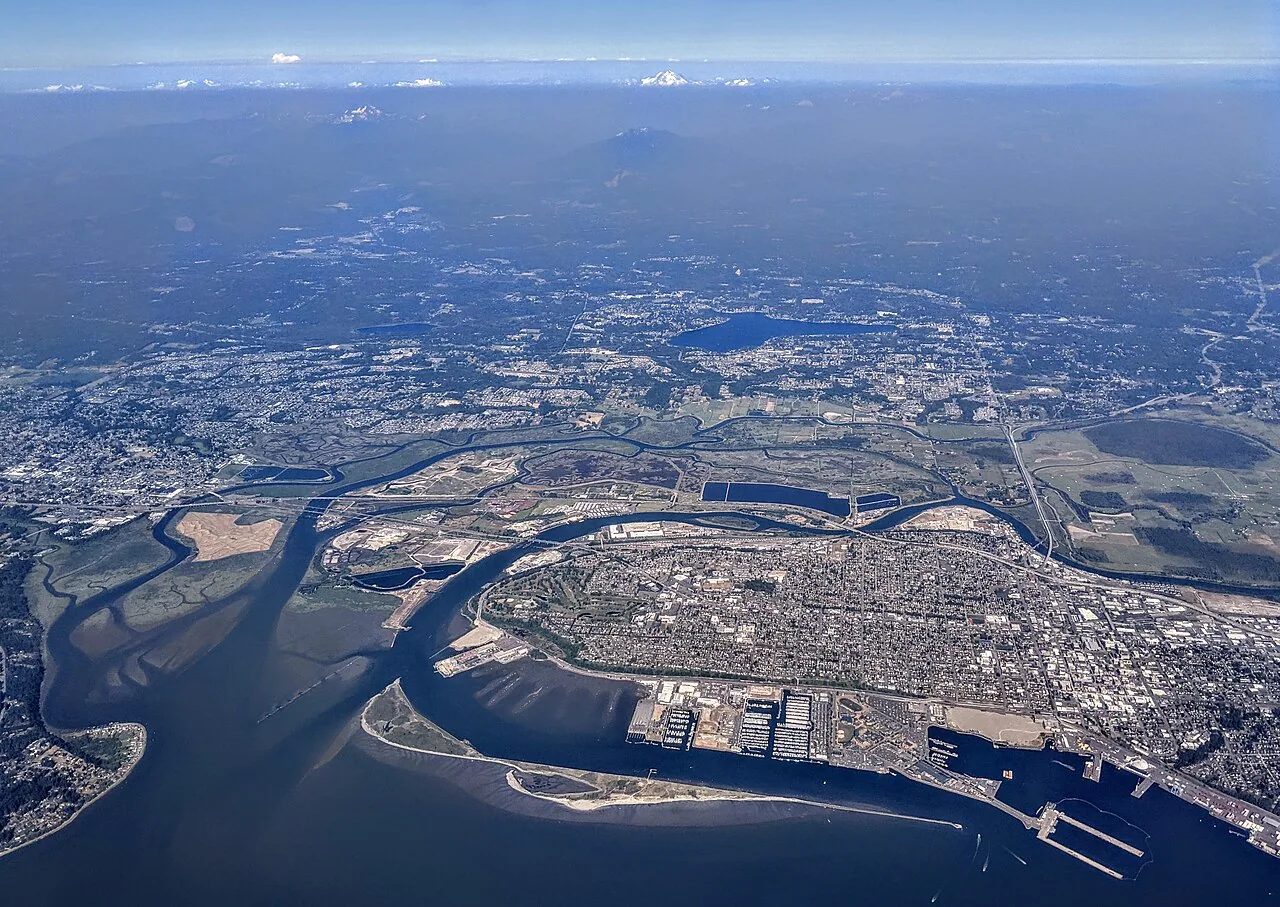
A PVC membrane may serve a roof exposed to oils or other chemicals, but compatibility depends on the material, concentration, contact time, and system detail. We inspect the existing sheet, seams, attachment, flashing, and drainage before recommending PVC installation or repair. The thermoplastic membrane uses heat-welded seams, while accessories and cleaners must suit the installed product. Everett's Port, rail, aerospace, and aviation facilities support varied operations, so a property may have rooftop equipment or service routes that affect membrane exposure and access. Those uses do not prove chemical contact at an individual roof; the facility identifies what is discharged or stored. Everett's annual precipitation normal reaches 40.25 inches, with the wettest monthly totals in late fall and winter, making seam integrity and outlet condition important. When identifying a roof system, start with a field inspection; when a seam is open or water is active, request a repair assessment.
Match the membrane to exposure
PVC formulation can provide resistance to certain substances, but no membrane should be selected from a generic chemical-resistance claim. We ask about process fluids, cleaning agents, rooftop exhaust, grease, and discharge patterns, then confirm compatibility using the product documentation and design team. If a roof has experienced a spill, the surface should be evaluated before ordinary maintenance cleaning or patching. The report identifies actual exposure and the source of the compatibility decision.
At a Port or manufacturing property, operational context may include cargo, fabrication, or equipment, yet the roof exposure must be established at the building. A Paine Field hangar or maintenance facility can have different rooftop and service requirements. We distinguish a likely exposure zone from a confirmed membrane reaction and avoid assuming the entire surface needs replacement based on one discolored spot.
Evaluate seam and sheet condition
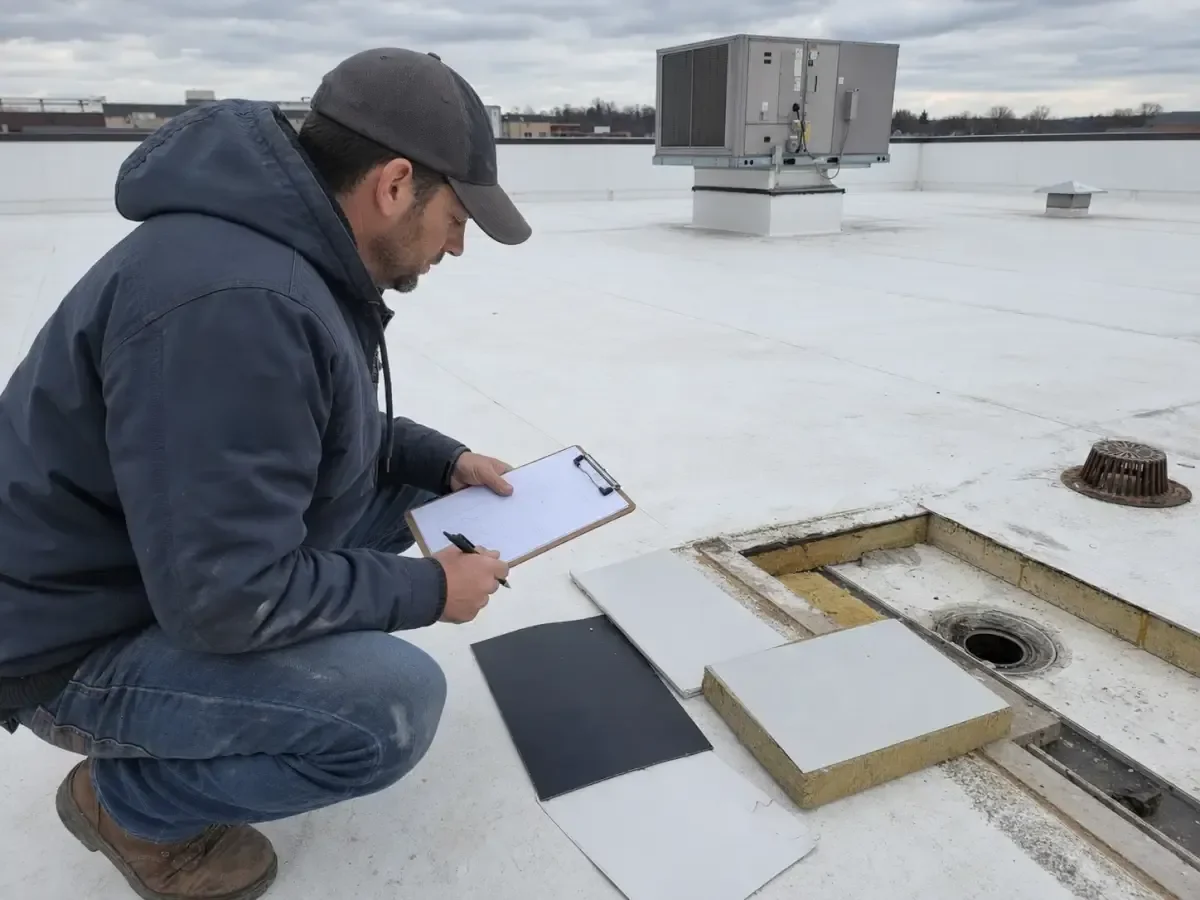
PVC seams are heat welded, and a repair depends on the sheet remaining suitable for fusion. We inspect for open laps, contamination, shrinkage, punctures, abrasion, and prior patches. The crew cleans and prepares a representative area, then checks whether a new weld can bond to the existing membrane. Surface chalking or chemical exposure may change the repair approach, so the defect boundary should reach material that can accept the specified process.
Seam layout should be considered with drainage and traffic. A loose edge near a drain can expose the assembly during heavy rain; a seam under a service path may be damaged by repeated access. We label defects by roof zone and note whether they appear isolated. If attachment or shrinkage has affected multiple sections, a wider evaluation may be more appropriate than a sequence of small patches.
Inspect flashings and penetrations
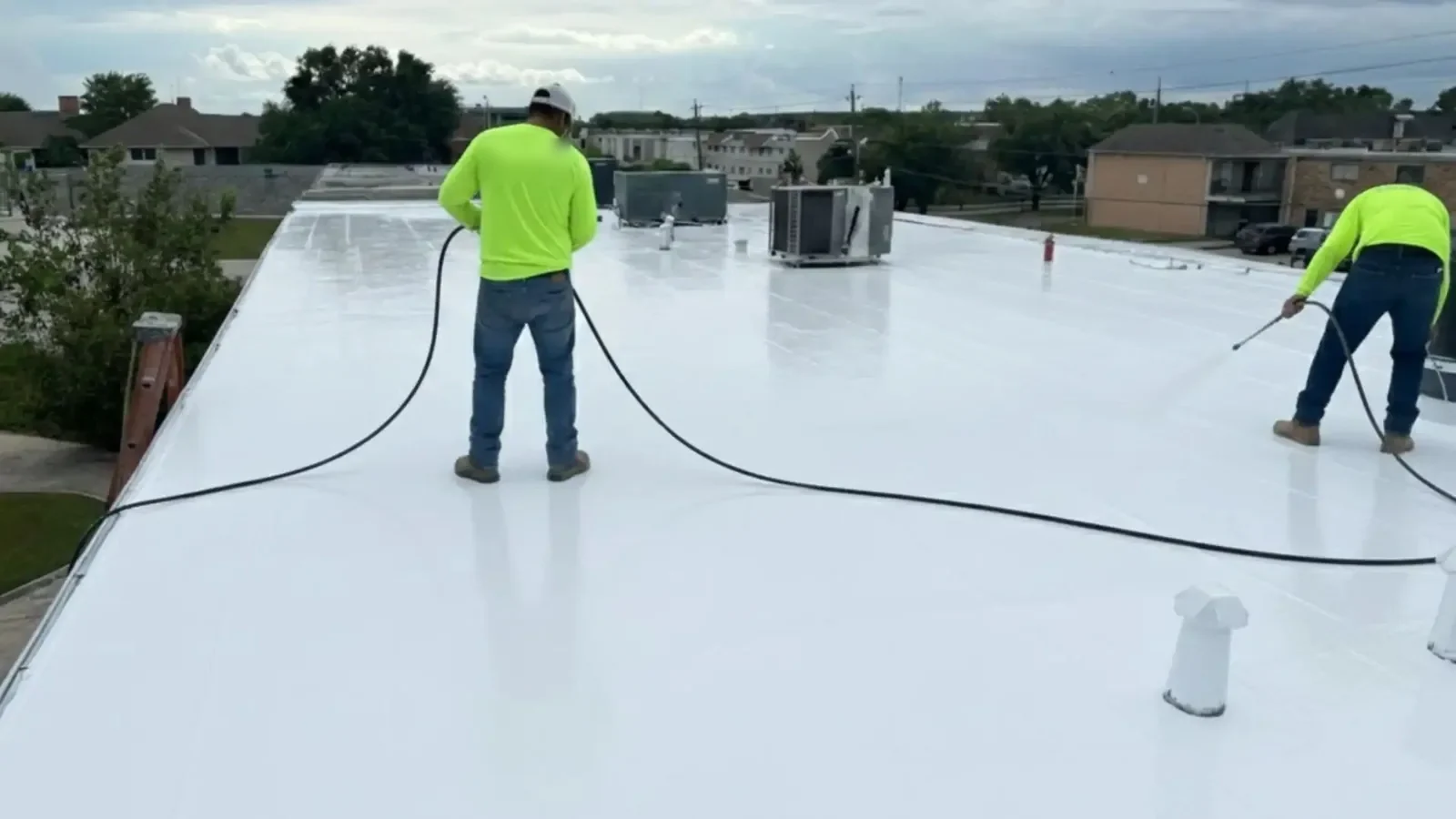
At curbs, pipes, skylights, walls, and drains, the membrane must transition without open corners, exposed fasteners, or incompatible materials. We inspect flashing height, welds, terminations, movement joints, and the substrate beneath each detail. Prefabricated accessories can help form corners and penetrations, but they still need to be welded and secured under the product requirements. Sealant is used only where the system detail calls for it.
Everett's rainy winter period can expose a small defect at an equipment curb or parapet. We compare the detail with interior symptoms and follow the water path rather than attributing a stain to the nearest penetration automatically. A curb and support review can address unit bases, while a drain evaluation can examine outlet and flashing conditions. Each inspection records what was visible and any need for a test opening.
Control attachment, insulation, and drainage
A PVC assembly can be mechanically attached, adhered, or installed over an approved substrate, depending on project design. Attachment must suit the deck and uplift requirements; insulation and cover board need stable support and correctly placed joints. We inspect roof edges, fastener patterns, substrate, drains, curbs, and terminations so a new sheet does not create trapped water or unsupported transitions. A reroof that raises the membrane surface may require extensions or altered flashing heights.
Port-area roofs may have long freight-related building spans, while aviation properties add equipment and maintenance access. The roof design should account for those operations by preserving walk routes and drainage. PVC and TPO are both thermoplastic systems with heat-welded seams, but their formulations, accessory compatibility, and chemical-resistance profiles differ. TPO membrane may be compared where chemical exposure is not the primary driver, while KEE-modified PVC is a distinct formulation that also needs product-specific compatibility review. The scope identifies the installed product and approved accessory set before any cleaner, flashing, or patch is selected. Washington's adopted building code applies to construction in Everett, with project-specific criteria confirmed for the permitted work. We identify the approved assembly and avoid substituting a repair method just because materials appear similar.
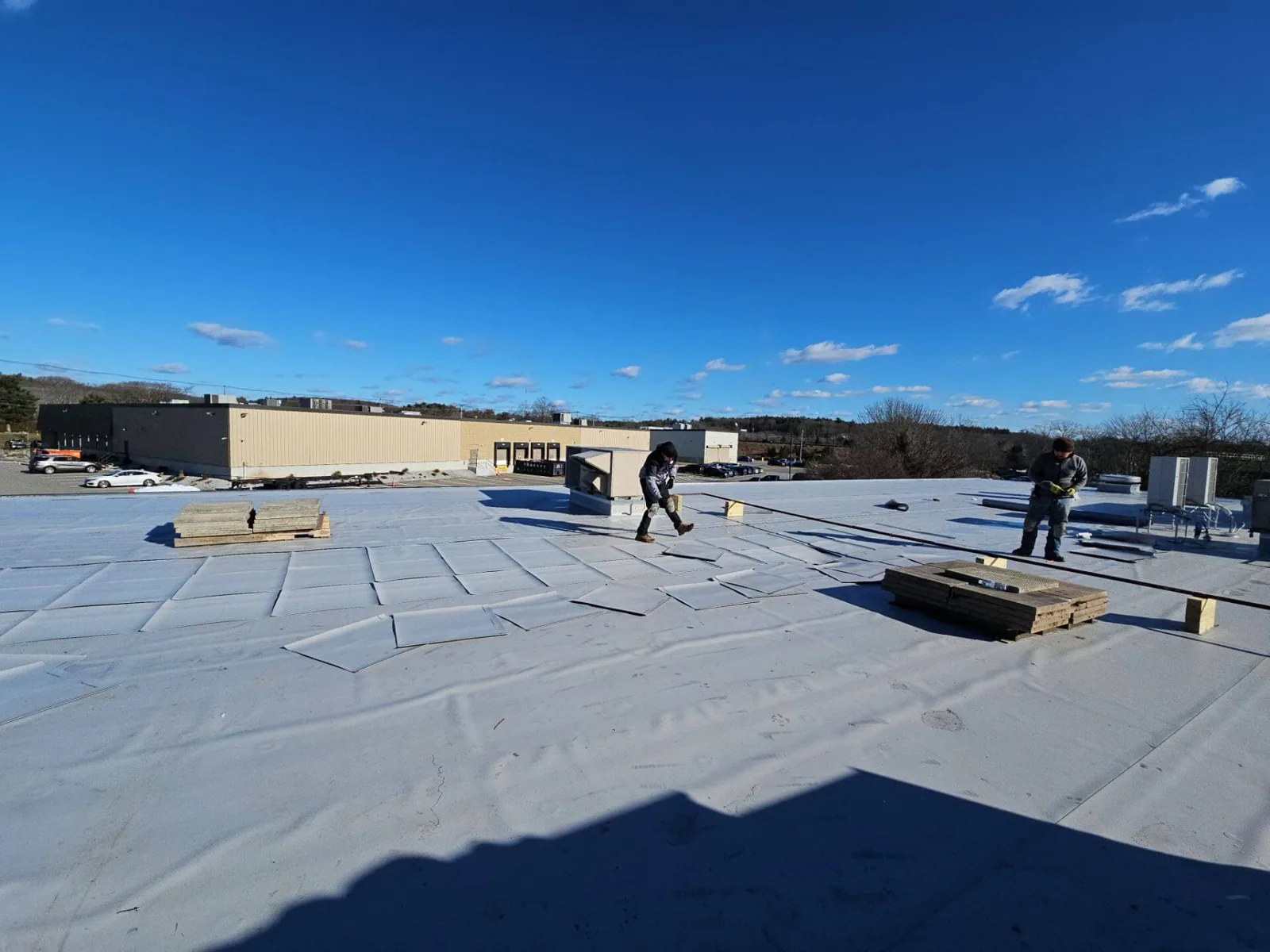
Choose a repair boundary
A localized puncture or open weld can be repaired when surrounding material is stable and compatible. If the membrane is embrittled, chemically affected, loose at edges, or covering wet insulation, the repair may need to extend farther or lead to replacement. We define what is removed, how the replacement sheet ties into the existing membrane, and whether the substrate or insulation also needs work. The scope states any adjacent area that remains unverified.
Owners can compare a replacement plan with a recover option after the assembly and moisture boundary are understood. A cover-board review can identify surface support or tapered insulation needs. The recommendation should explain why the repair boundary stops where it does and what condition would change that decision.
Retain system and exposure records
At closeout, we record the PVC product or system identified, repair materials, preparation, weld checks, roof zone, and any compatibility documentation provided. Photographs show the repaired detail and surrounding assembly. If the roof exposure involved a process or cleaning substance, the file should identify the source and any restrictions confirmed by the product documentation. A repair note should not suggest the membrane is resistant to every chemical or use condition.
Everett's industrial and freight network connects properties with distinct operations, including the industrial waterfront and the Paine Field area. Those service locations help plan access and coordination. Metro Everett also combines commercial, civic, residential, and transportation uses, so its building contacts may set different roof-access windows; system selection remains specific to each building. A condition report can retain exposure observations and repair history. Schedule a PVC roof evaluation with product records, leak history, and information about rooftop processes so the inspection can address compatibility and water entry together. We can also document prior cleaning or coating work, since residue may affect surface preparation and new weld quality.
Commercial Roofing Questions
Is PVC resistant to every chemical on a commercial roof?
No. Compatibility depends on the specific substance, concentration, contact time, temperature, and membrane formulation. Confirm exposure against product documentation.
Can an old PVC seam be rewelded?
It may be possible if the surface can be cleaned and fused to compatible material. The inspection checks sheet condition and tests a representative area when needed.
How do you identify whether a white membrane is PVC?
We review project records and field characteristics, then confirm with appropriate testing if the system remains uncertain. Color alone does not establish membrane type.
What if a process spill reached the roof?
Document the substance and affected area, restrict unapproved cleaning, and evaluate the membrane against compatibility guidance before repair.
When is replacement more suitable than patching?
Widespread shrinkage, incompatible exposure, loose attachment, wet insulation, or repeated failures can expand the repair boundary. Inspection findings support that comparison.
Questions Owners Ask
Is PVC resistant to every chemical on a commercial roof?
No. Compatibility depends on the specific substance, concentration, contact time, temperature, and membrane formulation. Confirm exposure against product documentation.
Can an old PVC seam be rewelded?
It may be possible if the surface can be cleaned and fused to compatible material. The inspection checks sheet condition and tests a representative area when needed.
How do you identify whether a white membrane is PVC?
We review project records and field characteristics, then confirm with appropriate testing if the system remains uncertain. Color alone does not establish membrane type.
What if a process spill reached the roof?
Document the substance and affected area, restrict unapproved cleaning, and evaluate the membrane against compatibility guidance before repair.
When is replacement more suitable than patching?
Widespread shrinkage, incompatible exposure, loose attachment, wet insulation, or repeated failures can expand the repair boundary. Inspection findings support that comparison.
Verify the membrane and roof exposure
Schedule a PVC roof inspection in Everett. We will document system condition, exposure, seam and flashing defects, and the repair boundary.
Related Roofing Work
- Commercial Roof Inspection
- Commercial Roof Repair
- TPO Roofing
- KEE Roofing
- Commercial Roof Replacement
- Commercial Roof Insulation and Cover Board
- Everett Industrial Waterfront
- Paine Field and Boeing Manufacturing Center
Browse every page in Roof Systems, or request a roof assessment and we will walk the roof with you.
Questions about this roof? Call 555-555-5555.