Commercial Roof Repair, Replacement & Maintenance
EPDM Roofing in Everett, WA
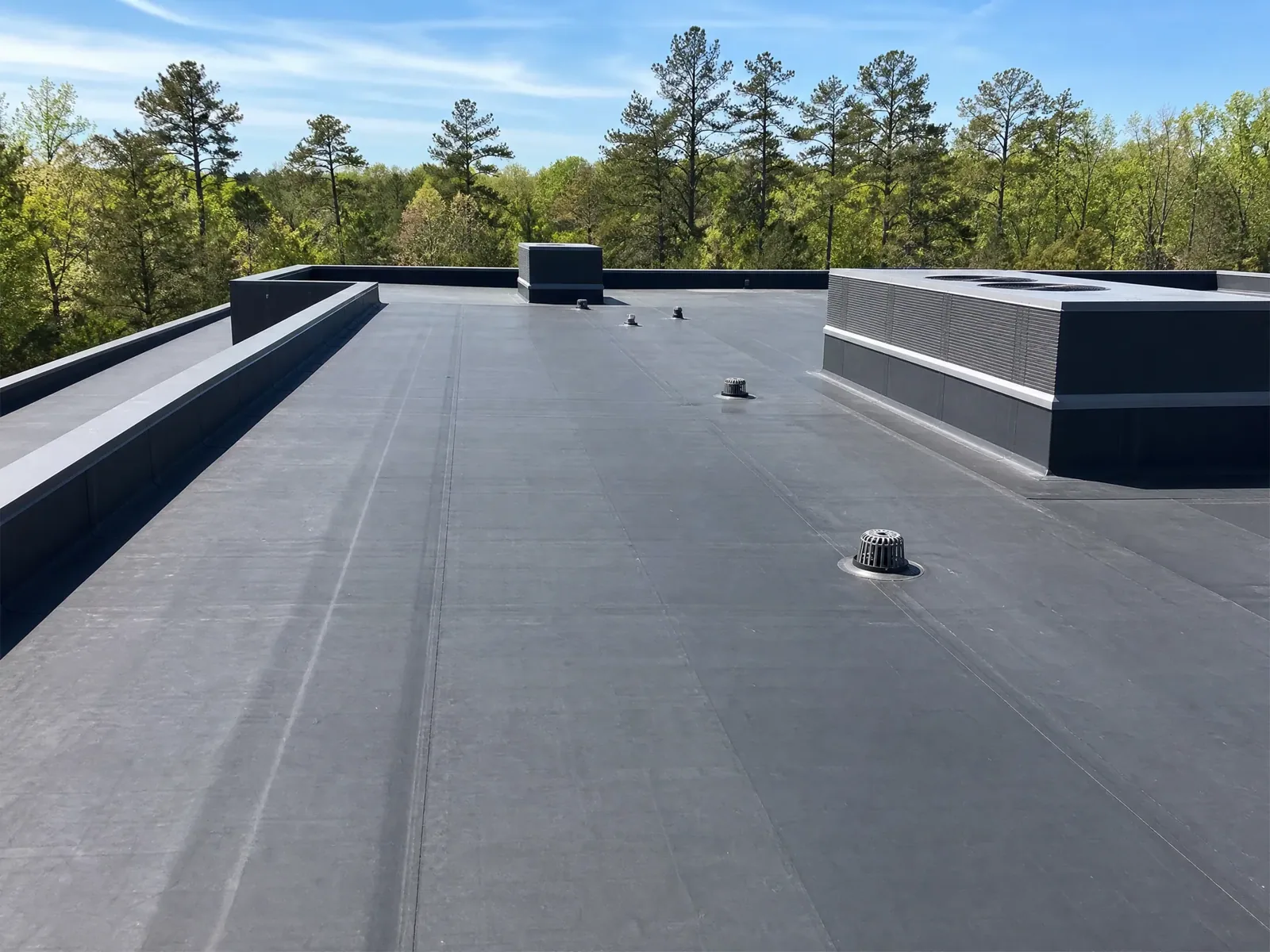
An EPDM seam depends on a clean, well-bonded lap, so a narrow opening can matter more than the broad black field surface around it. We inspect the seam tape or adhesive, membrane condition, attachment, edge movement, and nearby flashings before selecting a repair. EPDM is a flexible rubber membrane, and its seams are joined through system-compatible bonding methods rather than heat welding. Everett's wet season puts repeated water exposure on seams, drains, and transitions; annual precipitation normals total 40.25 inches, with November, January, and December highest. Port warehouses, Paine Field facilities, and Metro Everett commercial buildings differ in roof layout and access, so we confirm the installed assembly and work constraints at each property. Where the system is uncertain, a roof inspection should precede material selection; active water entry may need a leak investigation.
Test the lap and bonding surface
We check seam edges for separation, fishmouths, contamination, adhesive failure, and movement that may have pulled the membrane from its bond. The repair method depends on whether the existing sheet is clean and receptive, whether old adhesive has degraded, and whether the lap still has enough sound material to bond. A patch placed over dirt, chalking, or incompatible residue can fail even when the new material appears secure at installation.
Seam direction and water flow also matter. A lap that opens into the drainage path may expose the assembly during sustained rain, while a seam under a service route may show wear from repeated traffic. We record the location, length, nearby detail, and any test used to confirm adhesion. If the membrane has shrunk and pulled away at several edges, isolated seam repair may not address the movement.
Measure shrinkage and attachment
EPDM can move over time, and edge pullback may place stress on flashings, curbs, and terminations. We inspect perimeter metal, termination bars, fasteners, field seams, and membrane tension at corners. A loose edge can result from attachment failure, material movement, or a detail that no longer accommodates expansion. The report identifies the observed gap and does not infer a cause that was not verified.
At a port-side warehouse or a Paine Field hangar, large roof fields may contain multiple elevations and equipment zones. We map each edge and attachment condition separately, compare exposed material with the roof record, and identify whether a test or opening is needed. A wind damage assessment can check displaced edges and surrounding details after an event, while a metal-edge review can address the termination assembly.
Review boots, curbs, and drains
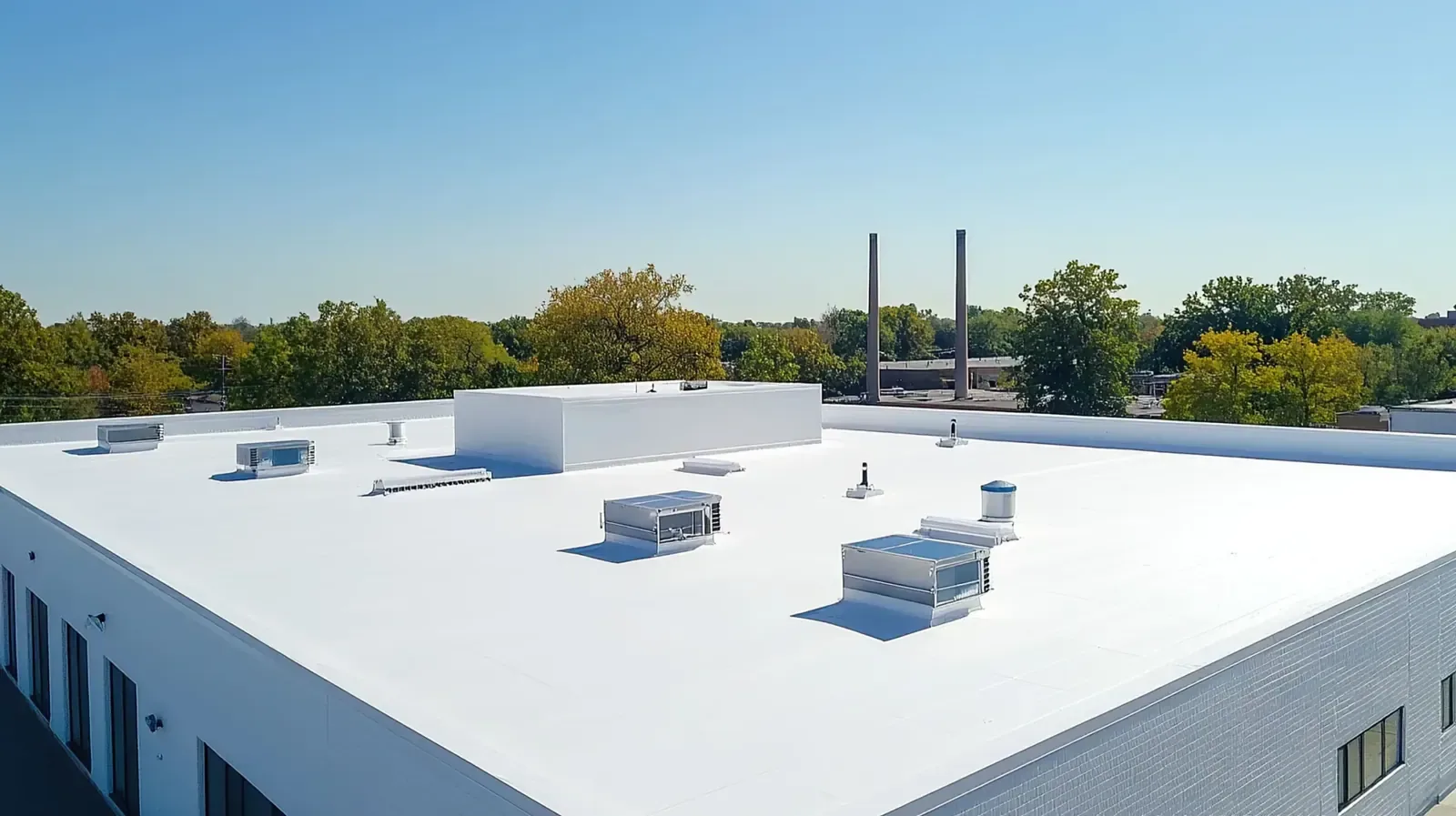
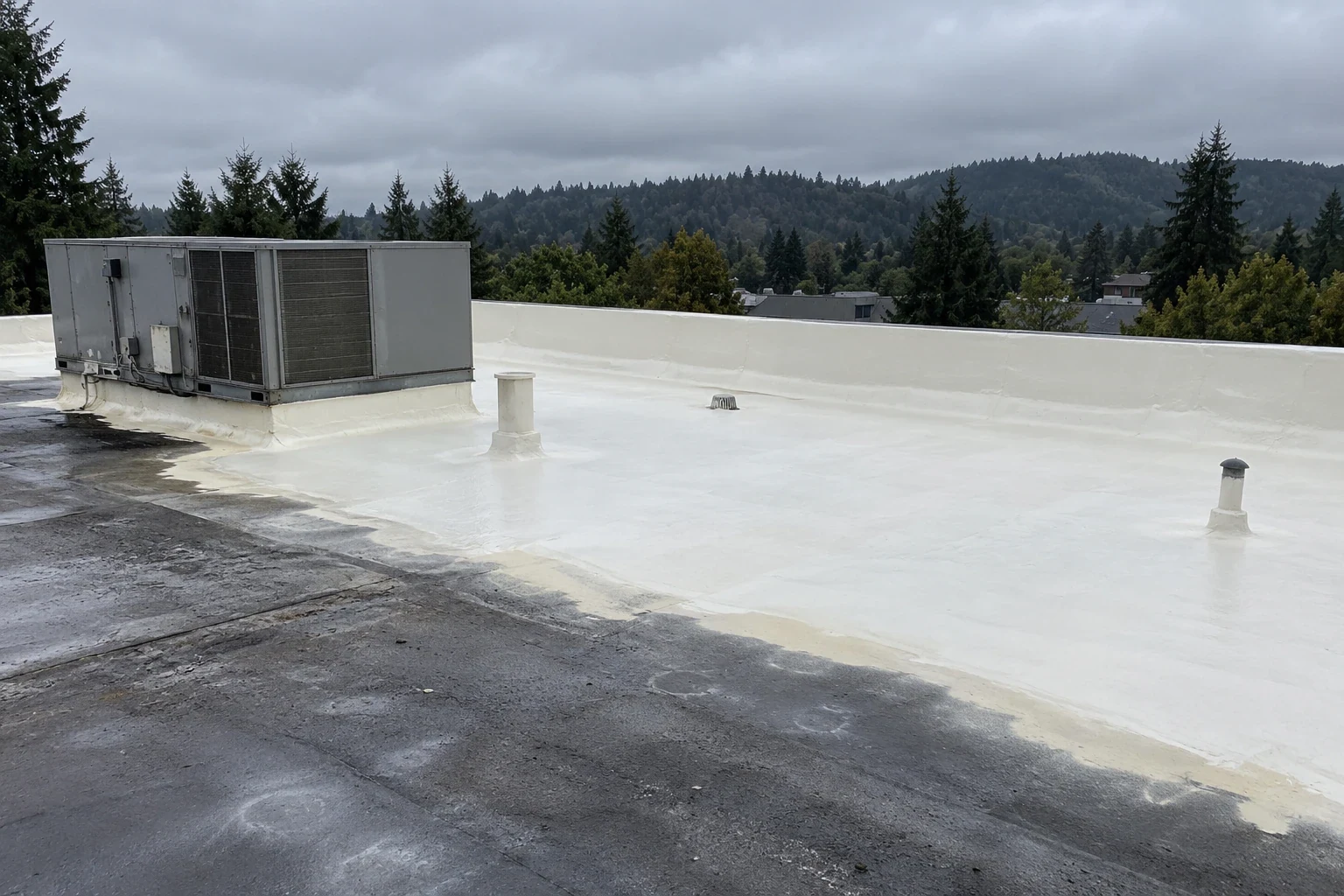
Pipe boots, equipment curbs, drain bowls, skylights, and wall transitions interrupt the membrane field. We inspect how EPDM turns up, bonds, and terminates around each feature. Patches need compatible material and a shaped detail that remains continuous at corners; a flat patch forced over a boot or curb may bridge gaps rather than seal them. At drains, the sheet must be secured at the intended flange or clamping ring.
Everett's wet months can reveal openings at low points and penetrations that are difficult to see in dry conditions. We connect interior reports with the roof path and check whether water is moving beneath the sheet. An outlet inspection can assess the drain detail, and a curb review can coordinate the roof-to-equipment interface. We distinguish a surface patch from an assembly repair that requires removal.
Prepare a compatible rubber-membrane repair
EPDM repair requires system-compatible primer, seam tape, cover strip, flashing, or adhesive as specified for the roof. We clean and prepare the membrane, allow primer to reach the required tack, and roll the bonded surface to make consistent contact. Corners and T-joints need detailed treatment, and the repair should extend onto sound material. Temperature, moisture, and contamination can constrain installation. EPDM accessories must also be selected for the installed membrane, because a repair may combine sheet, primer, tape, uncured flashing, and termination components. We check compatibility at corners and T-joints where multiple layers meet, and use the required roller pressure and lap width from the approved detail. A bond that looks closed from above may still contain a channel if the surface was not prepared evenly. Where seams are wet or dirty, we first correct the condition and protect the area rather than rushing the permanent bond.
When existing material is aged or has a prior coating, the repair area may need a test patch or product-specific direction. We record products and preparation rather than relying on color or a generic rubber label. If a leak is active during Everett's rainy season, temporary protection may bridge the gap until a dry surface permits permanent bonding. The closeout states which work was temporary and what remains for the return visit.
Compare repair with broader roof work
One failed lap on a stable EPDM roof can support a local repair. Widespread seam separation, shrinkage, loose attachment, recurring leaks, wet insulation, or deteriorated substrate can require a broader scope. We map defects across the roof and verify suspected moisture before deciding whether to patch, recover, or remove layers. A recover system must be compatible with the existing assembly and cannot trap unresolved water. Before recovery, the survey checks whether the added layers will preserve curb height, drain clamping details, and edge termination. A roof with isolated wet areas may need selective removal and replacement of insulation even when most of the field remains dry. A roof with broad shrinkage or weak attachment may have a different boundary. These conditions are recorded by zone so the owner can compare the repair area with the building-wide condition.
Owners can compare localized repair with a recover review or replacement option. Other single-ply systems use different seam methods: TPO and PVC are heat-welded thermoplastics, while EPDM relies on bonded joints. System choice should follow building condition, design, and project requirements rather than a broad label.
Keep the repair history tied to the roof zone
A useful report identifies membrane type, seam or penetration location, surface preparation, repair materials, and the condition of adjacent insulation and attachment. Photos should show the detail and nearby roof zone so a future visit can locate the same area. If access or weather prevented a test, that limit belongs in the closeout. The owner should know whether an observation is confirmed, suspected, or still untested.
Properties around the Everett industrial waterfront, Paine Field, and Metro Everett have different operations, but the roof history remains specific to each building. A condition report can retain test results, and asset tracking can connect later maintenance to the same zones. Schedule an EPDM evaluation with installation details, prior patches, and any interior leak record.
Commercial Roofing Questions
Can EPDM seams be heat welded?
No. EPDM laps use compatible bonding methods such as seam tape or adhesive. The repair depends on the system and the condition of the existing surface.
Why does an EPDM edge pull away?
Movement, attachment, termination, and material condition can all contribute. We inspect the edge and adjacent assembly before identifying the correction.
Can a patch go over an older repair?
Only if the surface and prior material are compatible and stable. We may need to remove the earlier patch or test adhesion before closing the area.
What causes leaks around EPDM drains?
The sheet-to-flange connection, clamping assembly, drain bowl, or surrounding slope may be involved. We inspect each part and trace the water path.
When does an EPDM roof need more than seam repair?
Repeated separation, shrinkage, wet insulation, or unstable attachment can expand the repair boundary. Testing and a roof-zone map help compare options.
Questions Owners Ask
Can EPDM seams be heat welded?
No. EPDM laps use compatible bonding methods such as seam tape or adhesive. The repair depends on the system and the condition of the existing surface.
Why does an EPDM edge pull away?
Movement, attachment, termination, and material condition can all contribute. We inspect the edge and adjacent assembly before identifying the correction.
Can a patch go over an older repair?
Only if the surface and prior material are compatible and stable. We may need to remove the earlier patch or test adhesion before closing the area.
What causes leaks around EPDM drains?
The sheet-to-flange connection, clamping assembly, drain bowl, or surrounding slope may be involved. We inspect each part and trace the water path.
When does an EPDM roof need more than seam repair?
Repeated separation, shrinkage, wet insulation, or unstable attachment can expand the repair boundary. Testing and a roof-zone map help compare options.
Inspect the bonded seams and edges
Schedule an Everett EPDM roof evaluation. We will document lap condition, membrane movement, attachment, moisture, and repair boundaries.
Related Roofing Work
- Commercial Roof Inspection
- Commercial Roof Leak Repair
- Commercial Roof Repair
- Commercial Roof Replacement
- TPO Roofing
- PVC Roofing
- Everett Industrial Waterfront
- Paine Field and Boeing Manufacturing Center
Browse every page in Roof Systems, or request a roof assessment and we will walk the roof with you.
Questions about this roof? Call 555-555-5555.