

Commercial Roof Repair, Replacement & Maintenance
Commercial Roof Leak Repair in Everett, WA
Everett's repeated wet-season rain keeps seam and curb details exposed longer, so a leak visit should establish whether water reached the insulation before setting the repair boundary. We start with the building's report: when the leak appears, which rooms are affected, whether it changes during rain, and what temporary work has already been done. On the roof, we map the likely water path and inspect the membrane, penetrations, wall transitions, drains and prior patches that could connect to the symptom. Everett's winter rainfall can keep an opening active across several hours, while a freeze-thaw cycle can expose movement at flashing and metal transitions. A controlled inspection narrows the suspect zone before materials are removed. The Port of Everett's industrial waterfront, Metro Everett's mixed-use core, and Paine Field's aviation district have different building operations, so entry, interior protection and roof access must be confirmed at the property. We can provide emergency protection when water is entering now, then complete a permanent repair after the surface and detail are ready. The written findings identify what was observed, what remains uncertain, and which conditions need another test before a repair is closed.
Build a timeline from the interior
The first useful detail is often the timing. A leak that appears during steady rain may have a different path from one that shows up after wind-driven weather, rooftop equipment use, or a drain blockage. We ask when the stain first appeared, whether it grows, whether water is dripping or tracking along a beam, and whether the ceiling cavity has been opened. We note the room, ceiling type, equipment, electrical concerns and any sensitive contents below the suspected area. Where safe, interior measurements and observations help determine whether the water path follows deck flutes, insulation joints, piping or framing. On an occupied medical office, school or production space, we coordinate access with the facility contact and protect equipment before opening a ceiling or moving contents. The intake record also identifies earlier patches and their dates if available; a recurring stain near the same location can point toward a detail that was sealed at the surface without correcting the underlying connection. We use that history to direct roof testing and to avoid disturbing sound areas without a reason.
Follow the path across the assembly
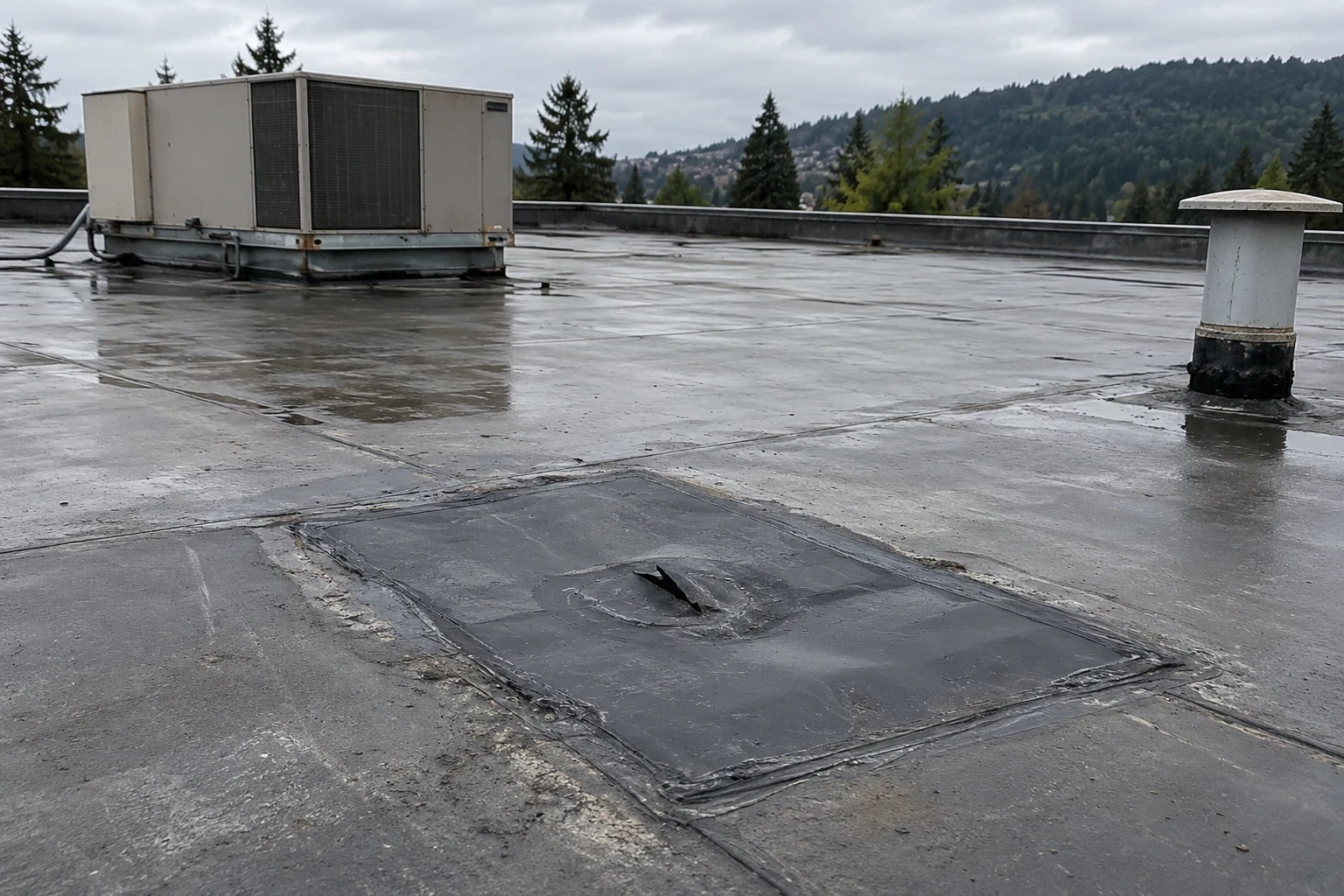
Once on the roof, we begin around the area above the interior symptom but continue beyond it when the assembly offers a path for water to travel. We inspect laps, seams, penetrations, curbs, drains, overflow points, wall transitions, edge metal and previous repair materials. Loose membrane, a split flashing corner, open termination, puncture or backed-up drain can create an entry point, but visual proximity alone does not prove which condition feeds the leak. Water can move within insulation or along the deck before reaching a ceiling opening. We check whether surface water, debris, equipment supports or a change in roof elevation directs runoff toward the suspect area. If the entry is concealed, a small test opening, moisture probe or other targeted investigation may be needed. At a warehouse or cargo building on the Everett waterfront, long roof runs can separate an interior symptom from its likely entry detail. Around the Evergreen Way and Casino Road commercial hub, compact roof sections and wall transitions can create a shorter but still concealed path. These local place facts guide what we consider; the inspection establishes the actual route on the building.
Keep water out while the cause is confirmed
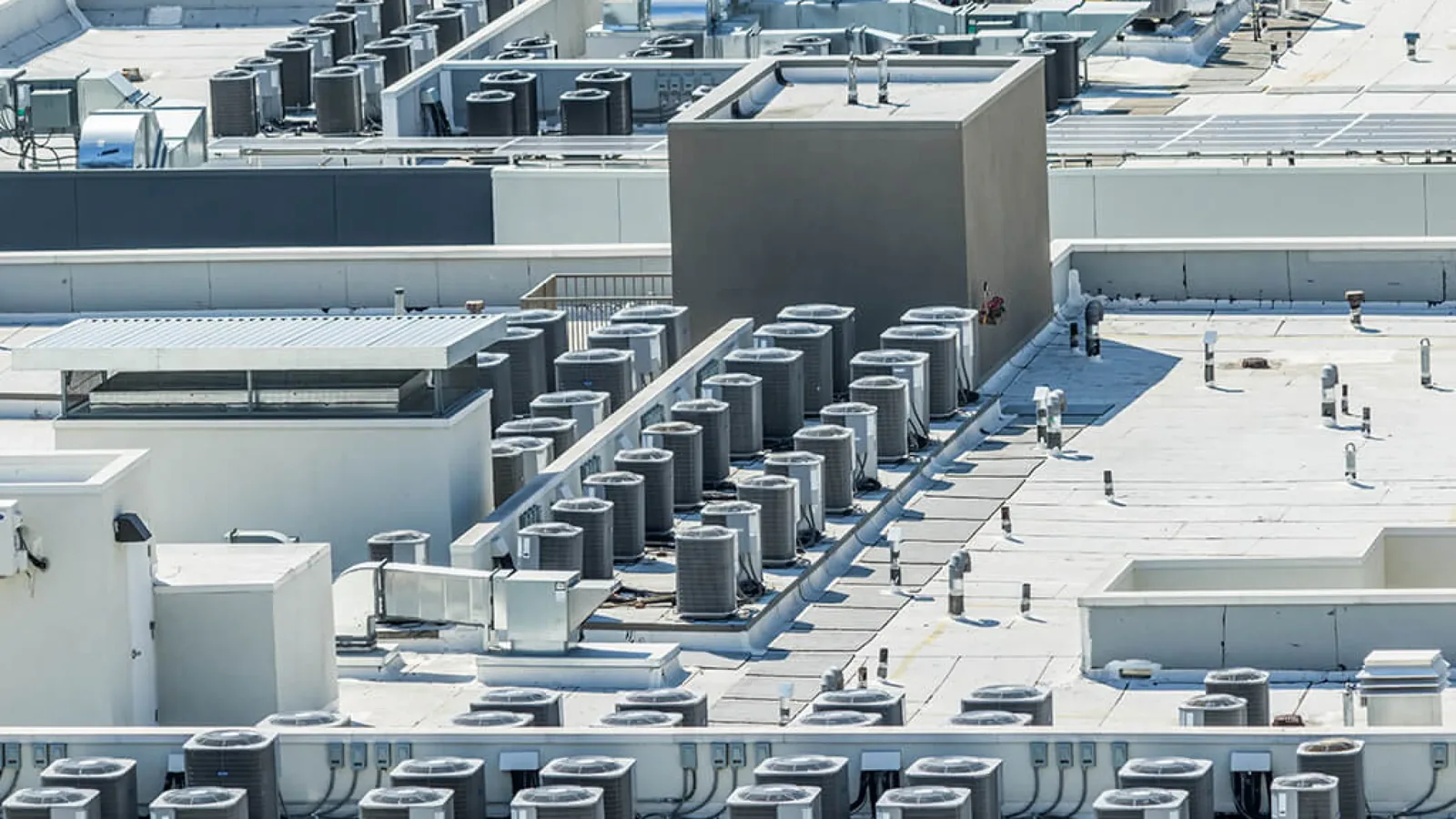
If active water threatens inventory, electronics, a ceiling system or an occupied room, the immediate task is to control exposure safely. We identify the interior area, avoid energized equipment or unsafe ceiling cavities, and place temporary protection where it can be supported without adding risk. On the roof, an emergency dry-in must account for the surface condition, nearby drains, wind, equipment and forecast. A tarp or temporary membrane is not a permanent repair, and its edges need inspection while it remains in service. Everett's normal climate brings substantial precipitation, with the wettest month normals in November, January and December, so an emergency response may need repeated checks before the permanent materials can be installed. If weather prevents bonding or welding, the scope should say what is temporary and when the crew can return. For a roof near Paine Field or an operating port area, access timing may depend on active vehicles, tenant controls or equipment that cannot be moved on short notice. We confirm those constraints with the site contact and separate the immediate water-control step from the final cause correction.
Correct the detail that admits water
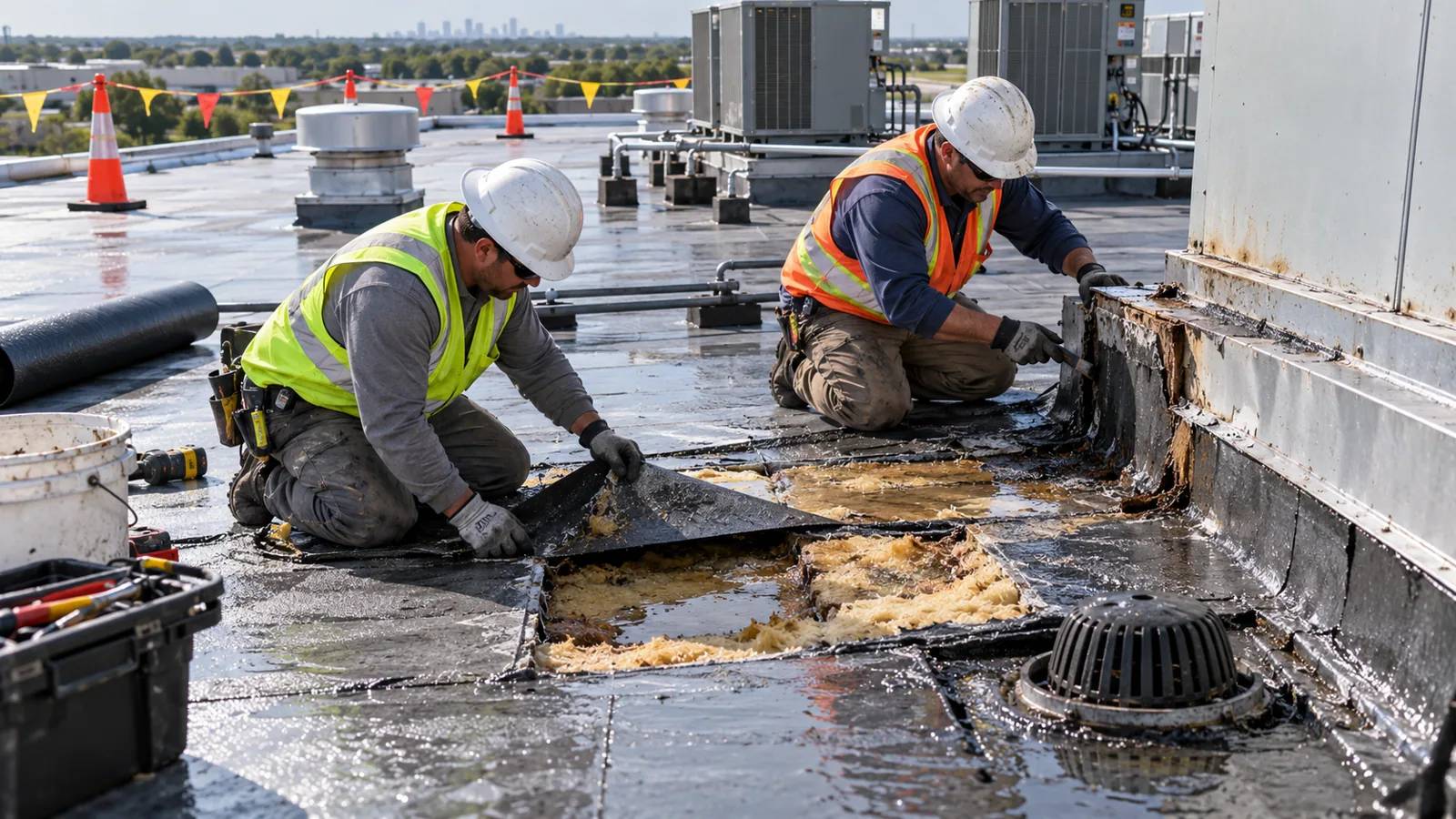
Permanent leak repair depends on what the inspection finds at the opening. A puncture in an otherwise sound membrane may call for compatible patching after the surface is cleaned and prepared; a failed pipe boot may require rebuilding the flashing around the penetration; an open metal seam may need a profile-specific repair rather than a membrane patch. If water has reached wet insulation or damaged the deck, the work may have to remove those layers and restore the assembly before closing it. We identify the repair zone and the material transitions so that new work bonds to stable surfaces. Sealants are selected for the actual joint and substrate, and they are not used to hide a larger separation or replace required mechanical attachment. Drains and scuppers also receive a check when the water path approaches an outlet; debris removal, flashing repair and drainage correction are distinct tasks that should appear separately in the work record. An owner can compare the repair scope with a broader condition report if the roof has multiple symptoms. We photograph before and after the work and note materials, weather, access limits, and any nearby condition that remains to be monitored.
Confirm the repair after weather returns
A repair record is more useful when it tells the next person where to look and what was changed. We identify the roof zone, detail, materials, preparation, and the interior area associated with the original report. Where the work could not be completed during the first visit, the record distinguishes temporary measures from permanent correction and gives a clear follow-up trigger. If water reappears, the next check should compare the new symptom with the original route and note whether the repair itself or a different detail is involved. Repeated leaks can expose a larger moisture pattern, especially when several openings occur at drains, seams or transitions. We can map recurring findings for a full roof inspection or track repair history through roof asset management. For property teams coordinating buildings in Everett, Lynnwood and Marysville, consistent records keep each address and roof section distinct. The service area informs dispatch and access planning; the roof conditions determine the diagnosis. If an active leak returns, call with the room, timing, weather and prior repair notes so the next inspection can compare evidence rather than repeat the same guesswork.
Commercial Roofing Questions
Why does water show up far from a roof opening?
It can travel through insulation, along deck flutes, or across framing before entering the room. We inspect the path that connects the symptom to a roof detail instead of patching directly above the stain.
What information helps during the first leak call?
Tell us when the water appears, which rooms are affected, whether the stain grows, and what temporary work is in place. Photos and earlier repair notes can help us target the first inspection.
Can you stop the leak before making a permanent repair?
We can install temporary protection when site and weather conditions allow. We document its location and follow-up needs, then return to rebuild the detail with compatible permanent materials.
Will one repair fix several ceiling stains?
Only if inspection confirms that the stains share a water path and entry point. Several symptoms can also come from separate roof defects, so each one is traced and recorded.
When is testing needed before the patch?
Testing helps when the entry is hidden, moisture may have spread below the membrane, or earlier repairs have not held. We limit openings to locations that can answer a specific question.
Questions Owners Ask
Why does water show up far from a roof opening?
It can travel through insulation, along deck flutes, or across framing before entering the room. We inspect the path that connects the symptom to a roof detail instead of patching directly above the stain.
What information helps during the first leak call?
Tell us when the water appears, which rooms are affected, whether the stain grows, and what temporary work is in place. Photos and earlier repair notes can help us target the first inspection.
Can you stop the leak before making a permanent repair?
We can install temporary protection when site and weather conditions allow. We document its location and follow-up needs, then return to rebuild the detail with compatible permanent materials.
Will one repair fix several ceiling stains?
Only if inspection confirms that the stains share a water path and entry point. Several symptoms can also come from separate roof defects, so each one is traced and recorded.
When is testing needed before the patch?
Testing helps when the entry is hidden, moisture may have spread below the membrane, or earlier repairs have not held. We limit openings to locations that can answer a specific question.
Trace the symptom to its source
Schedule commercial roof leak repair in Everett. Share the leak timing, affected room and earlier work so we can plan a focused inspection and safe temporary protection if needed.
Related Roofing Work
- Emergency Commercial Roof Repair
- Commercial Roof Repair
- Evergreen Way and Casino Road
- Commercial Roof Condition Reports
- Commercial Roof Inspection
- Commercial Roof Asset Management
Browse every page in Commercial Roofing Services, or request a roof assessment and we will walk the roof with you.
Questions about this roof? Call 555-555-5555.