
Commercial Roof Repair, Replacement & Maintenance
Commercial Roof Drains and Scuppers in Everett, WA
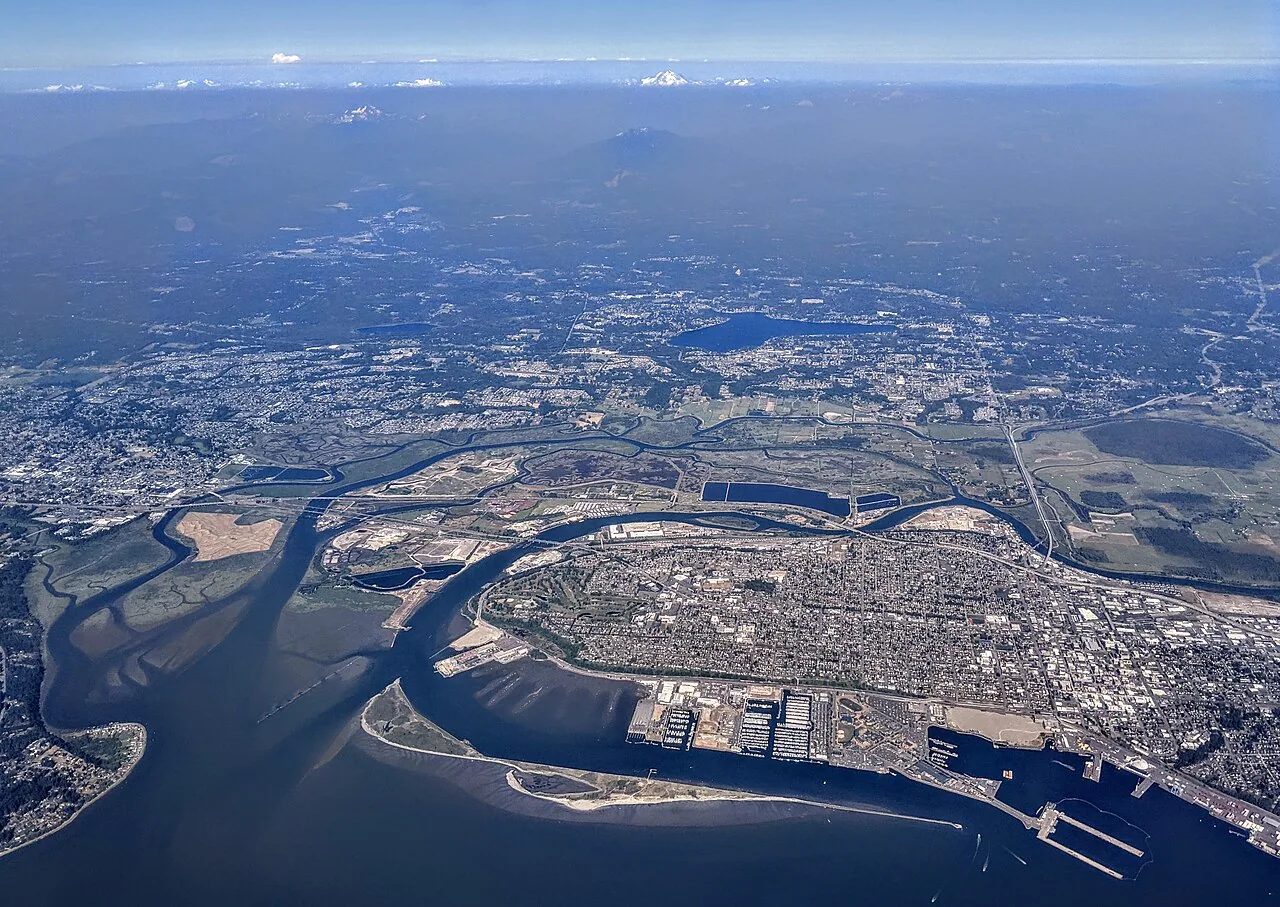
A ring of standing water around a drain can point to debris, a low sump, a depressed deck, or a drain assembly that no longer meets the roof surface cleanly. The repair begins by measuring the water pattern and tracing the drainage path, not by adding sealant around the bowl. We inspect strainers, clamping rings, flashing, leaders, overflow outlets, crickets, and surrounding membrane, then identify whether the restriction is at the roof surface, outlet, or downstream connection. Everett's annual precipitation normal is 40.25 inches, and November, January, and December have the highest monthly normals, making open drainage paths a practical wet-season priority. Freezing nights can also affect exposed transitions and debris trapped at scuppers. At a warehouse near the Port, a marine property, or a Metro Everett commercial building, access and operations differ, but the drain detail still needs a roof-specific diagnosis. Where the water boundary extends beyond an outlet, a ponding-water assessment can evaluate slope and assembly conditions; routine cleaning belongs in preventive maintenance.
Map the water route
We start with roof elevations, drains, scuppers, overflow points, and the path that connects them. A roof plan helps identify basins and crickets, but field measurements matter because later repairs or settlement can alter the surface. We note where water accumulates, how far it extends, and whether the pattern changes around equipment curbs, parapets, or wall transitions. A shallow residual after rain differs from a basin that repeatedly holds water long enough to affect seams and insulation.
The outlet is one part of the system. A clear strainer cannot correct a backfall or a constricted leader, and a plugged downspout can send water back toward the roof. We check accessible outlet components and record any downstream blockage or connection issue that falls outside roof work. Where the drainage path is interrupted, we identify the obstruction and the correction needed before assigning a surface patch.
Inspect drains and scuppers
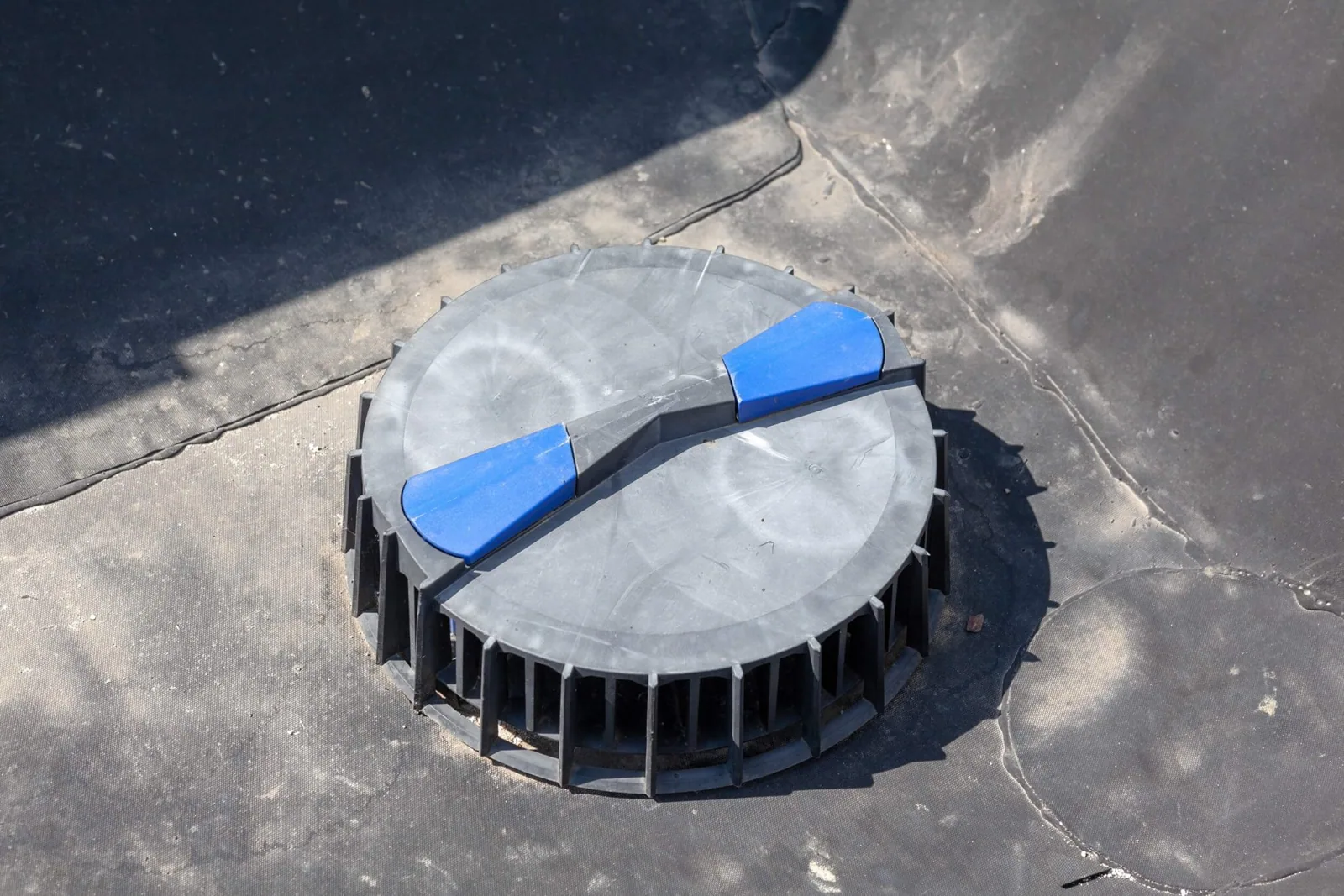
At a roof drain, we check the bowl, clamping ring, flange, strainer, fasteners, and the condition of membrane termination around the opening. Loose hardware, corrosion, cracked sealant, or a distorted bowl can allow water to reach the assembly. We distinguish a drain requiring cleaning from a detail needing reset or replacement. At a scupper, we inspect the opening, metal liner, flashing, edge, and discharge path; a scupper that is clear at the roof may still have a blocked leader or damaged downspout.
Overflow outlets need to remain distinguishable from primary drainage. We document whether they are unobstructed and whether the field condition indicates water can reach them. Repairs should preserve the intended outlet path rather than seal a visible gap without understanding its role. For industrial properties near the Port, debris from roof operations and vehicle or cargo activity may need to be considered during maintenance planning, but we base the scope on what is present at the building.
Check crickets and low points
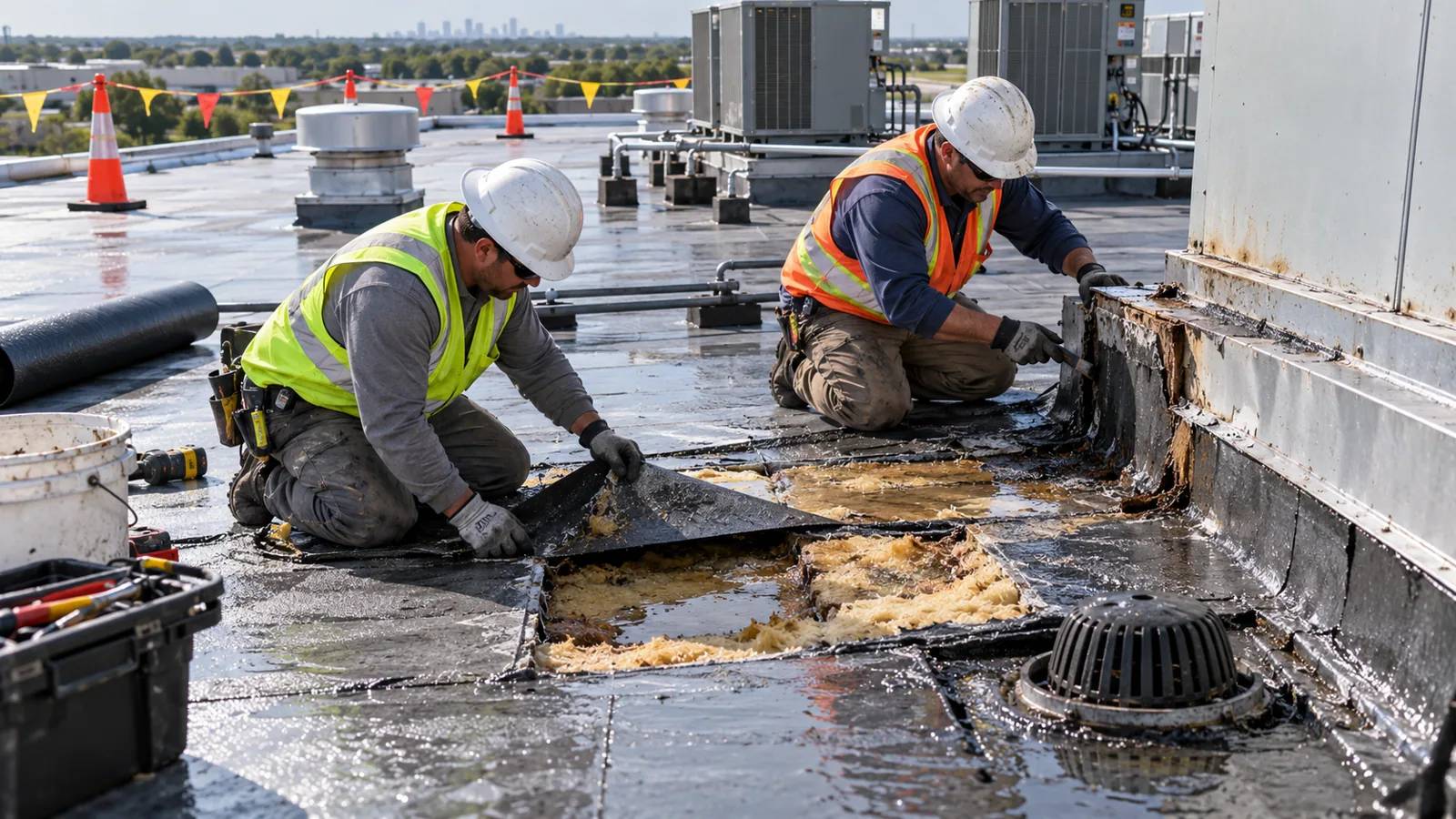
Crickets and tapered sections direct water toward outlets by changing the surface elevation. We inspect whether the slope remains continuous, whether debris forms a dam, and whether a later curb or patch interrupts the route. A cricket that drains toward the wrong side can leave a persistent pool even when the drain itself is clear. We use the roof geometry and water marks to identify whether the correction calls for cleaning, local regrading, insulation work, or a more extensive design review.
Everett's wet climate makes low points worth mapping before the months with higher precipitation normals. Water depth and duration should be recorded as observed, not estimated from a single image taken after a shower. We also examine the membrane at the edge of a pool because repeated wetting may expose open laps, weak patches, or damaged surfacing. If moisture may have moved beneath the membrane, a moisture survey can help define where a physical verification is appropriate.
Correct the assembly around the outlet
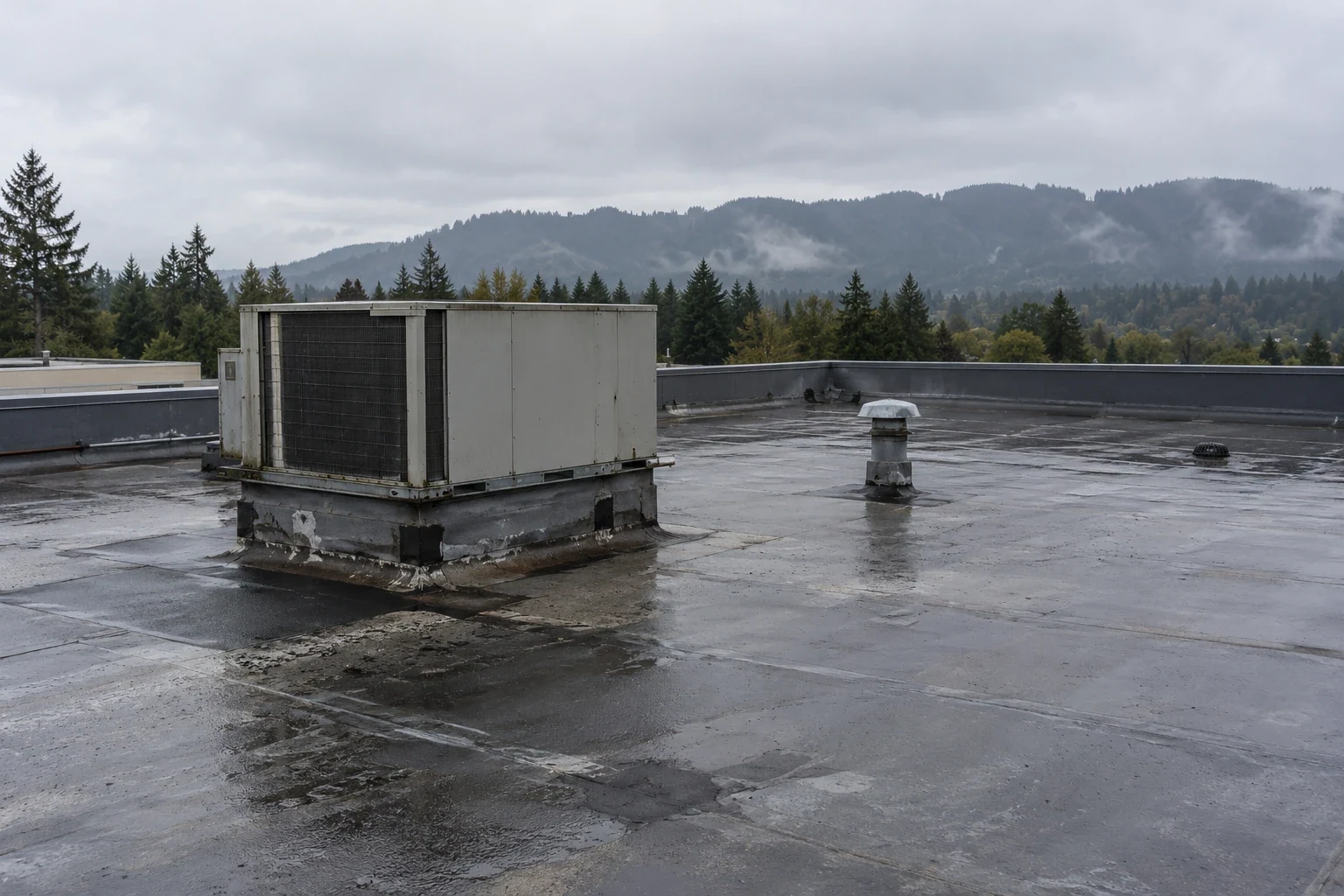
A drain repair includes the membrane-to-flange connection, clamping hardware, insulation transition, and outlet configuration. We remove material only as far as needed to reach a stable substrate, then restore compatible layers and secure the membrane according to the system detail. Sealant alone is not a replacement for a sound flange, mechanical attachment, or properly formed flashing. If the bowl or leader is damaged, roof work and plumbing work may need separate coordination.
For a scupper, the repair may involve the opening dimensions, metal liner, wall flashing, counterflashing, and discharge. We check that water cannot track behind the metal and that the outlet does not terminate into a blocked gutter. A gutter and edge review can address downstream metal conditions. When water has affected adjacent seams, we document those details separately and may recommend a roof repair scope beyond cleaning or drain correction.
Protect the building during drainage work
Opening a drain or removing a section of wet insulation can expose the interior if temporary protection is not planned. We coordinate the work area, weather window, materials, and interior protection with the site contact. Active warehouses in the Southwest Everett Industrial Center and commercial buildings in Metro Everett may have inventory, loading, tenant, or pedestrian routes below the work zone. We identify where tools, removed debris, and temporary covers can be staged without blocking roof egress or drainage.
Cold or wet surfaces can also limit adhesive work and affect safe footing. If conditions do not support permanent closure, we stabilize the area, record what remains open, and schedule a return during a suitable drying window. The owner receives a clear distinction between the outlet that was cleaned, the component that was repaired, and any unresolved downstream or structural issue.
Confirm flow and preserve the record
After work, we inspect the repaired perimeter, verify that the outlet path is open, and remove materials that could obstruct flow. A controlled water check may be useful when it can be performed safely and does not add risk to the building. We photograph the drain or scupper with nearby landmarks, label the roof zone, and note any portion of the leader or plumbing that was not accessible. Follow-up after rainfall can show whether the same low point remains, but Compare conditions after rainfall at more than one intensity when drainage performance remains uncertain.
The record should state the observed drainage condition, repair materials, any slope limitation, and the next check. For properties around Everett's industrial waterfront or Metro Everett, roof access and operating hours are coordinated with the property. A repeated basin may need an engineered drainage correction rather than another cleaning visit. Request an evaluation with roof plans, leak history, and any prior drain work so the recommendation can distinguish maintenance from assembly repair.
Commercial Roofing Questions
Why does water remain after the drain is cleared?
A low point, backfall, compressed insulation, blocked leader, or drain geometry may still limit movement. The inspection maps the basin and outlet path before proposing slope work.
Does adding sealant around a drain solve a leak?
Only if the defect is a compatible joint that needs sealing. A failed flange, loose clamping ring, damaged bowl, or unstable substrate needs a different repair.
What is the purpose of an overflow scupper?
It provides a separate route for water when primary drainage is restricted. We inspect its opening, flashing, and discharge path to confirm that the route remains clear.
Can you correct ponding during a maintenance visit?
Cleaning and minor maintenance may restore flow, but a persistent basin can require tapered insulation, drain relocation, or a design correction.
How do you know whether insulation is wet near the drain?
Surface water does not define concealed moisture. A targeted survey or opening may be needed to confirm the boundary and condition beneath the membrane.
Questions Owners Ask
Why does water remain after the drain is cleared?
A low point, backfall, compressed insulation, blocked leader, or drain geometry may still limit movement. The inspection maps the basin and outlet path before proposing slope work.
Does adding sealant around a drain solve a leak?
Only if the defect is a compatible joint that needs sealing. A failed flange, loose clamping ring, damaged bowl, or unstable substrate needs a different repair.
What is the purpose of an overflow scupper?
It provides a separate route for water when primary drainage is restricted. We inspect its opening, flashing, and discharge path to confirm that the route remains clear.
Can you correct ponding during a maintenance visit?
Cleaning and minor maintenance may restore flow, but a persistent basin can require tapered insulation, drain relocation, or a design correction.
How do you know whether insulation is wet near the drain?
Surface water does not define concealed moisture. A targeted survey or opening may be needed to confirm the boundary and condition beneath the membrane.
Trace the basin before correcting drainage
Schedule a roof drain evaluation in Everett. We will map the water path, inspect outlet details, and separate routine cleaning from slope or assembly repair.
Related Roofing Work
- Ponding Water Roof Repair
- Preventive Roof Maintenance
- Infrared Moisture Survey
- Commercial Roof Edge Metal, Coping and Gutters
- Commercial Roof Repair
- Southwest Everett Industrial Center
- Everett Industrial Waterfront
- Metro Everett
Browse every page in Commercial Roofing Services, or request a roof assessment and we will walk the roof with you.
Questions about this roof? Call 555-555-5555.