Commercial Roof Repair, Replacement & Maintenance
Infrared Moisture Survey
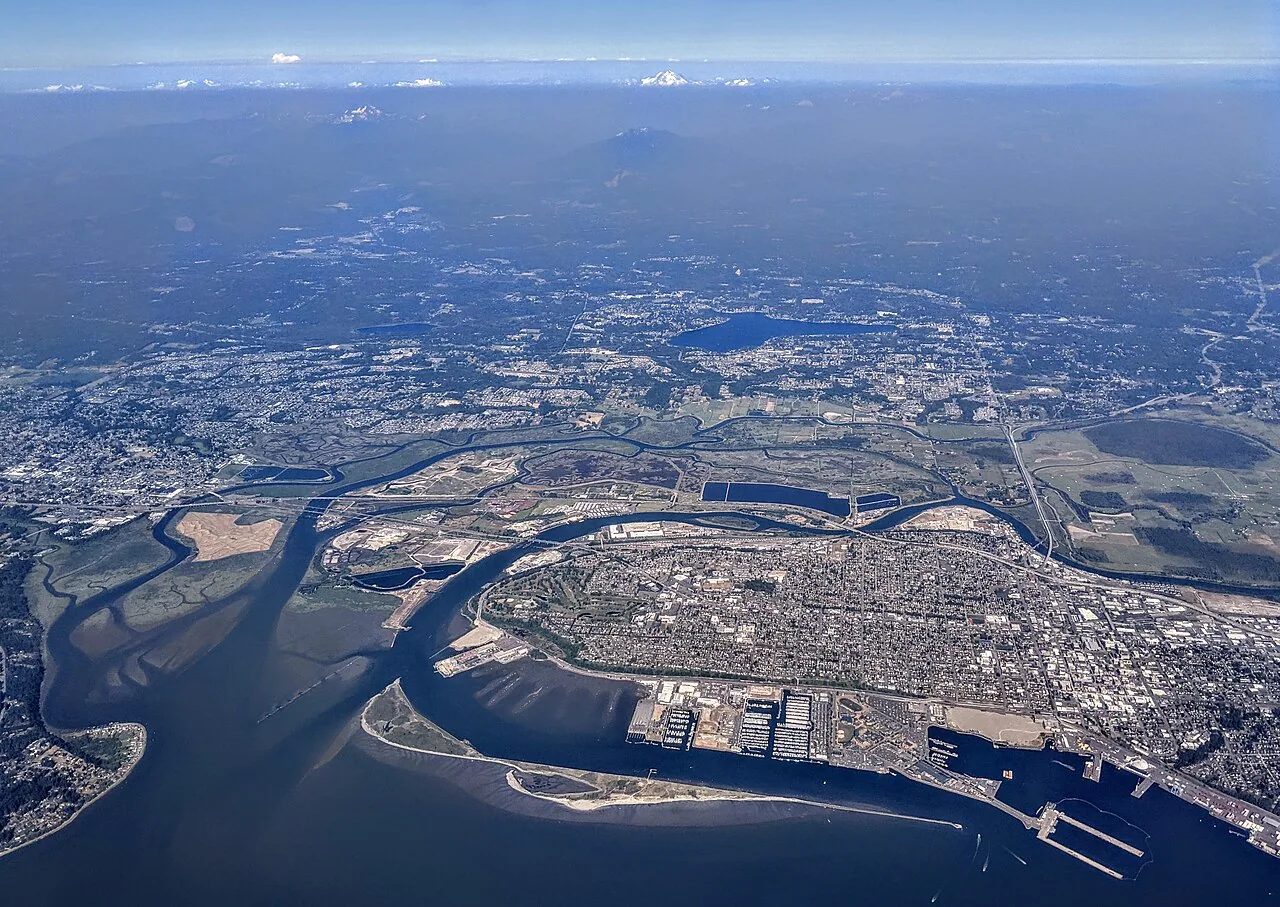
A warm roof pattern can indicate retained moisture, but it can also reflect insulation layout, rooftop equipment, surface conditions, or heat escaping from below. An infrared survey is a screening method that maps temperature differences under suitable conditions; it does not by itself prove that insulation is wet or define material suitable for removal. We plan the survey around a specific question, inspect the roof surface and interior context, and verify selected anomalies with a second method when the decision requires it. Everett's annual precipitation normal is 40.25 inches, with the wettest monthly normals in November, January, and December. Seasonal moisture exposure makes a survey useful for some buildings, while recent rain, cloud cover, wind, interior heating, roof construction, and scan timing can affect interpretation. Commercial roofs around the Port, Metro Everett, and Paine Field cover varied operations and assemblies, so results need to be tied to the actual roof section and materials. We separate a thermal anomaly from a confirmed moisture boundary and explain what the owner can decide from each. If the initial concern is a visible active leak, begin with roof leak repair; if concealed moisture is the central question, define an inspection and test scope before authorizing removal.
Set a boundary before scanning
We first define the decision the survey should support: locating potential wet insulation, comparing a suspected area with a dry reference, identifying where a repair may need selective removal, or screening a broad section before a capital project. The owner provides available roof plans, assembly records, repair history, and interior symptoms. If the construction is unknown, that uncertainty matters because different decks, insulation layers, and coverings retain or release heat differently. A scan without that context can produce a striking image that does not answer the repair question.
We divide the roof into identifiable zones and note which areas are accessible, shaded, obstructed, or affected by rooftop equipment. Interior temperature and operating schedules may also influence how the surface responds. On an active building, the survey plan should account for tenant access, equipment that must remain online, and any area where a core sample would disrupt operations. The scope names the intended coverage, expected conditions, and what is excluded before fieldwork starts.
Choose a useful thermal window
Infrared contrast depends on the roof gaining or losing heat in a way that exposes differences among materials. The surveyor evaluates weather, time of day, wind, cloud cover, recent precipitation, and building operation rather than assuming every evening is suitable. Moisture can change heat storage, but so can insulation thickness, membrane color, reflective surfaces, repairs, and shadows. If the conditions do not produce interpretable contrast, postponing or changing the method is more useful than forcing a conclusion from weak data.
Everett's wet-season pattern can leave surfaces damp, and that may affect both safety and thermal behavior. Long industrial roofs near the Port may have multiple orientations, equipment shadows, and different interior heat loads. Metro Everett buildings can include smaller roof zones with parapets and adjacent structures that shade portions of the field. These are reasons to record conditions and divide the interpretation by zone, not to infer a moisture problem from geography.
Collect and label the thermal evidence
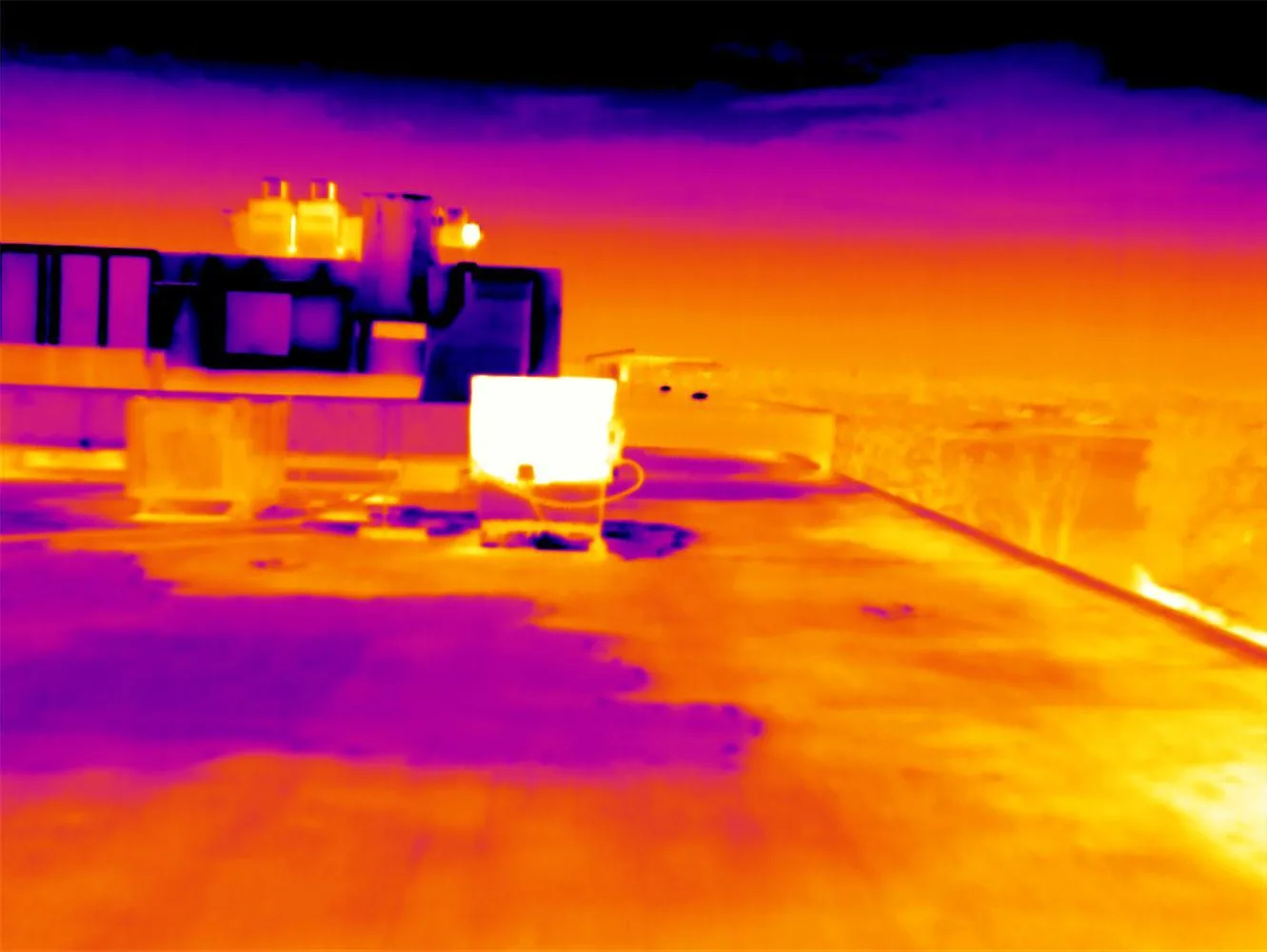
During the scan, we capture thermal images with corresponding visible-light views so an anomaly can be located on the roof. Each image should include enough context to identify seams, drains, penetrations, curbs, or changes in surface material. We record instrument settings and ambient conditions according to the survey method, then organize results by roof zone. A color palette makes relative differences easy to see, but colors are not moisture percentages and should not be presented as a direct measure of wet insulation.
We compare patterns within the same roof assembly and look for anomalies that align with the inspection question. A warm oval beneath a repaired area might merit verification, while a consistent stripe could follow framing or insulation layout. We note alternative explanations and distinguish an isolated reading from a pattern. The image set also records inaccessible sections or surfaces where glare, standing water, or equipment prevented a reliable scan.
Verify selected anomalies
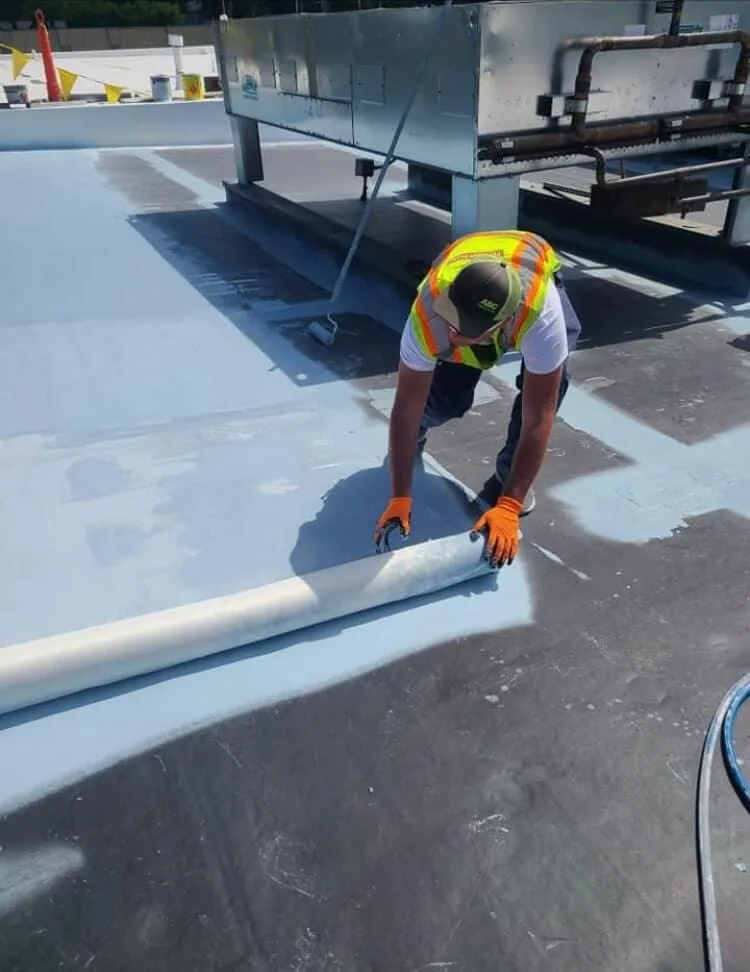
Thermal results are strongest when paired with physical evidence. Depending on the roof and the owner's decision, verification may use a capacitance meter, core cut, probe, visual opening, or comparison with a known dry reference. Each method has limits: a core samples one point, while a meter responds to material and moisture characteristics that can vary across the assembly. We select verification locations to test the interpretation, not simply to confirm the brightest pixels.
Before a core cut, we review warranty conditions, system construction, weather protection, and the detail needed to restore the opening. The report identifies each sample point, material observed, condition, and repair made to close it. If results do not support the thermal pattern, we state that plainly and avoid expanding a repair boundary without evidence. For a recurring leak, connect findings with a roof repair assessment and the visible water path rather than treating every thermal anomaly as a leak source.
Turn the map into a repair boundary
The final interpretation separates confirmed wet material, suspected areas, normal temperature variation, and locations where the survey could not make a reliable distinction. We show the boundary on a roof plan or annotated image and state how verification informed it. A repair or replacement decision may depend on whether wet insulation is isolated, how it relates to seams and penetrations, and whether the deck is affected. Thermal data can focus selective openings, but the repair design still requires evaluation of the assembly and substrate.
For a property team comparing buildings in Everett, Lynnwood, or Marysville, a consistent report format lets managers track location, date, method, weather, verified condition, and unresolved areas. A roof condition reports can integrate the scan with visual inspection, while roof asset management retains the boundary and follow-up decision by property. Findings at the industrial waterfront, in Metro Everett, or near Paine Field area remain specific to the scanned building and roof assembly.
Choose the next test or action
A useful closeout identifies whether the survey answered the owner's question. If anomalies were verified, the report states which material was wet and where the repair boundary falls. If they were not, the next option may be additional testing, a different survey window, or monitoring. When contrast is poor, the report should describe why and avoid implying that unscanned portions are dry. The owner can then choose targeted removal, localized repair, or a broader assessment based on documented evidence.
Infrared surveys are particularly helpful when the surface looks continuous but the owner needs information about concealed conditions. They are not a substitute for a visual inspection of flashing, drainage, seams, and penetrations. Combining the thermal map with a commercial roof inspection gives the owner both surface observations and a tested moisture interpretation. We schedule around the roof system, building operations, and weather window, then provide the evidence and limits needed for a defensible maintenance decision.
Commercial Roofing Questions
Does an infrared image prove the roof is wet?
No. It shows relative surface-temperature patterns that may have several causes. Selected areas should be verified with an appropriate physical method before defining a wet boundary.
When should the survey be performed?
The timing depends on roof assembly, weather, recent precipitation, heat conditions, and the needed thermal contrast. We evaluate the conditions and reschedule when the data would be unreliable.
Will you make core cuts?
Only when the owner authorizes them and the test is appropriate. We choose points to verify an interpretation, then document the materials and restore each opening.
Can the survey locate a roof leak?
It can help identify a potential moisture pattern, but the entry point may be elsewhere. Leak tracing should also examine the water path, seams, penetrations, and drainage.
What does the report provide?
The report maps thermal anomalies by roof zone, notes weather and method limits, records verification results, and distinguishes confirmed conditions from unresolved questions.
Questions Owners Ask
Does an infrared image prove the roof is wet?
No. It shows relative surface-temperature patterns that may have several causes. Selected areas should be verified with an appropriate physical method before defining a wet boundary.
When should the survey be performed?
The timing depends on roof assembly, weather, recent precipitation, heat conditions, and the needed thermal contrast. We evaluate the conditions and reschedule when the data would be unreliable.
Will you make core cuts?
Only when the owner authorizes them and the test is appropriate. We choose points to verify an interpretation, then document the materials and restore each opening.
Can the survey locate a roof leak?
It can help identify a potential moisture pattern, but the entry point may be elsewhere. Leak tracing should also examine the water path, seams, penetrations, and drainage.
What does the report provide?
The report maps thermal anomalies by roof zone, notes weather and method limits, records verification results, and distinguishes confirmed conditions from unresolved questions.
Verify the moisture boundary before opening the roof
Request an Everett infrared moisture survey. We will define the question, assess scan conditions, verify selected anomalies, and report the limits of the evidence.
Related Roofing Work
- Commercial Roof Leak Repair
- Commercial Roof Repair
- Commercial Roof Condition Reports
- Commercial Roof Asset Management
- Everett Industrial Waterfront
- Metro Everett
- Paine Field and Boeing Manufacturing Center
- Commercial Roof Inspection
Browse every page in Commercial Roofing Services, or request a roof assessment and we will walk the roof with you.
Questions about this roof? Call 555-555-5555.