Commercial Roof Repair, Replacement & Maintenance
KEE Roofing in Everett, WA
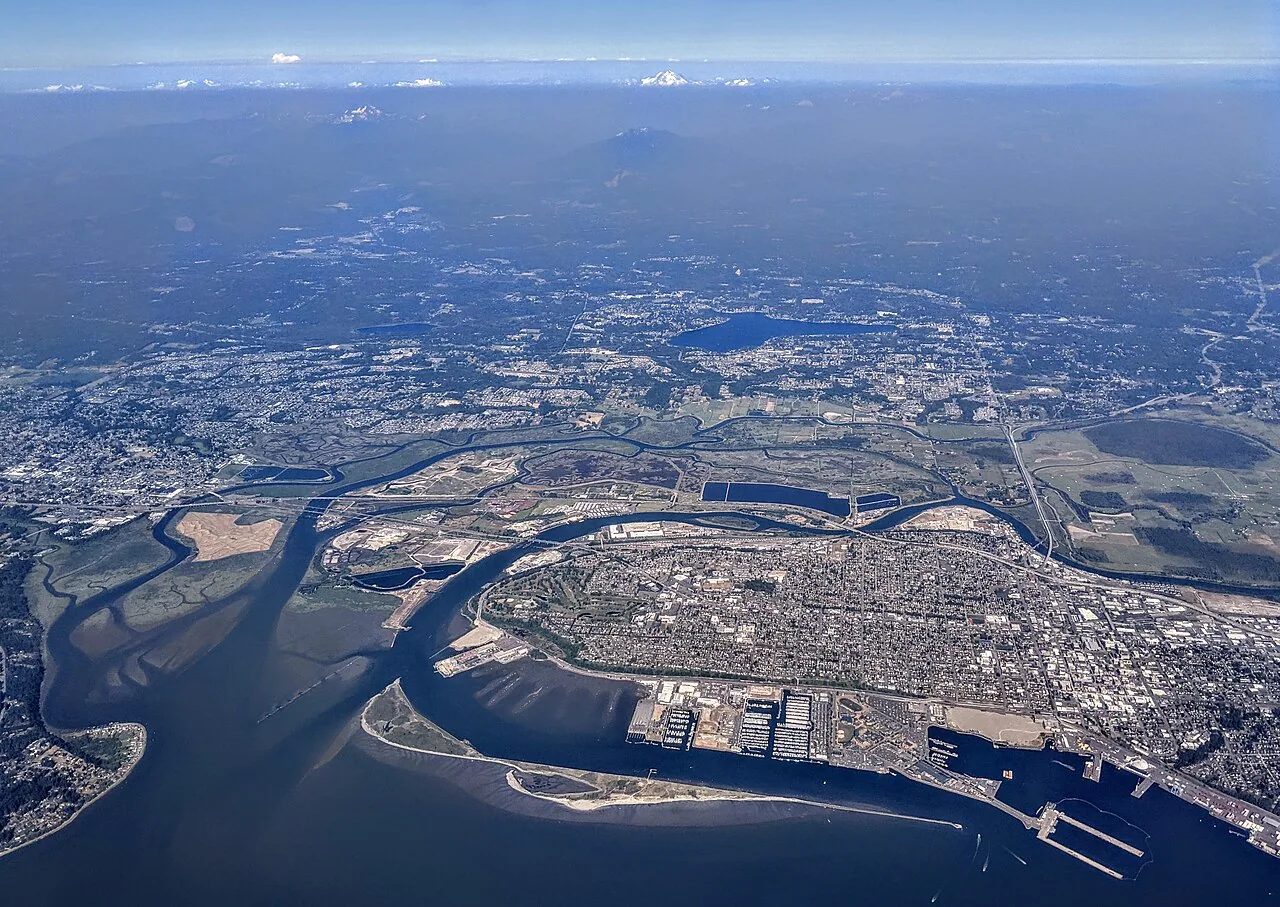
A KEE membrane is a PVC-alloy single-ply, but the product designation alone does not say how the installed roof is performing. We inspect welds, sheet condition, flashings, attachment, and chemical exposure before choosing repair or replacement. KEE-modified PVC uses heat-welded seams, and its formulation may suit certain service conditions when the product documentation confirms compatibility. Everett's port, aerospace, and aviation properties include varied industrial and maintenance operations; the specific roof exposure still has to be confirmed with the facility. Rain is a persistent local factor, with 40.25 inches in Everett's annual climate normal and the wettest months in late fall and winter. A seam or flashing detail should be evaluated in that context, not inferred from the market alone. For a system baseline, schedule a roof inspection; for an open weld or active leak, a leak-path review can identify the likely entry detail.
Confirm the installed KEE product
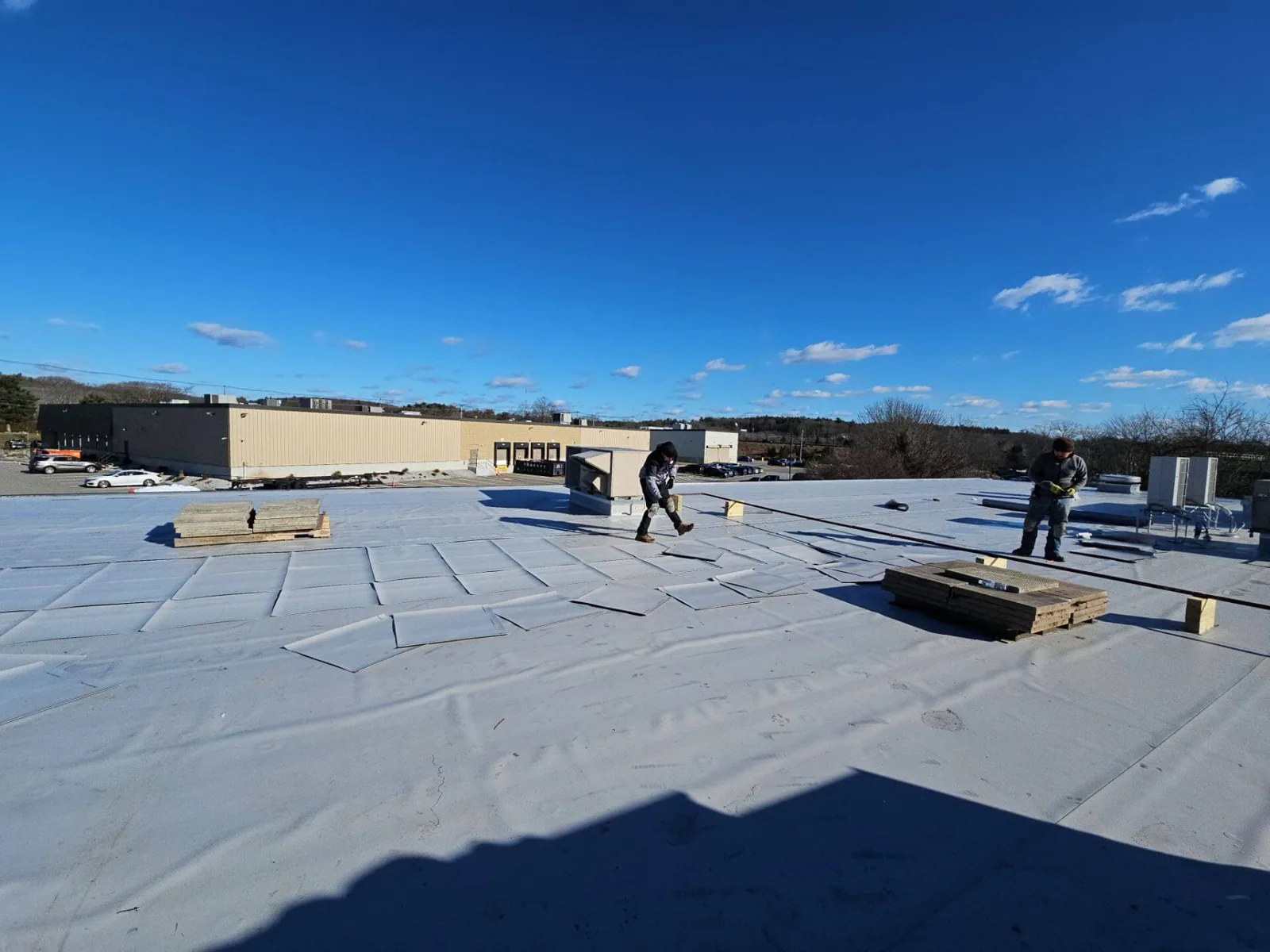
Roof records, product labels, membrane markings, and field characteristics help confirm whether the assembly is KEE-modified PVC or a different thermoplastic. Similar colors and heat-welded seams do not make products interchangeable. We record the manufacturer and system when evidence supports it, then check the approved repair accessories and cleaner. If the product cannot be confirmed, the scope states what additional test or manufacturer direction is needed before repair.
At a manufacturing property, ask facilities staff which process materials, exhaust, or service work could reach the roof. The owner or facility operator should identify processes, exhausts, cleaning agents, oils, or other materials that may reach the surface. We compare that information with product documentation and note any exposure restriction. A KEE designation should not be used as a blanket claim of resistance to every chemical or operating condition.
Evaluate weld quality and sheet condition
Heat-welded laps depend on clean surfaces and suitable settings. We look for open edges, irregular welds, contamination, punctures, abrasion, shrinkage, and patch edges that have lifted. A probe can locate visible separation, but a test weld or other evaluation may be needed to learn whether aging or exposure changed the sheet's ability to accept a new bond. The inspection records whether the defect is in the weld, membrane field, or adjacent accessory.
Water that enters at a lap can migrate under the membrane before appearing indoors. We map the seam direction, roof slope, nearby curb, and drain route, then compare those details with the reported symptom. A repair should extend onto compatible material and have a continuous welded perimeter. If the surface is damp, dirty, or affected by process residue, we correct or test the surface condition before attempting permanent work.
Review accessories and process exposure
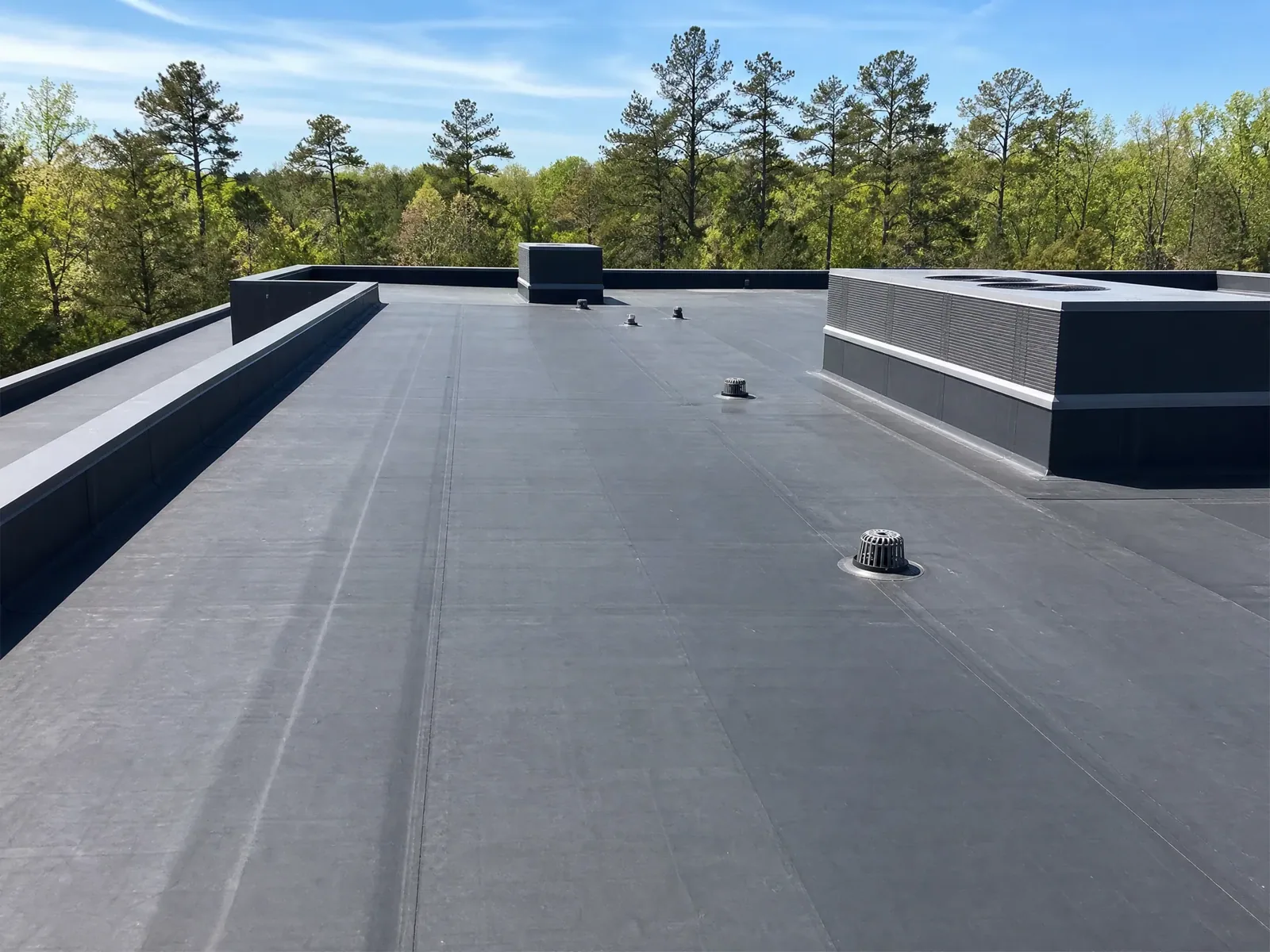
KEE-modified PVC accessories need to match the installed membrane and the joint they serve. Pipe boots, curb flashing, corners, and drain connections require compatible material and sound welds. We inspect the manufacturer-specific detail and adjacent substrates so a repair does not use an accessory that appears similar but cannot fuse to the existing sheet. Where chemical exposure is possible, the exact substance and conditions matter more than the broad alloy name.
Before selecting a membrane, identify any actual chemical, grease, or oil exposure at the building and confirm material compatibility. Facility records should identify the source and location of any discharge, exhaust, or spill. We can then map the affected roof zone and compare it with the product's guidance. Temperature, standing water, repeated cleaning, and material contact can vary across one roof, so the report identifies exposure by location rather than assigning a uniform condition to the entire membrane. If the source is unknown, we record the limits of that information and avoid selecting a cleaner or repair material until compatibility is confirmed. At Paine Field, aircraft maintenance is part of the tenant mix; at the industrial waterfront, marine and cargo uses shape building operations. The roof inspection establishes actual exposure and condition at each site.
Inspect attachment, drainage, and transitions
Thermoplastic membrane may be mechanically attached, adhered, or installed over an approved substrate. We examine field movement, edge restraint, fastener patterns where visible, insulation, cover board, drains, and perimeter details. A membrane that has pulled from a termination may need more than a seam patch. The new work must maintain attachment and a secure transition into stable material.
Everett's wet season exposes the importance of open drainage paths. We check whether water reaches the outlets and whether curbs, rooftop equipment, and wall flashing interrupt the route. If additional insulation or cover board is considered, drain and flashing heights need review. A drainage assessment can examine outlet geometry, while a cover-board review can address substrate support and moisture boundaries.
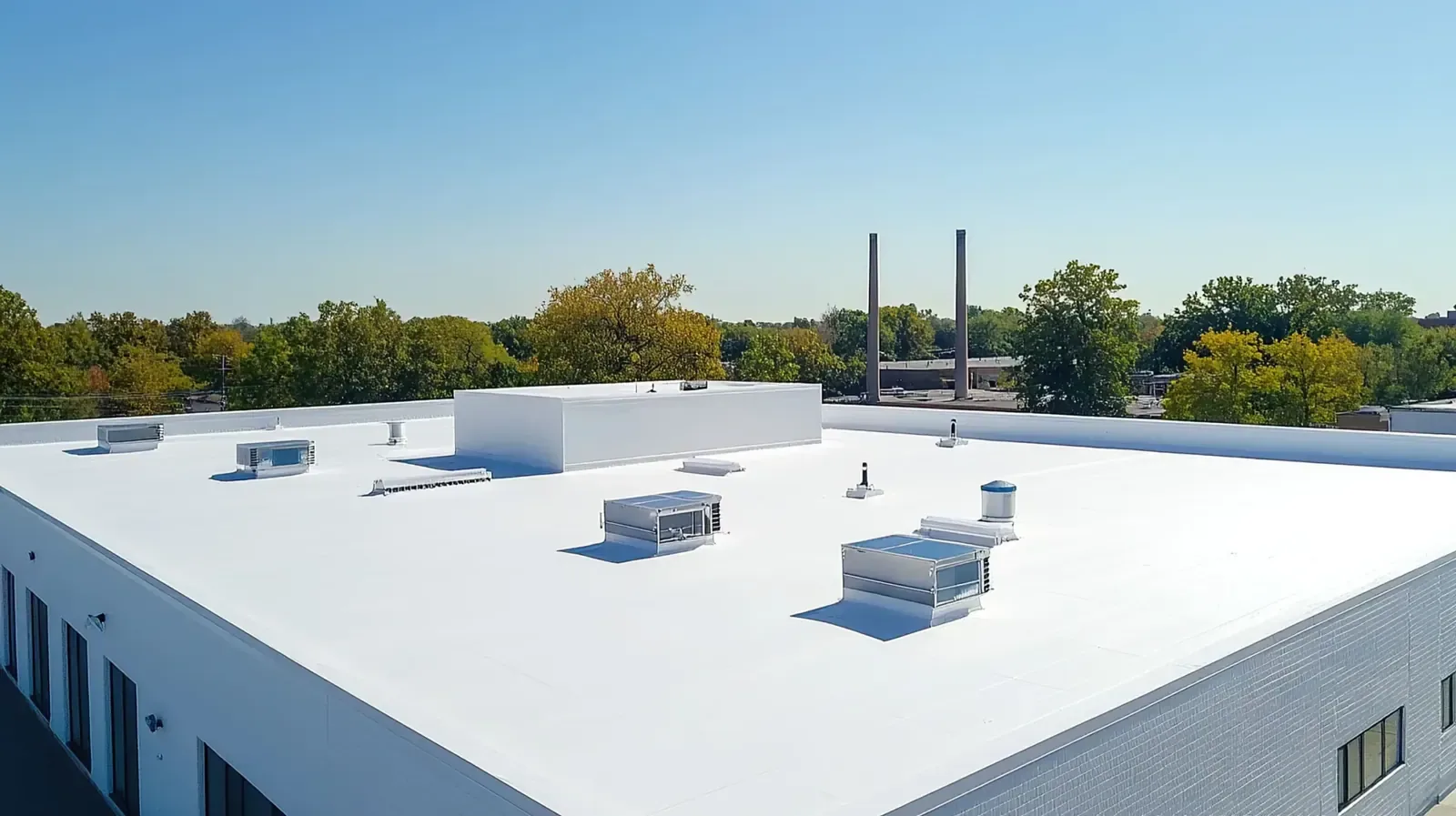
Select a compatible correction
An isolated puncture or open weld may be repaired when the surrounding membrane remains sound. A product compatibility issue, multiple failed seams, loose attachment, or wet insulation can expand the scope. We identify whether the correction requires cleaning and welding, replacement of a flashing accessory, removal of a sheet section, or assembly work beneath the membrane. Each item is linked to a roof zone and has a defined edge. If repair requires removal, we document the cutback dimensions, substrate condition, insulation moisture, and how the replacement sheet is tied into the existing field. Those details help distinguish a repaired membrane from a broader roof renewal and give future inspectors a location-specific record.
Owners can compare a localized repair with a replacement assessment after system identity, attachment, and moisture are reviewed. For comparison, conventional PVC roofing and TPO roofing also use heat-welded seams but have distinct formulations and accessory systems. The specification should stay tied to the confirmed product rather than treating all white membranes as equivalent.
Document product and repair limits
Closeout identifies the confirmed membrane, repair material, surface preparation, weld checks, chemical information supplied by the owner, and roof zones treated. Photographs show the repaired lap or flashing and nearby field. If product identity or exposure remains uncertain, that limitation is listed with the next verification step. This record lets future maintenance select compatible materials and recognize whether a later symptom is at the same location. A follow-up after rain should revisit prior weld repairs and record whether the seam remains closed, whether moisture appears inside, and whether later service work has crossed the repaired zone.
A report can compare observations at the Metro Everett commercial core and other properties without merging their conditions. For recurring service, a condition report can keep repair zones and testing results tied to dates. Schedule a KEE membrane evaluation with available roof plans, installation documents, maintenance records, and process-exposure details so the inspection can support a specific repair decision. We can note access routes for equipment service and the locations where later trades should avoid cutting through the completed membrane.
Commercial Roofing Questions
How is KEE roofing different from standard PVC?
KEE-modified PVC has a different formulation, but both are thermoplastic membranes with heat-welded seams. Product identification and accessory compatibility should be confirmed before repair.
Does KEE resist all oils and chemicals?
No membrane should be treated as universally resistant. Compatibility depends on the exact substance, concentration, temperature, and contact time.
Can a KEE seam be rewelded?
A new weld may work when the sheet is clean, dry, and receptive. We inspect material condition and select compatible preparation and repair accessories.
What if the membrane product is unknown?
We review records and field markings, then identify any testing or product guidance needed before selecting repair material.
When is replacement considered?
Repeated weld failures, exposure concerns, wet insulation, or attachment issues may require a broader comparison. The inspection maps each condition before recommending scope.
Questions Owners Ask
How is KEE roofing different from standard PVC?
KEE-modified PVC has a different formulation, but both are thermoplastic membranes with heat-welded seams. Product identification and accessory compatibility should be confirmed before repair.
Does KEE resist all oils and chemicals?
No membrane should be treated as universally resistant. Compatibility depends on the exact substance, concentration, temperature, and contact time.
Can a KEE seam be rewelded?
A new weld may work when the sheet is clean, dry, and receptive. We inspect material condition and select compatible preparation and repair accessories.
What if the membrane product is unknown?
We review records and field markings, then identify any testing or product guidance needed before selecting repair material.
When is replacement considered?
Repeated weld failures, exposure concerns, wet insulation, or attachment issues may require a broader comparison. The inspection maps each condition before recommending scope.
Confirm the membrane before repair
Request a KEE roof evaluation in Everett. We will identify the product, inspect welded seams and transitions, and document compatibility and repair limits.
Related Roofing Work
- Commercial Roof Inspection
- Commercial Roof Leak Repair
- Paine Field and Boeing Manufacturing Center
- Everett Industrial Waterfront
- Commercial Roof Drains and Scuppers
- Commercial Roof Repair
- Commercial Roof Replacement
- PVC Roofing
Browse every page in Roof Systems, or request a roof assessment and we will walk the roof with you.
Questions about this roof? Call 555-555-5555.