Commercial Roof Repair, Replacement & Maintenance
Commercial Roof Recover in Everett, WA
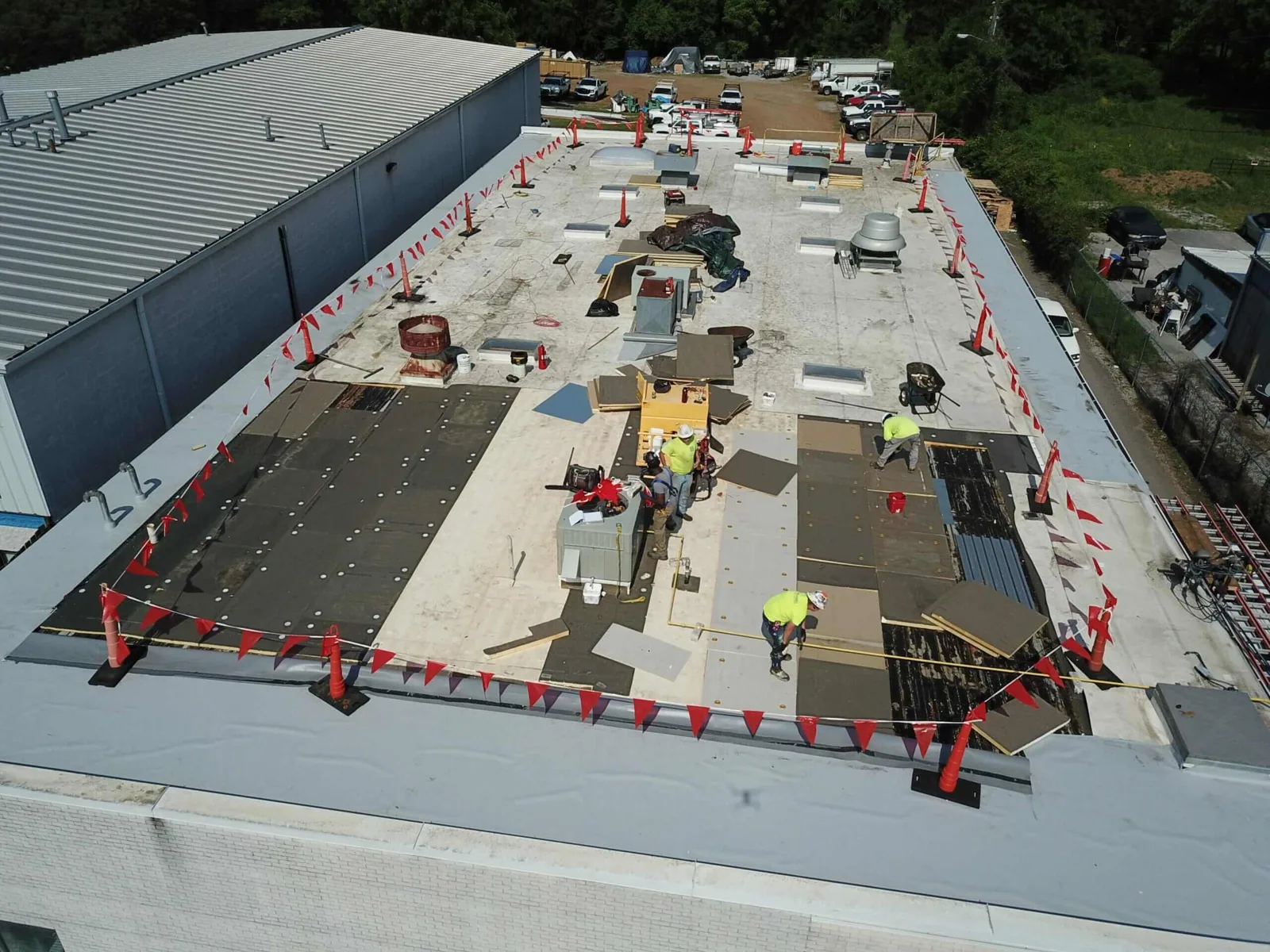
Two roof layers can sometimes remain in service beneath a new membrane, but only after the existing assembly is shown to be dry enough, stable enough, and compatible with the proposed work. First decide whether the base can stay. We identify the membrane, insulation, cover board, deck, attachment, drainage and transitions, then check added height at drains, curbs, doors and edge metal. Everett's wet season places a premium on finding concealed moisture before it is covered. At a distribution facility near the Port of Everett or an aerospace property around Paine Field, rooftop equipment and access paths can make selective investigation more practical than opening the entire surface. We record the areas checked and separate confirmed dry conditions from zones that need a core cut or other testing. A recover can limit tear-off while retaining existing conditions that affect drainage, loading and future repairs. A roof inspection provides the condition evidence; we can also compare a full replacement when the retained layers do not meet the project's requirements.
Test the layers before covering them
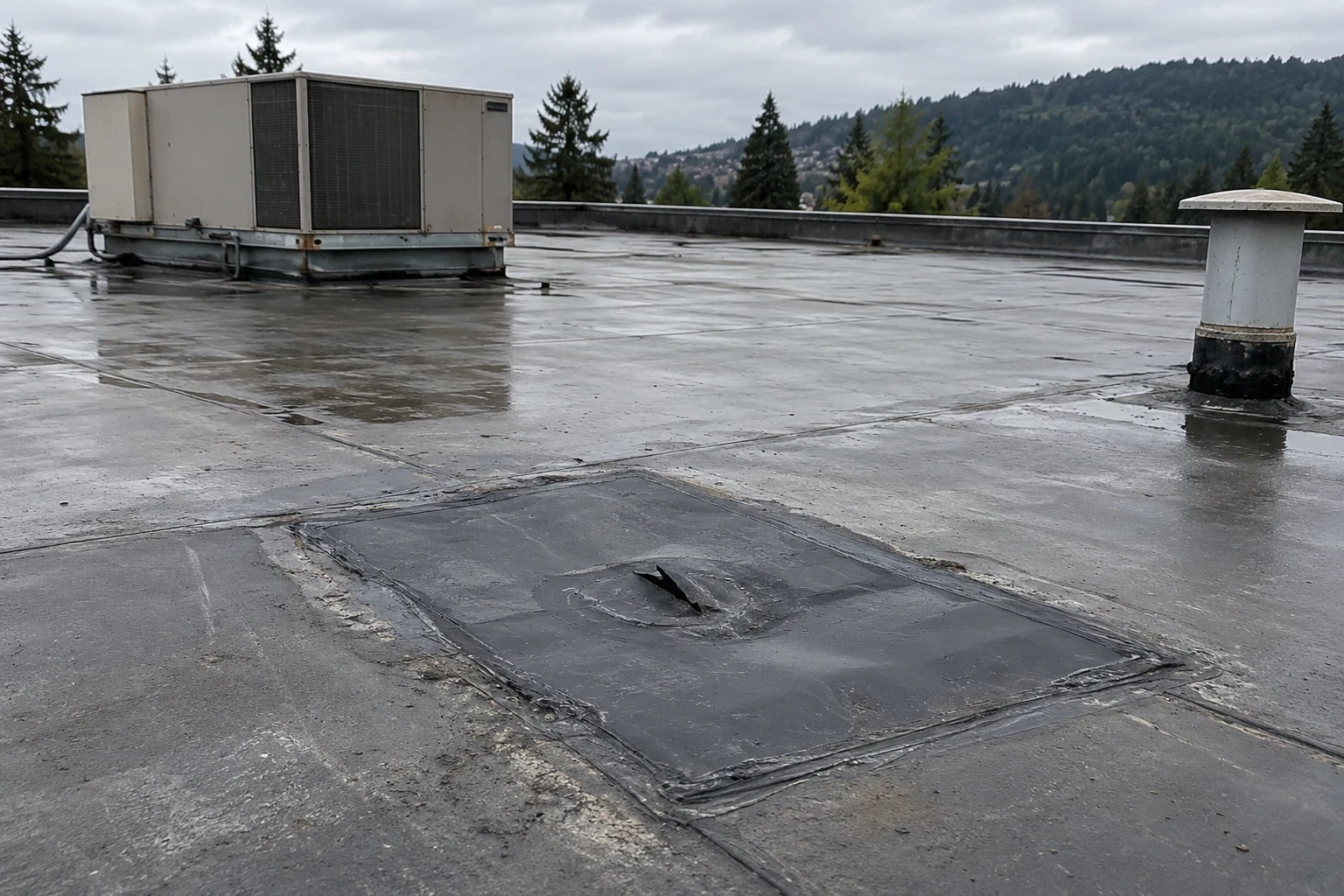
Moisture is the condition most likely to make an otherwise convenient recover a poor choice. Water can enter at a seam, penetration, drain, curb or edge, spread within insulation, and remain hidden beneath a surface that appears intact. A recover does not dry wet insulation or restore a softened deck. We look for visible blistering, open laps, trapped water, displacement, patch history and suspect interior staining, then use targeted probes or core cuts where the findings call for them. A few dry cores do not establish that every roof section is dry, and one wet core does not show the full moisture extent. We map results by roof area and distinguish tested locations from untested ones. On a building with phased additions, separate roof assemblies may need different conclusions. We agree on access windows, interior protection and safe routing before opening the surface. If the investigation indicates widespread wet materials, deteriorated deck or numerous failed transitions, removal gives a clearer route to correct those conditions. Proceed only if evidence supports the retained base and sound attachment.
Check height, load and attachment
Adding a roof layer changes the assembly in ways that need to be measured. The new system raises the finished surface, which can reduce the height difference at drains, overflow scuppers, roof hatches, mechanical curbs and wall terminations. We check whether those transitions can be rebuilt with compatible flashing and whether the drainage plane will still direct water to its outlets. Added weight also matters. The deck and structural system must support the proposed materials and any staging loads, and a building's past performance is not proof of current capacity. Attachment design needs a reliable substrate; existing layers that move, delaminate or have loose boards may not provide one. Wind uplift resistance is determined by the assembly, edge zones, fastener pattern, deck, and exposure, not by the top membrane alone. Everett's adopted code framework includes the 2021 International Building Code and Washington's commercial energy code. A recover scope should identify which code requirements apply to the actual project and which existing conditions need review by the design professional or building official. We do not assume that an existing insulation value or a second layer meets current requirements. A membrane choice still needs to account for attachment, chemical exposure, seam details and compatibility with retained materials.
Keep water moving after the surface rises
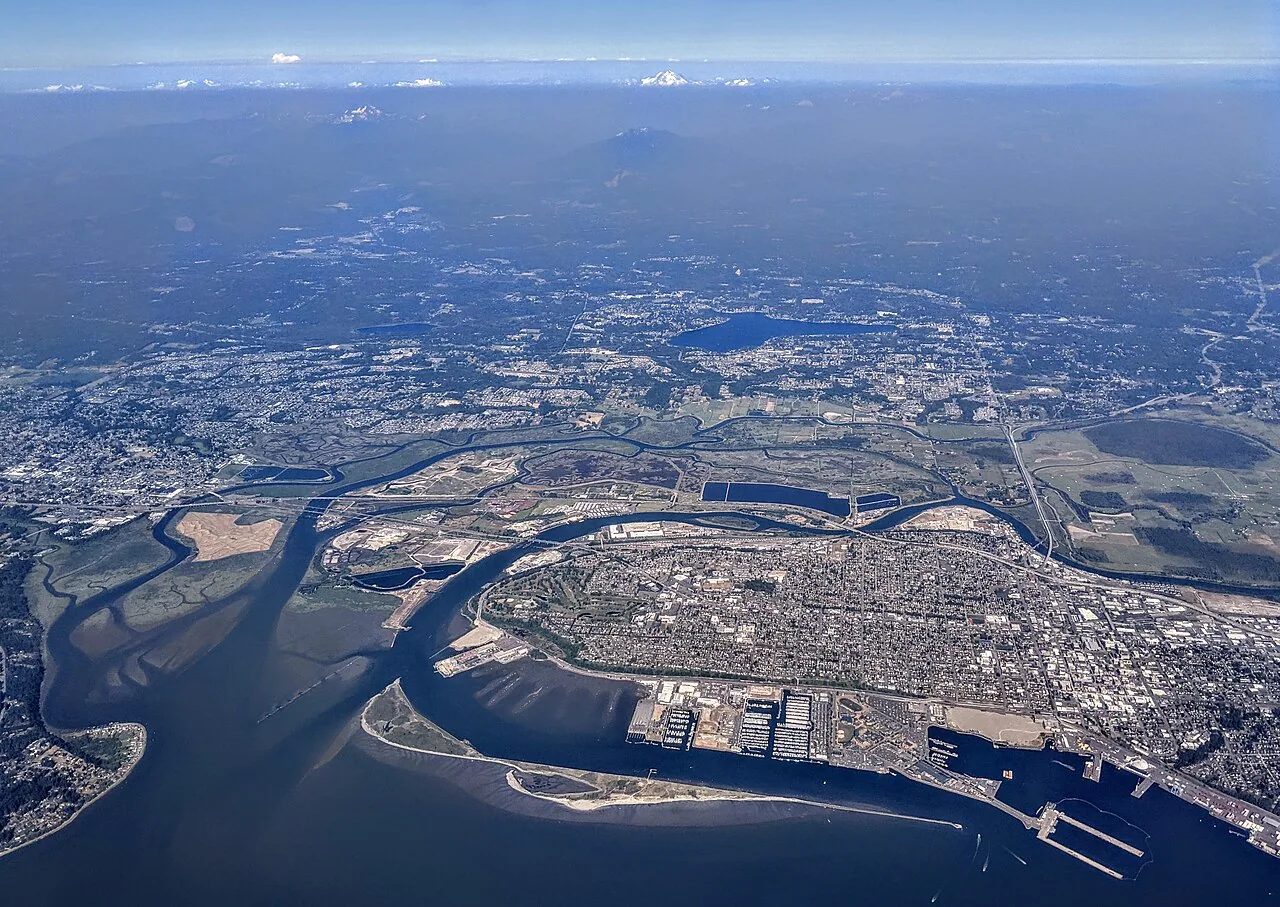
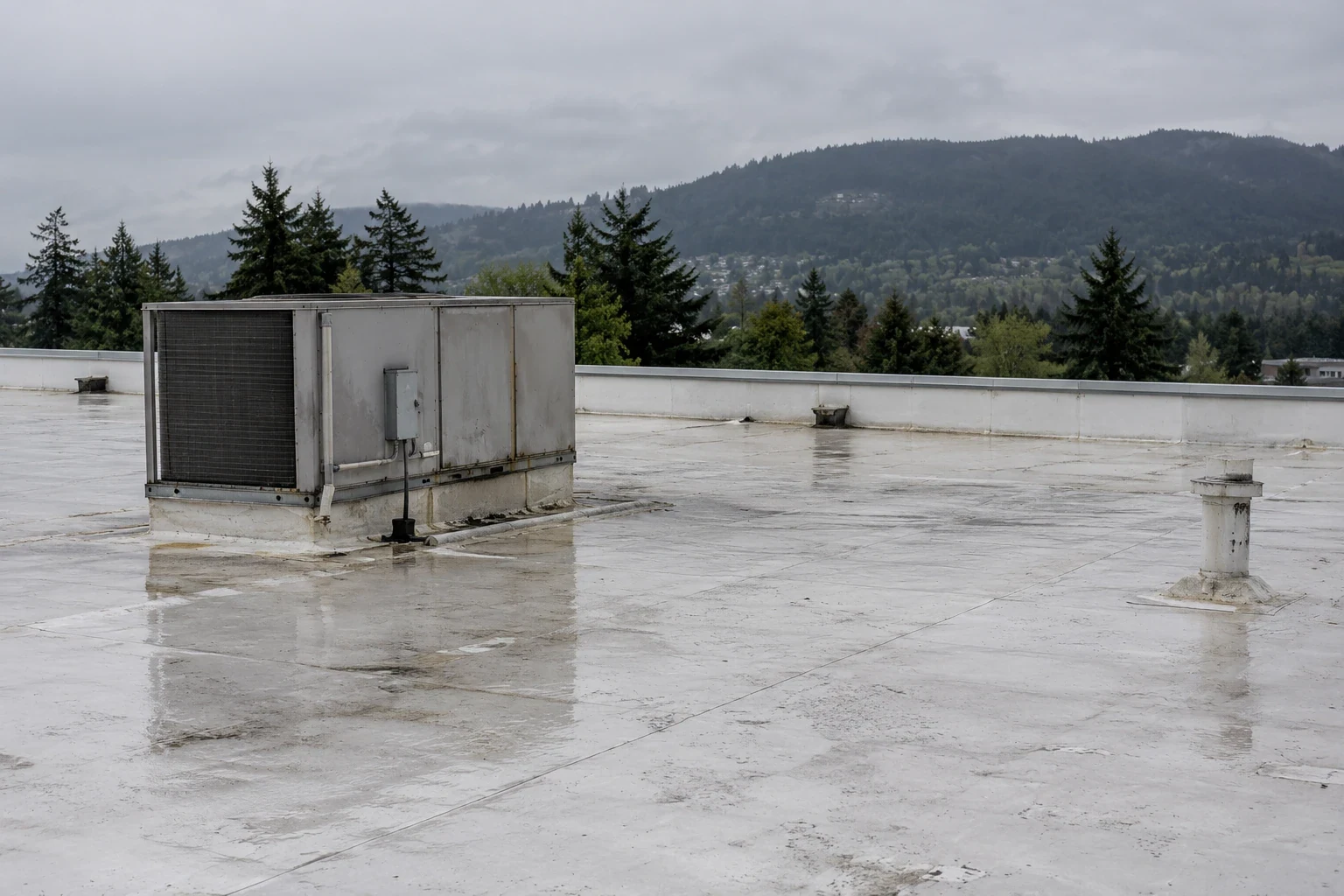
A recover can narrow drainage paths if the new assembly is installed without adjusting the details around it. We record existing low points, drain bowls, scuppers, crickets, roof-to-wall transitions and discharge routes, then mark where added thickness could change those relationships. If ponding already occurs, the recover plan should state whether tapered insulation or other drainage work is included, and how the outlets will be reset. Water should not be assumed to disappear because a new membrane is installed. At the Port of Everett's working waterfront, warehouse and cargo buildings may have long roof runs; on smaller commercial sections along Evergreen Way, parapets and equipment curbs can create shorter, interrupted routes. The survey must verify the actual roof rather than assign a condition from the district. Metal edge conditions also change when the assembly height rises. Coping, fascia, gutters and perimeter securement should be detailed as part of the same scope, with terminations protected against water entry and wind forces. Where a drain cannot be raised or a curb cannot accept another layer, that constraint may decide whether selective removal or full tear-off is safer. Our drain and scupper work and perimeter metal detailing are coordinated with the recover drawings so the new top surface drains as intended.
Compare disruption with retained risk
Keeping the existing roof in place can reduce tear-off noise, material handling and disposal, but it leaves some older conditions concealed. We describe what was tested, what remains, how the new layers will be attached, and what future investigation could require. Tear-off allows inspection of the deck and removal of wet or incompatible materials, while a recover can keep sound insulation and the existing membrane in service under a new system. A recover still requires access, staging, edge work and localized closures; removal may need phasing to protect interiors. In Everett, winter rain changes how much roof can safely be opened at one time, while industrial and port operations can constrain lift locations and delivery windows. We plan daily limits, temporary dry-in and site contact procedures with the facility. Each building needs its own survey; the area's land use does not determine its roof assembly. A Metro Everett roof review can assess the building's actual layers and work access before the owner commits to a recover or removal.
Set the decision boundary in writing
A useful recover proposal names the tested roof sections, the moisture findings, the retained layers, the proposed attachment, the new membrane and flashing details, and the work that is excluded. It should also show how drains, overflow points, penetrations, edge metal, curbs and transitions will be handled. If a test opening reveals concealed wet insulation or deck damage, the contract should explain who reviews the condition and how a changed scope is approved before the crew proceeds. Record photographs and marked roof plans at closeout so a future service visit can distinguish the base assembly from the recover. Warranty documents must match manufacturer requirements and installed details. Compare recover and tear-off using the same quantities, with investigation, protection, disposal, insulation, metal and schedule assumptions stated. If inspections later find a leak, retained layers may complicate tracing, so service records should show roof zones, repairs and known test locations. Our condition reports can preserve the evidence used for the original choice, while repair service addresses localized issues that remain appropriate for repair. The decision should follow tested conditions and the building's constraints, not the appeal of avoiding removal by itself.
Commercial Roofing Questions
How do you know whether the existing roof is dry enough to recover?
We review visible conditions and use targeted testing where needed. The report identifies where material was checked and what remains uncertain; it does not assume that a few sample points represent every roof section.
Does a recover correct existing ponding?
Not by itself. Drainage changes need to be designed into the assembly, including outlet height, low points, scuppers and transitions. We document existing water paths before setting the new surface elevations.
Can another layer be added to any commercial roof?
No. Deck capacity, existing layer count, attachment, code requirements, roof height and material condition can rule it out. We verify those constraints before recommending a recover.
Will the old roof make future leaks harder to locate?
It can. A second assembly may leave concealed pathways or older details in place, so closeout records should show the retained layers, test openings, drains and repair zones.
When should the owner choose tear-off instead?
Broad moisture, unstable layers, deteriorated deck, incompatible materials or a height and load constraint can favor removal. The inspection should show which condition changes the recommendation.
Questions Owners Ask
How do you know whether the existing roof is dry enough to recover?
We review visible conditions and use targeted testing where needed. The report identifies where material was checked and what remains uncertain; it does not assume that a few sample points represent every roof section.
Does a recover correct existing ponding?
Not by itself. Drainage changes need to be designed into the assembly, including outlet height, low points, scuppers and transitions. We document existing water paths before setting the new surface elevations.
Can another layer be added to any commercial roof?
No. Deck capacity, existing layer count, attachment, code requirements, roof height and material condition can rule it out. We verify those constraints before recommending a recover.
Will the old roof make future leaks harder to locate?
It can. A second assembly may leave concealed pathways or older details in place, so closeout records should show the retained layers, test openings, drains and repair zones.
When should the owner choose tear-off instead?
Broad moisture, unstable layers, deteriorated deck, incompatible materials or a height and load constraint can favor removal. The inspection should show which condition changes the recommendation.
Verify the base before approving a recover
Schedule a roof survey that records moisture, attachment, drainage, height changes and transitions. We will compare a recover with removal using the conditions found on your Everett building.
Related Roofing Work
- Commercial Roof Inspection
- Commercial Roof Replacement
- Commercial Roof Drains and Scuppers
- Commercial Roof Edge Metal, Coping and Gutters
- Metro Everett
- Commercial Roof Condition Reports
- Commercial Roof Repair
Browse every page in Commercial Roofing Services, or request a roof assessment and we will walk the roof with you.
Questions about this roof? Call 555-555-5555.