

Commercial Roof Repair, Replacement & Maintenance
Commercial Roof Inspection
On Everett's wet roofs, the inspection question is often how far moisture traveled beneath the membrane, not just where a stain appeared; map the suspected boundary before choosing a test. A split seam, clogged drain, loose edge, or stained ceiling is an observation; the next step is to determine its extent, whether it is active, and what evidence supports repair now versus continued monitoring. We begin with the building history, access limits, roof system if known, and the reason for the visit. The field review then follows the drainage plane, checks transitions and penetrations, and records areas that need a closer test. Everett's wet season makes it practical to examine how water moves toward outlets and whether prior patching has altered the surface. Everett averages 40.25 inches of annual precipitation, with the highest monthly totals in November, January, and December. Schedule inspections ahead of wetter months and use observed roof conditions to set repair priorities. A warehouse or marine-terminal building near the Port may have long runs and operating constraints; Paine Field's aviation businesses add hangars and equipment transitions; Metro Everett mixes commercial and civic uses. We document the field condition at the actual property, not infer it from its neighborhood. If an active leak is present, arrange commercial leak tracing; for immediate water entry, use emergency response before a broader report.
Define the inspection question
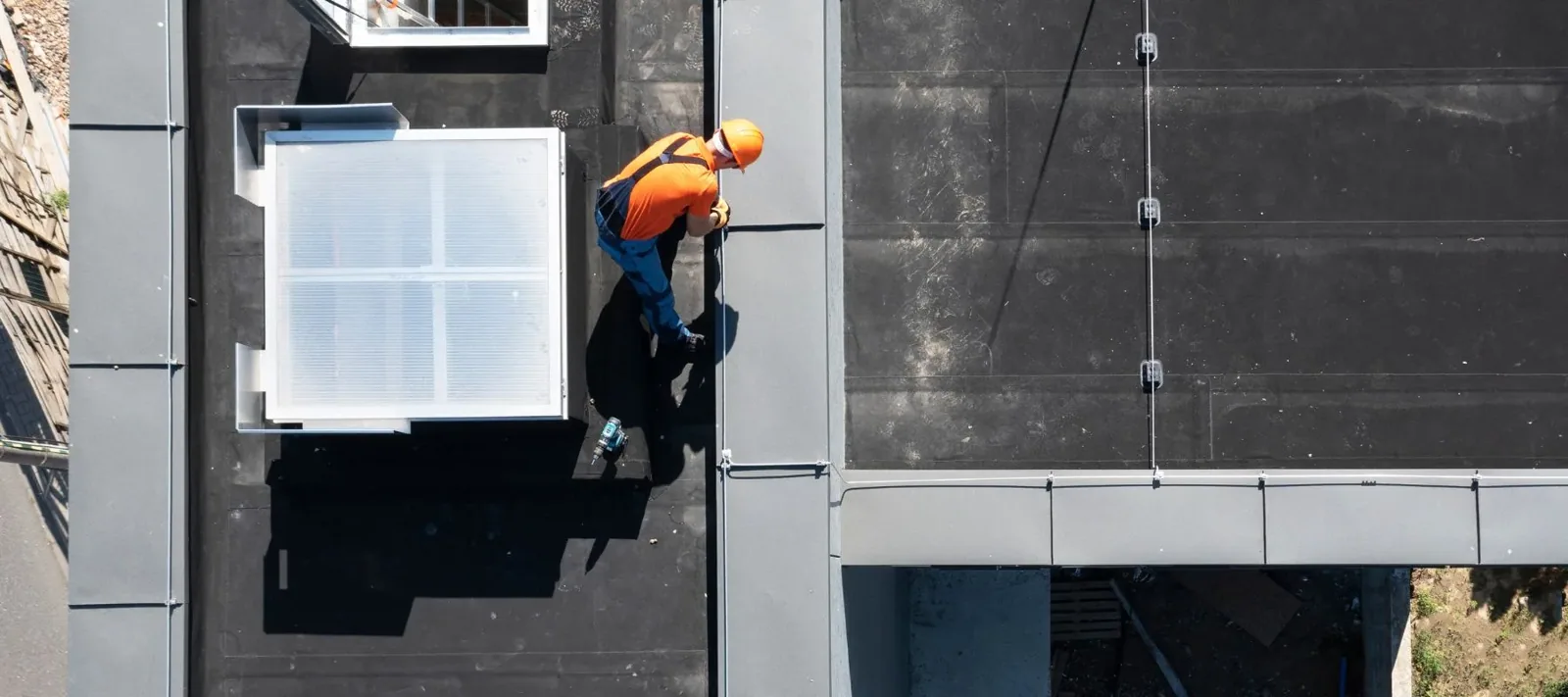
Before stepping onto the roof, we clarify what the owner needs to decide. A leak call may require a focused water-path review, while an annual condition visit may compare multiple roof zones, drainage points, seams, and previous repairs. A transaction survey may need a dated snapshot and visible limitations rather than a repair design. We ask for prior reports, warranty records, repair invoices, known access restrictions, and a roof plan when available. If records are incomplete, we identify that gap instead of presenting an assumed system history as fact.
The building contact can help identify interior symptoms, rooftop equipment that cannot be interrupted, tenant access rules, and sensitive spaces below. On a production or logistics roof, scheduling around vehicle flow or equipment operation can determine which zones are accessible. We note whether the visit is visual, includes targeted moisture checks, or requires a separate test. The resulting scope stays tied to the owner's question and says what was outside the inspection boundary.
Trace drainage and transitions
On the roof, the inspection follows water from high points toward drains, scuppers, and edges. We check whether outlets are clear, whether the surrounding membrane is secure, and whether ponding or debris changes the drainage path. At seams and wall transitions, we look for open laps, movement, separated terminations, damaged counterflashing, or repairs that no longer bond to their substrate. Around pipes, curbs, screens, and supports, the condition of the flashing matters as much as the equipment itself. A visible stain below one area is a clue, not proof that the nearest roof detail is the entry point.
Everett's climate includes frequent precipitation and periodic freezing conditions, so water retention and movement deserve attention where field conditions support it. We record the location and dimensions of a concern, photograph the relationship to adjacent details, and distinguish an active opening from staining, surface wear, or an older patch. At larger industrial properties, a single roof can have different deck elevations and drainage basins. We keep findings separated by zone so one clear drain does not conceal an obstruction elsewhere.
Test only where evidence points
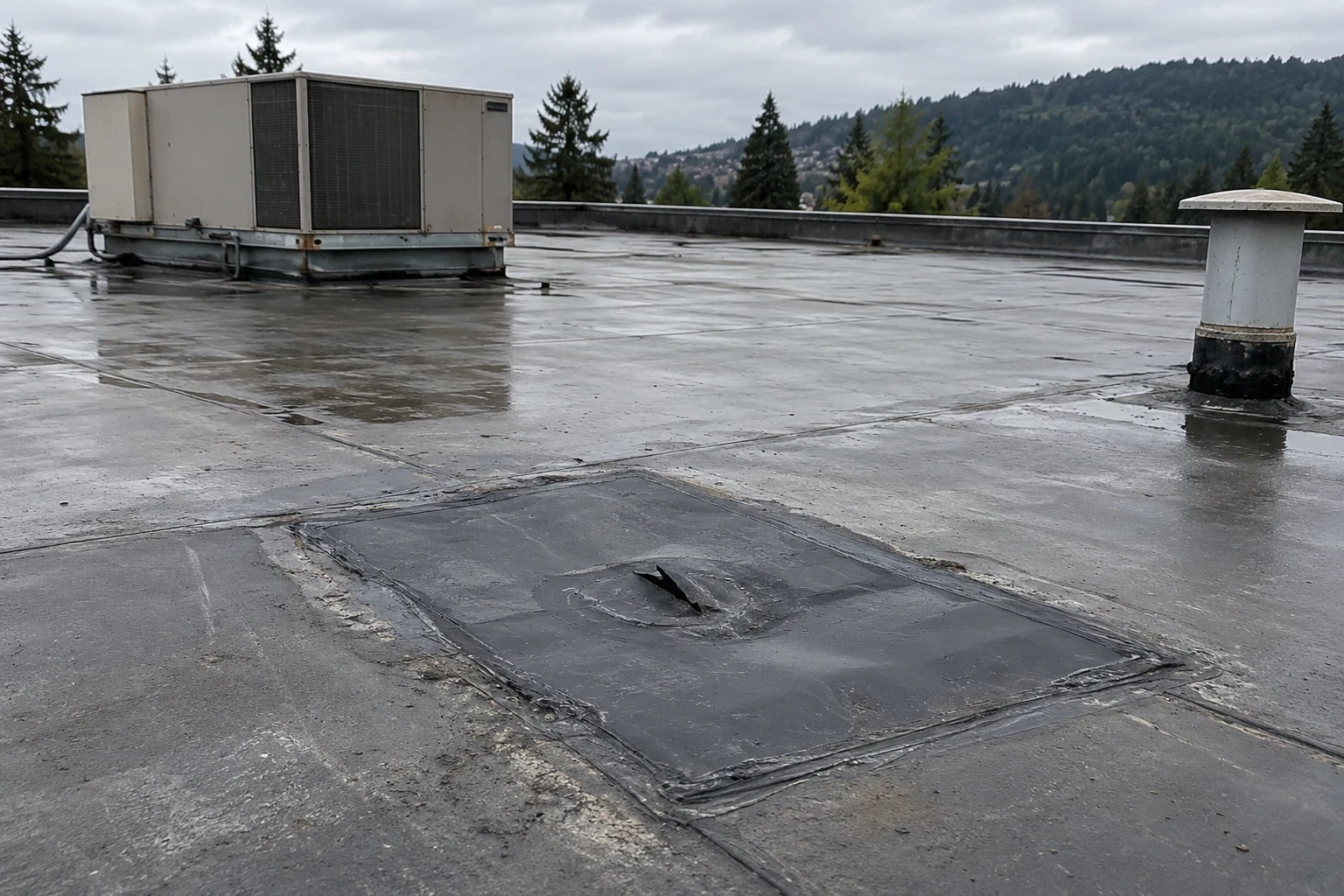
Moisture testing should answer a defined question. A thermal image, capacitance reading, probe, or core sample has limitations, and each method responds to different materials and conditions. We select a focused test when the visual review suggests that water may be beneath the membrane or when the owner needs a boundary for repair planning. Surface temperature alone does not prove wet insulation; a reading should be compared with construction, weather, and direct observations. If the evidence remains uncertain, the report identifies that uncertainty and proposes the next check rather than turning a screening result into a diagnosis.
Where a suspected wet area is near seams, penetrations, or drain bowls, we relate the test points to those physical details. A sample opening may reveal layers and substrate condition but should be placed and restored deliberately. We note the exact area checked, the method, and what was not tested. Owners can request an infrared moisture survey when a broader scan is appropriate; a targeted visual inspection may be sufficient when the defect is exposed and localized.
Rank repair and monitoring
A field report should help an owner distinguish immediate exposure from future maintenance. We list the observed condition, roof zone, likely consequence, recommended next action, and any access or test limitation. A repair recommendation identifies the detail and substrate involved; a monitoring item names a specific change to watch for and when to revisit it. We avoid ranking a condition solely by appearance when the evidence does not show whether water has entered the assembly.
For properties near the Port of Everett, freight traffic and cargo use can make access windows important; around Paine Field, aircraft and airport-support operations may constrain equipment staging. These are coordination facts, not assumptions about the roof. The report records the actual site constraints and separates them from roof findings. If there are repeated service calls across facilities, a condition-report program can keep observations comparable by date and zone. For recurring portfolio work, multi-site roof programs can organize inspections without merging one property's evidence into another.
Leave a clear next step
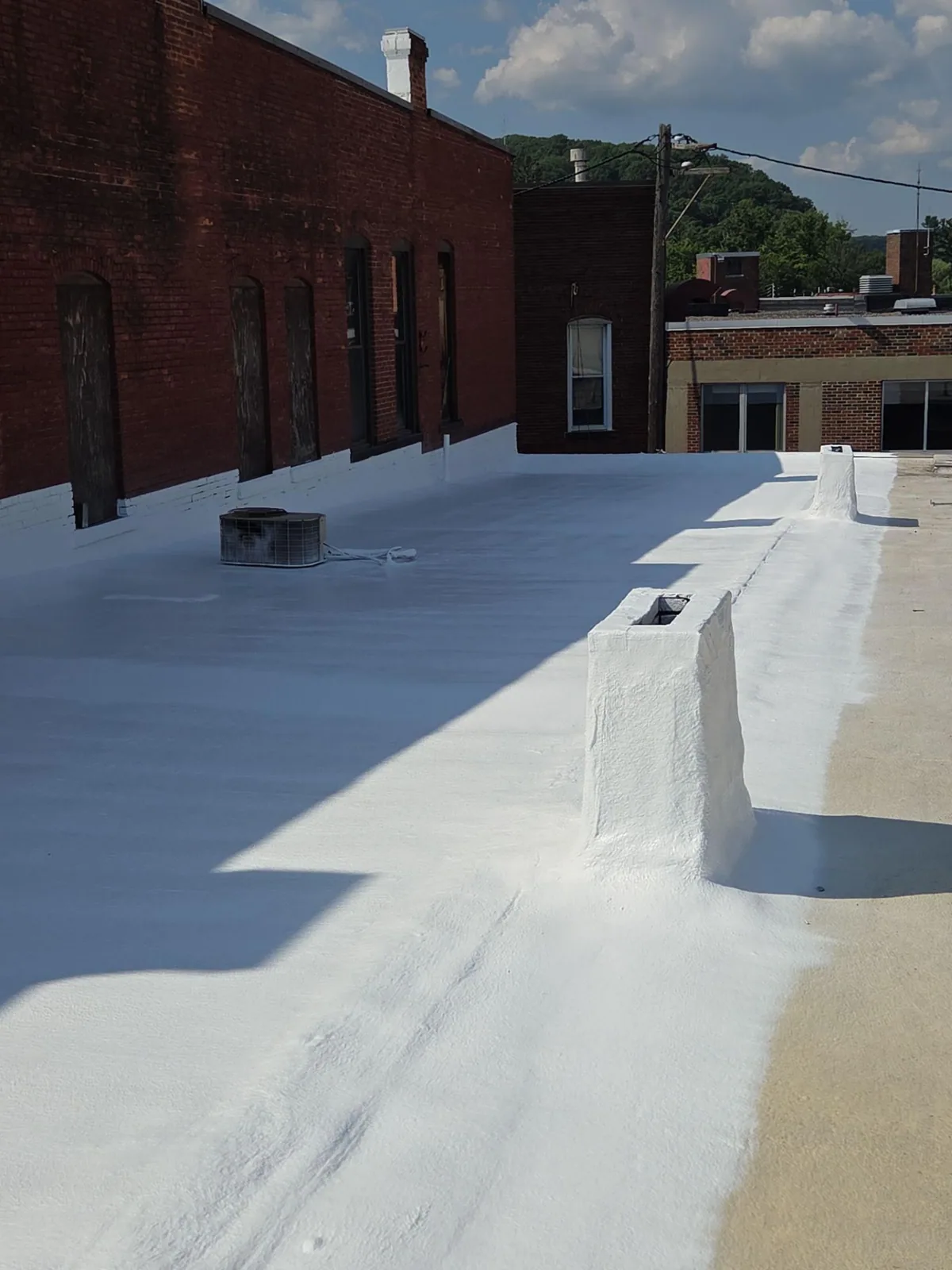
At closeout, we review the principal findings with the owner or facility contact and confirm whether any area could not be reached. We identify active concerns, repair candidates, and observations that do not yet support corrective work. Photos should show both the detail and its location so the next person can find the same area without relying on a general roof description. When an inspection includes an interior leak report, we connect the symptom to the tested or observed roof zone and explain whether the path is confirmed or still under investigation.
Inspection intervals depend on roof condition, maintenance history, warranty needs, and the owner's operating risk. A roof with recurring leaks or recent construction may justify closer follow-up than one with stable observations. The record can also inform a repair quote or budget discussion, but it should not imply a replacement need unless the findings support that conclusion. Request an Everett inspection for a commercial property around the industrial waterfront, Paine Field, or Metro Everett; we will define the scope around the building and decision.
Commercial Roofing Questions
What does a commercial roof inspection include?
The visit documents accessible roof surfaces, drainage, seams, penetrations, transitions, visible repairs, and any reported interior symptoms. The scope states which zones were and were not inspected.
Does an inspection confirm hidden moisture?
A visual inspection may identify warning signs, but concealed moisture needs an appropriate test. The report distinguishes observations from readings and states the limits of each method.
Can you inspect while the building is operating?
Often, with access and safety coordination. We plan around tenant rules, equipment, vehicle paths, and any areas that require escort or shutdown.
When should an owner schedule the next roof inspection?
Frequency depends on system condition, repair history, warranty obligations, and operational risk. The report can recommend a follow-up interval tied to specific findings.
Will the report recommend replacement?
Only when the documented conditions support that option. Findings may instead call for a localized repair, moisture boundary check, maintenance, or observation.
Questions Owners Ask
What does a commercial roof inspection include?
The visit documents accessible roof surfaces, drainage, seams, penetrations, transitions, visible repairs, and any reported interior symptoms. The scope states which zones were and were not inspected.
Does an inspection confirm hidden moisture?
A visual inspection may identify warning signs, but concealed moisture needs an appropriate test. The report distinguishes observations from readings and states the limits of each method.
Can you inspect while the building is operating?
Often, with access and safety coordination. We plan around tenant rules, equipment, vehicle paths, and any areas that require escort or shutdown.
When should an owner schedule the next roof inspection?
Frequency depends on system condition, repair history, warranty obligations, and operational risk. The report can recommend a follow-up interval tied to specific findings.
Will the report recommend replacement?
Only when the documented conditions support that option. Findings may instead call for a localized repair, moisture boundary check, maintenance, or observation.
Inspect the roof before choosing work
Schedule a commercial roof inspection in Everett. We will document accessible conditions, connect findings to the building's decision, and identify any additional testing needed.
Related Roofing Work
- Commercial Roof Leak Repair
- Emergency Commercial Roof Repair
- Infrared Moisture Survey
- Commercial Roof Condition Reports
- Multi-Site Commercial Roof Programs
- Everett Industrial Waterfront
- Paine Field and Boeing Manufacturing Center
- Metro Everett
Browse every page in Commercial Roofing Services, or request a roof assessment and we will walk the roof with you.
Questions about this roof? Call 555-555-5555.