Commercial Roof Repair, Replacement & Maintenance
Commercial Roof Repair in Everett, WA
A repair holds when it closes the path water is using and reconnects the materials that form the roof assembly. The visible opening may be a split seam, puncture, lifted flashing, failed sealant, displaced edge, or drain detail, but those observations do not all call for the same repair. In Everett, frequent wet-season rain can keep a small discontinuity active, while freeze-thaw cycles add movement at exposed transitions. We inspect the membrane, substrate, flashing, nearby penetrations and drainage, then record the failed detail and the repair boundary. Varied elevations, rooftop equipment and active deliveries can affect access and work limits. We can investigate an active leak through leak tracing and repair, or document broader conditions with a commercial roof inspection. The repair plan should name what is being corrected, the compatible materials, any adjacent deterioration, and what needs monitoring after the work. A surface patch is incomplete if water can still enter at a nearby curb, lap or termination.
Find what failed at the detail
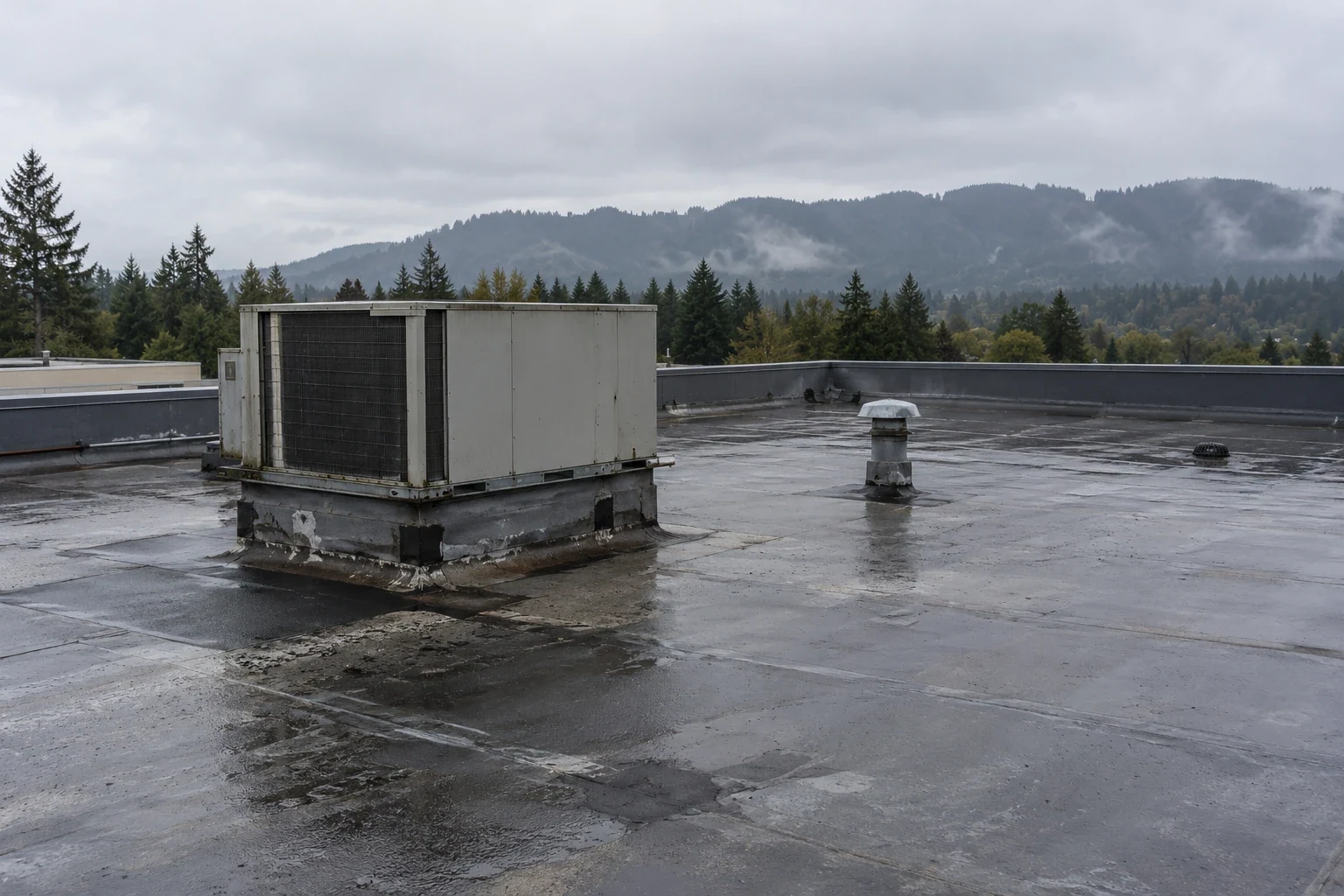
We start by locating the defect within the roof system. A puncture may pass through a membrane and cover board; a loose lap may reflect movement or inadequate bonding; an opening beside a pipe can involve the boot, target patch, counterflashing or the substrate below. We check the surface around the reported symptom and follow the suspected water path toward seams, drains, walls, equipment supports and previous repairs. Inside, staining can help identify timing and affected space, but its location does not establish the entry point above. Where the condition is concealed, a controlled opening or moisture test may be needed before setting the final repair size. The findings should distinguish an isolated failure from repeated defects in the same assembly. We map findings by roof section to show whether the pattern is concentrated or recurring. At an industrial building in Southwest Everett, equipment and service lines can interrupt the membrane field; at a storefront on an Evergreen Way corridor, edge conditions and wall transitions may deserve closer review. Adjacent materials are assessed before the repair boundary is set. A clear diagnosis gives future inspections a reference point.
Reconnect membrane and flashing
Repair materials need to suit the existing membrane, reinforcement, surface condition and exposure. Before installing a patch, we prepare the area according to the system, remove loose or contaminated material where required, and establish a sound bond surface. A patch must extend far enough past the defect to attach to stable membrane, and corners, edges or changes in plane need detailing that will remain tight as the assembly moves. Sealant can protect a properly designed termination, but a bead applied over dirt or standing water is not a substitute for rebuilding failed flashing. If wet insulation, crushed cover board or corrosion is found at the opening, the repair may need to reach the substrate rather than cap the surface. We document removed layers and restore compatible components in order. Metal details are different: fasteners, laps, cleats, seams, coatings and movement joints require a repair appropriate to the metal profile and adjacent roofing. Repair on standing-seam metal is not the same as a patch on a single-ply membrane. For a roof system such as EPDM, TPO, or standing-seam metal, we consider the manufacturer's system requirements without implying a certification or partnership. The completed work should be photographed and described with its materials and limits.
Check the surrounding water route
A repaired opening can remain wet if runoff repeatedly crosses the same detail or collects beside it. We check whether drains and scuppers are open, whether debris or equipment blocks the route, and whether the roof surface directs water toward the intended outlet. Ponding does not automatically mean the membrane failed, but long periods of standing water can expose a repair, seam or penetration to conditions it was not designed to handle. Where the repair touches an outlet, we inspect the bowl, clamping ring, flashing and connection below the surface as far as access allows. A scupper repair also needs to reconnect the membrane at the opening and protect the wall face and metal. At the working waterfront and freight areas, roof runoff may cross long spans before reaching an outlet; tracing that route can explain why a leak appears some distance from the actual defect. We note drainage conditions separately from the membrane repair so an owner can decide whether outlet cleaning, local slope correction or a larger drainage project is also needed. Our drain and scupper service can address those details, while ponding-water evaluation examines repeated standing water. The repair record should not imply that a separate drainage deficiency was corrected unless the scope includes it.
Set access and weather limits
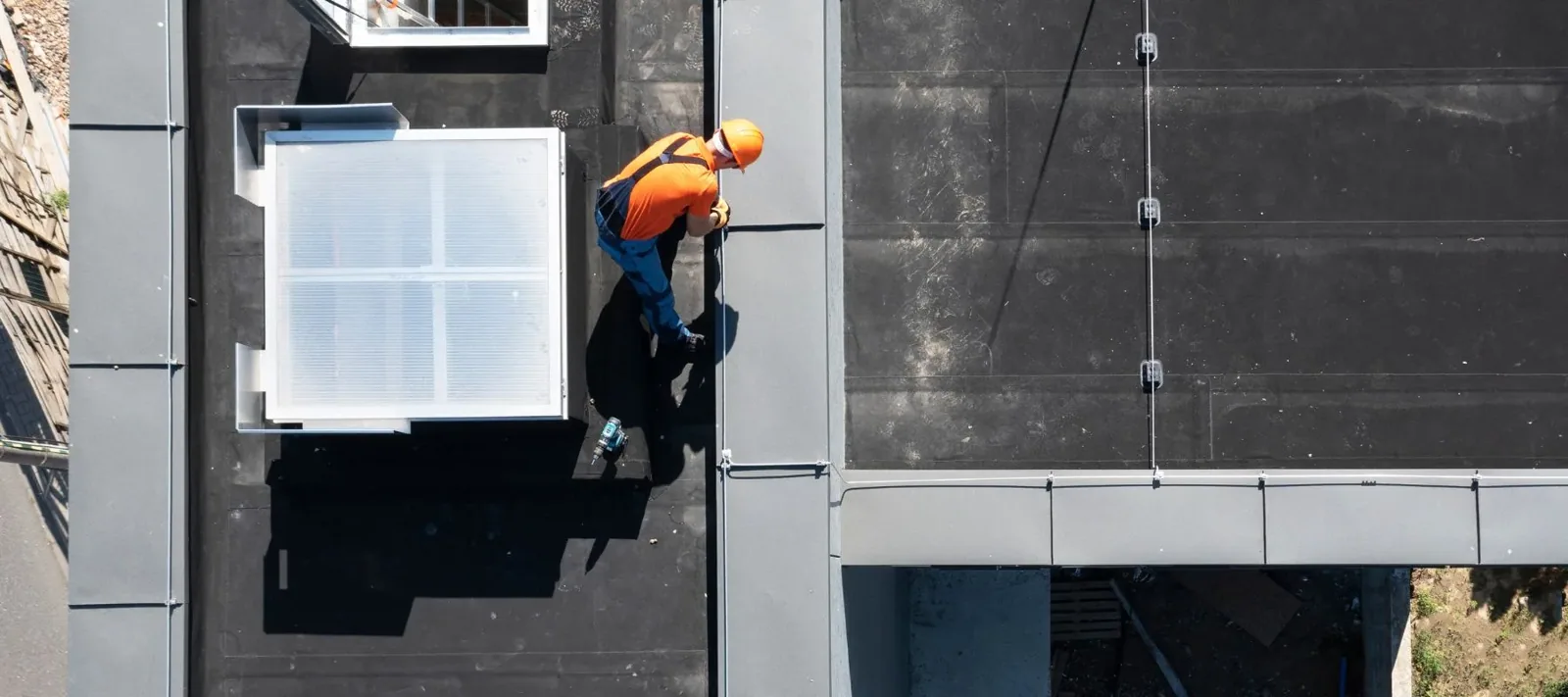
Repair work can often be confined to a small roof zone, but the access plan still needs to protect people, equipment and interior operations. We confirm roof hatch routes, ladder and lift locations, fall-protection requirements, restricted areas, rooftop electrical or mechanical hazards, and how materials will move through the property. For an occupied building, we coordinate any noise, odor, hot-work controls or interior protection before the crew begins. A warehouse near Paine Field may have loading activity and vehicle paths that cannot be obstructed; a commercial building in Lynnwood may require a different delivery and tenant-notice plan. We confirm conditions with the facility contact. Everett's annual normal precipitation is about 40 inches, with November, December and January carrying the wettest monthly normals. The repair window must allow the surface to be dry enough for preparation and bonding, and temporary protection must be secured if conditions change. If a roof is actively admitting water, around-the-clock emergency response can arrange temporary protection before the permanent repair is made. For planned work, maintenance visits can identify open details before they become recurring leaks. Weather and access conditions should be written into the scope, especially when work crosses several roof sections or active operations.
Record the work and its limits
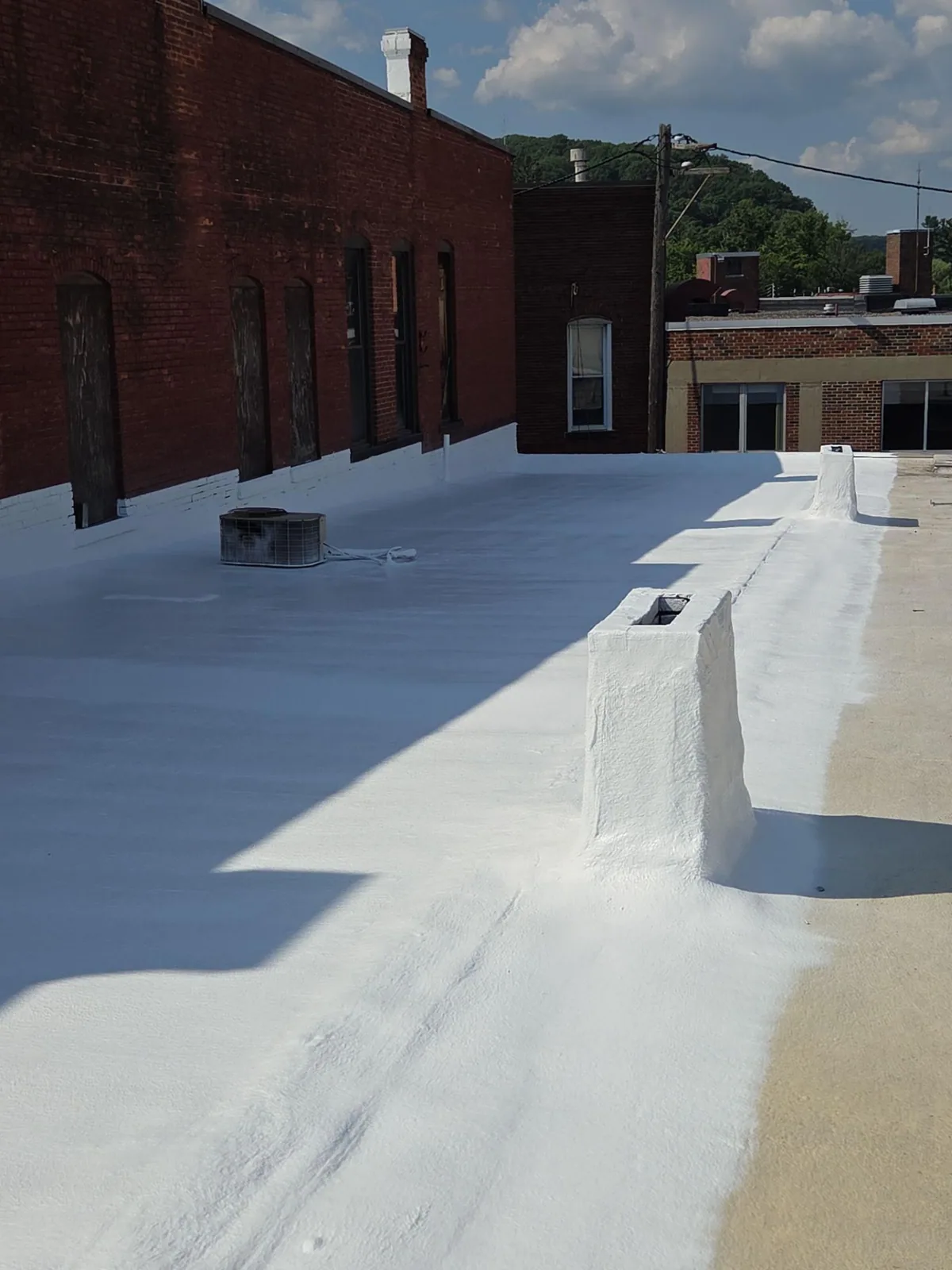
After repair, we document the area, materials, surface preparation, replaced components, and any conditions left for later attention. Photographs should show the repair in context and at close range, so an owner can find it on a future visit without relying on memory. We also note whether the repair was made under dry conditions, whether adjacent materials remained sound, and what kind of follow-up observation is appropriate. That record matters for a portfolio that includes Everett, Marysville and nearby municipalities, because work history should stay attached to the specific property and roof zone. If several repairs return to the same seam, curb or drainage path, the repeated location can help distinguish an isolated failure from a system-level issue. Owners can compare the repair record with a condition report or add the finding to a broader roof asset register. Each document should keep confirmed facts separate from suspected causes. The record states what was corrected, excluded and worth checking again. Schedule service for the Evergreen Way and Casino Road area with the relevant access and roof information ready for review.
Commercial Roofing Questions
Why can a roof leak away from the damaged detail?
Water can travel along insulation, deck flutes, seams or framing before it becomes visible. We trace the likely route and inspect nearby transitions before choosing a patch location.
Can a sealant bead stop a commercial roof leak?
Sometimes it is part of a sound repair, but it cannot replace failed membrane or flashing. We check the bond surface, detail geometry and materials before specifying sealant.
What if the repair area has wet insulation?
The scope may need to open the assembly, remove wet material and rebuild to a stable substrate. We map what was exposed and flag adjacent areas that need testing.
Will you inspect drains during a membrane repair?
We check nearby drainage paths and outlets because runoff can keep a detail under stress. If outlet work is separate, the report identifies it rather than implying it was included.
How do I know whether repeat repairs mean replacement?
Repeated failures at the same detail may call for redesign, while separated local defects may remain repairable. A condition map and repair history help show whether the problem is isolated or broader.
Questions Owners Ask
Why can a roof leak away from the damaged detail?
Water can travel along insulation, deck flutes, seams or framing before it becomes visible. We trace the likely route and inspect nearby transitions before choosing a patch location.
Can a sealant bead stop a commercial roof leak?
Sometimes it is part of a sound repair, but it cannot replace failed membrane or flashing. We check the bond surface, detail geometry and materials before specifying sealant.
What if the repair area has wet insulation?
The scope may need to open the assembly, remove wet material and rebuild to a stable substrate. We map what was exposed and flag adjacent areas that need testing.
Will you inspect drains during a membrane repair?
We check nearby drainage paths and outlets because runoff can keep a detail under stress. If outlet work is separate, the report identifies it rather than implying it was included.
How do I know whether repeat repairs mean replacement?
Repeated failures at the same detail may call for redesign, while separated local defects may remain repairable. A condition map and repair history help show whether the problem is isolated or broader.
Trace the defect before patching
Schedule a commercial roof repair inspection in Everett. We will document the failed detail, adjacent materials, likely water route, and the limits of the proposed correction.
Related Roofing Work
- Commercial Roof Leak Repair
- Commercial Roof Inspection
- EPDM Roofing
- Commercial Roof Drains and Scuppers
- Ponding Water Roof Repair
- Preventive Roof Maintenance
- Commercial Roof Condition Reports
- Commercial Roof Asset Management
Browse every page in Commercial Roofing Services, or request a roof assessment and we will walk the roof with you.
Questions about this roof? Call 555-555-5555.