Commercial Roof Repair, Replacement & Maintenance
Emergency Commercial Roof Repair
Everett's wet season can compress emergency repair time: the temporary closure must drain at the end of the shift and remain inspectable until a permanent bond can be made. An emergency visit begins with the location and timing of the leak, the rooms or equipment at risk, and any electrical or ceiling hazards. We separate immediate containment from a permanent repair because wet surfaces, active runoff, and poor drying conditions can prevent a durable bond. In Everett, rain can persist through the wet season; the local normal totals 40.25 inches annually, with November, January, and December carrying the highest monthly precipitation. That makes a documented temporary condition useful when the roof cannot be safely closed on the first visit. A warehouse near the Port of Everett, an aerospace building around Paine Field, and a mixed-use property in Metro Everett each has different access and occupancy constraints. We confirm those constraints with the site contact, map the suspect water path, and explain what can be secured now versus what needs a return visit. For an active opening, call for commercial roof repair; where the event has affected multiple roof zones, a later inspection can establish the broader condition.
Stabilize the occupied space
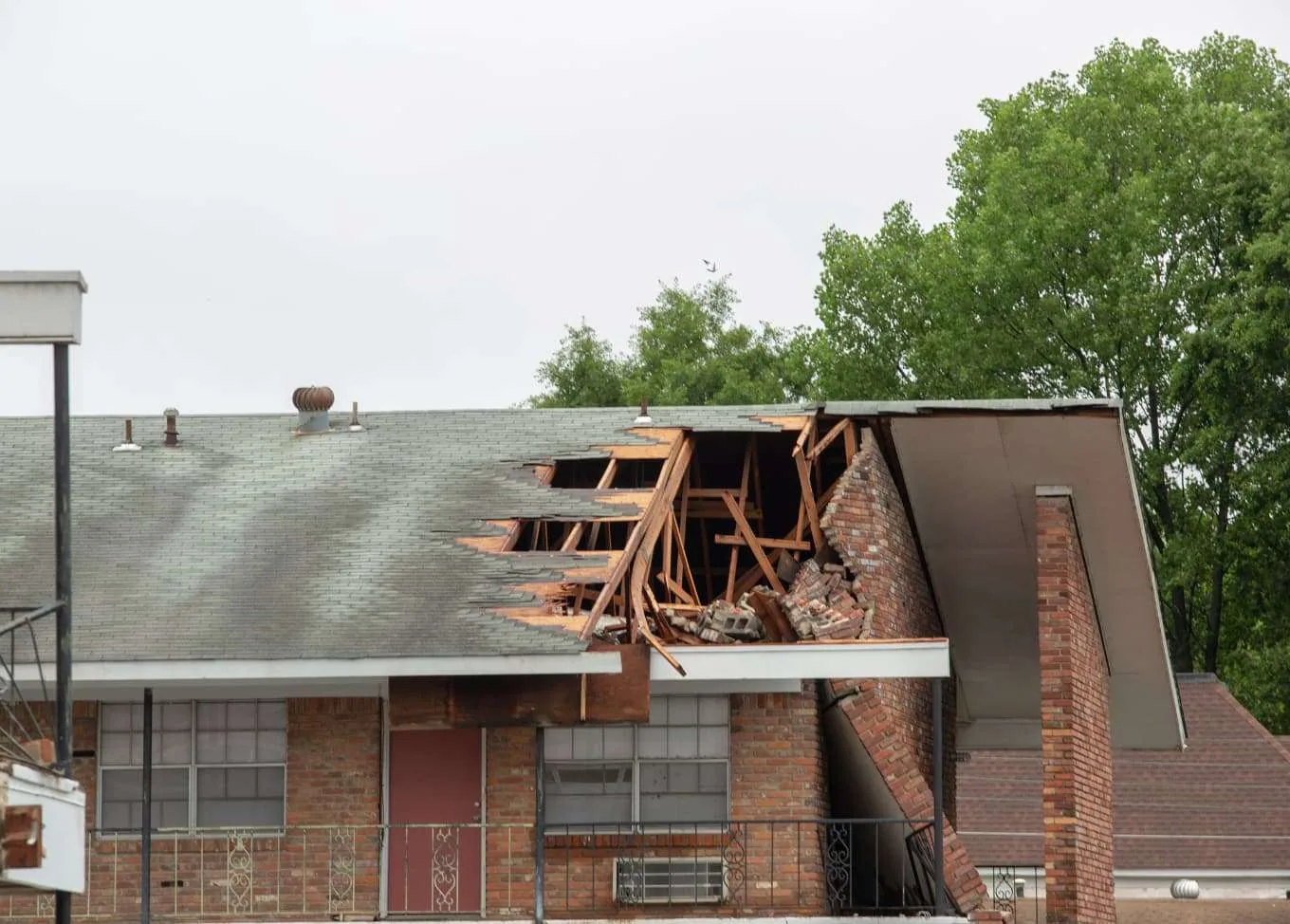
The first decision is whether people can remain in the affected area. Water near lighting, distribution panels, machinery, data equipment, or a suspended ceiling calls for controlled access before anyone moves materials or opens the ceiling. We ask the facility representative to identify shutoff procedures and restricted rooms, then place protection only where it can be supported safely. Catchment, temporary coverings, and relocation of vulnerable contents reduce exposure but do not establish where the water entered. If ceiling material is saturated or sagging, the building team should control access rather than wait below it for a roof crew to arrive.
We record the room, time, active drip pattern, weather, and any immediate protection. That record helps the roof inspection connect a visible symptom to a roof zone without treating the interior stain as the leak location. In a working plant or distribution building, we also identify operating equipment and travel paths that cannot be blocked. Emergency work is safer when a property contact can arrange roof access, escort crews through controlled areas, and coordinate lift or ladder placement before the inspection begins.
Find a safe roof route
Once the interior exposure is controlled, the crew confirms the access point, roof edge protection, ladder or hatch condition, weather, and walking surface. A roof that is wet, contaminated, or near energized equipment may not be safe to cross. We set boundaries around fragile skylights and unfamiliar surfaces, and we avoid stepping on unsupported components or placing a temporary load where the deck has not been checked. If conditions prevent a safe approach to the suspected area, the scope should say so and identify the next safe window instead of implying that an unseen detail was repaired.
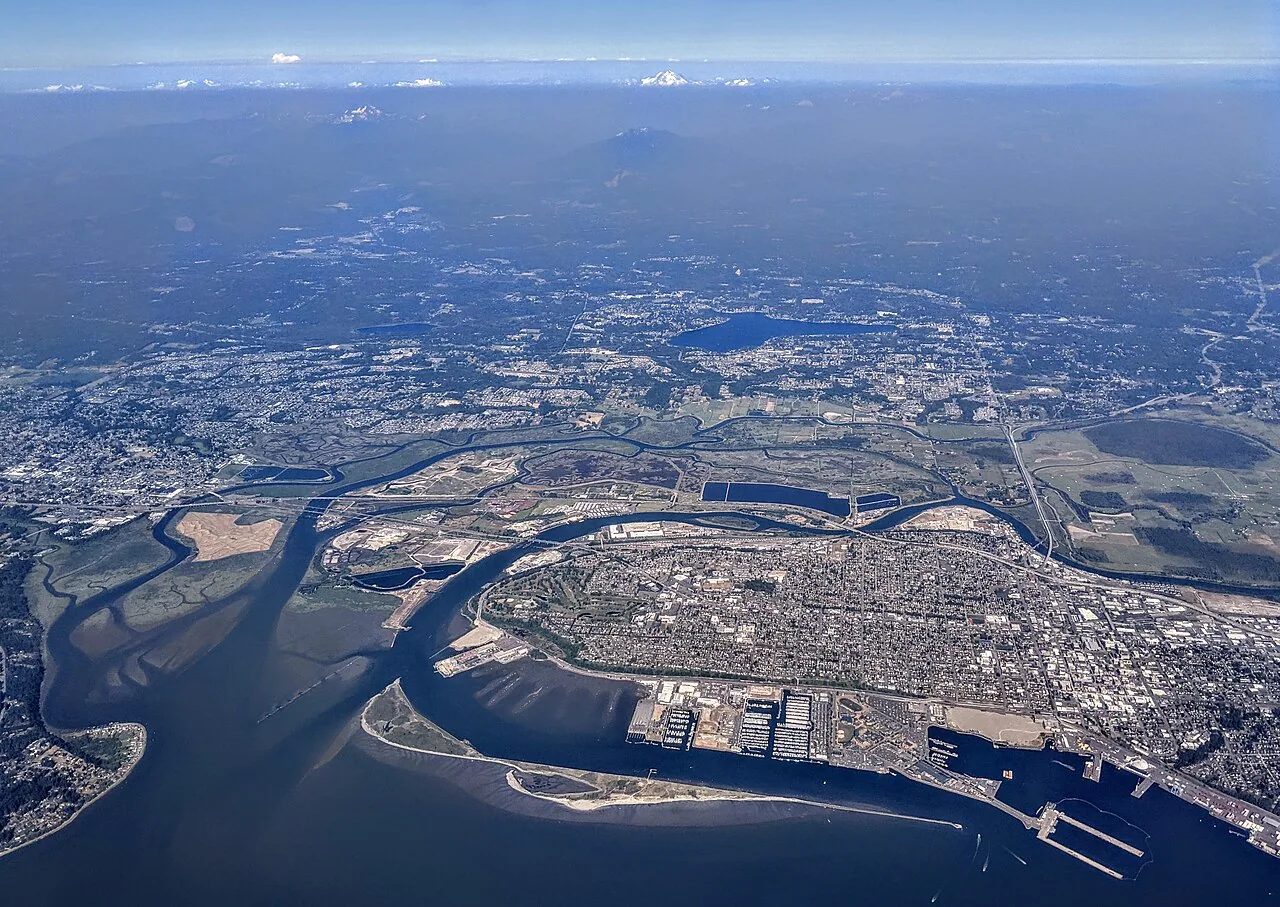
Everett's industrial and aviation building stock makes access planning a practical part of emergency response. The Port's marine-terminal area contains cargo and rail-served operations, while Paine Field supports hangars, maintenance businesses, and airport facilities. Around either operating cluster, vehicle movements, tenant rules, and equipment staging can affect where a crew enters. We confirm those property-specific rules with management, then select a route that protects the building and the people using it. A waterfront service-area inspection may involve a different access sequence from a Paine Field area facility; the actual roof determines the work method.
Limit the water path
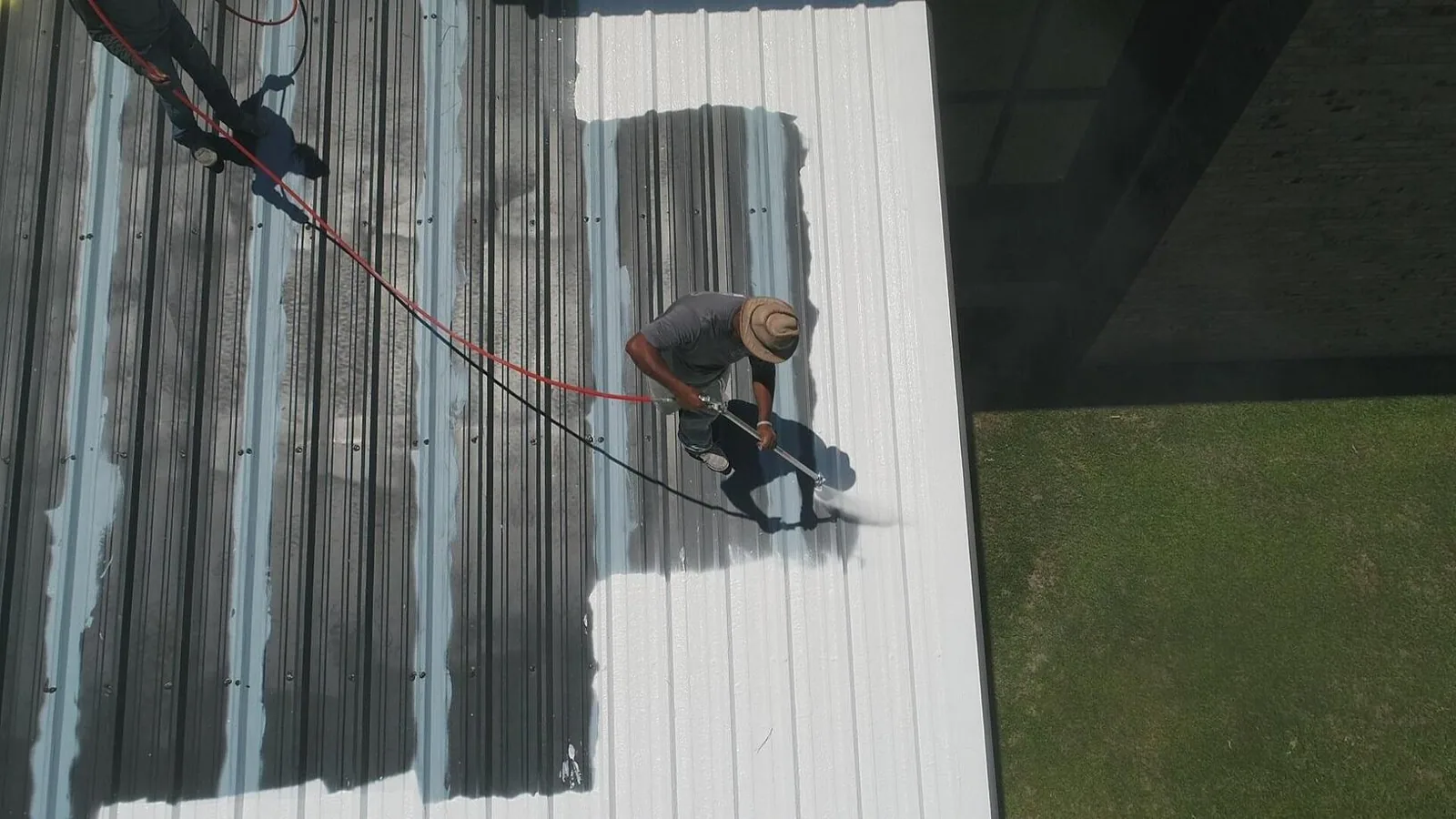
On the roof, we look for the condition that can admit water and for nearby features that may direct it toward the leak. The inspection can include seams, membrane laps, pipe boots, curbs, wall transitions, drains, overflow outlets, metal edges, and earlier patches. Wind-driven rain may enter at one detail and travel beneath the membrane or along a deck flute before reaching an interior opening. A temporary dry-in should cover the suspected exposure without blocking drainage or adding unsupported weight. We identify its limits, how it is attached, and what weather or movement requires another check.
When water is still moving, the crew may need to protect more than one vulnerable detail while keeping the drainage plane open. Debris removal, a temporary cover, and a permanent flashing repair are separate actions; one should not be reported as another. If the roof is too wet for adhesive or seam work, we document the installation limit and schedule the permanent correction for a compatible surface and drying window. A clear wind-damage review can help distinguish a displaced edge or flashing from a puncture or pre-existing seam issue.
Separate temporary work from repair
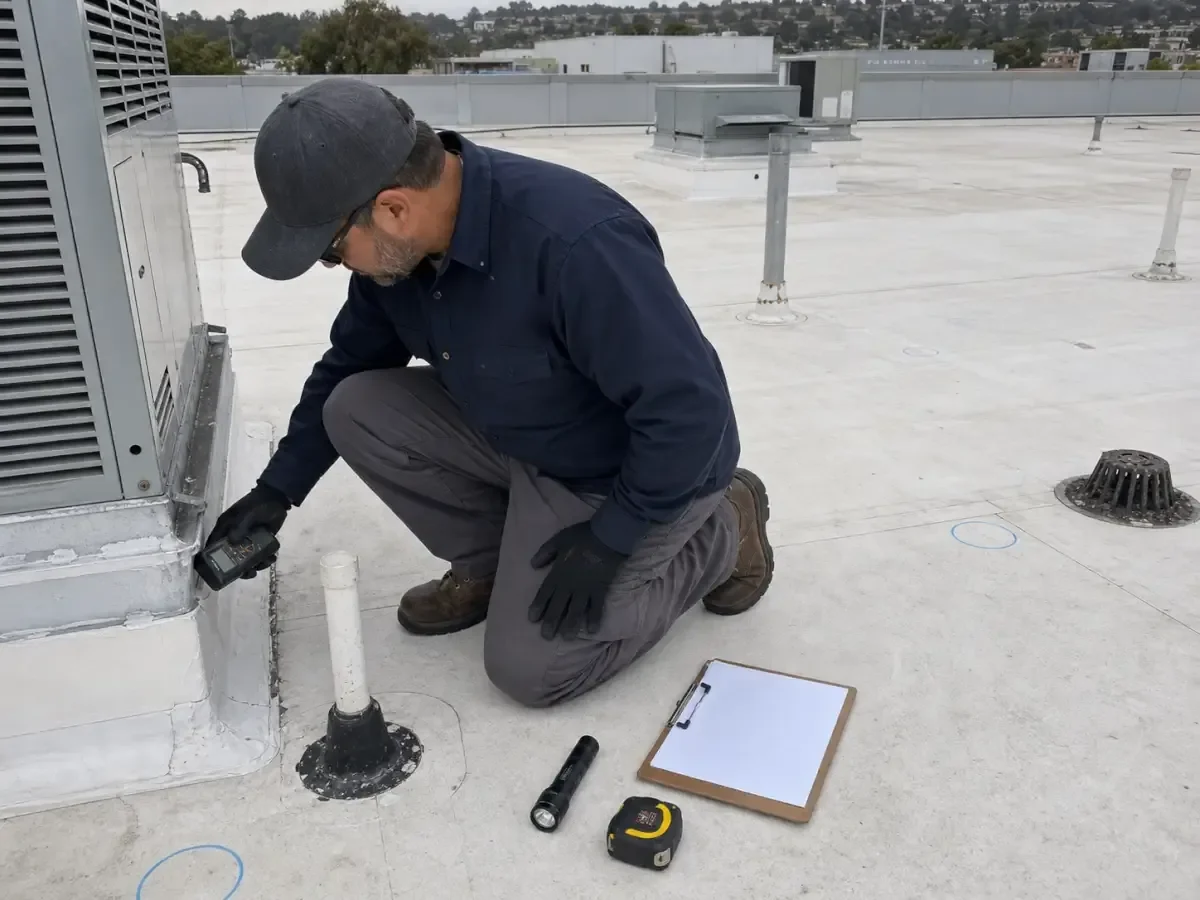
Emergency protection buys time; it does not prove the assembly is dry or the original opening is closed. We label each temporary measure, note the affected roof zone, photograph the edge and adjacent details, and state what remains unverified. If insulation or deck material may be wet, we avoid covering a broad area without first defining the limits of the known condition. Trapped moisture can continue to affect the assembly after the visible drip stops, so the return scope may include targeted probing, selective removal, or a moisture survey.
The permanent repair should match the material and geometry of the failed detail. A puncture, a separated seam, a split pipe boot, and an open coping joint call for different preparation and compatible materials. We explain which layer is being repaired, whether underlying material must be removed, and whether the proposed correction reaches stable substrate. For a larger roof with recurring symptoms, owners can use a condition report to keep emergency calls tied to dated observations and repair zones, rather than relying on the memory of a temporary visit.
Plan the return visit
A useful emergency closeout says what was found, what was protected, what was not accessible, and what event should trigger another inspection. We give the property contact a short list of interior areas to watch and identify when the temporary cover should be checked. Where weather, equipment, tenant access, or material curing prevents final work, those limits belong in the record. The crew can then return with the correct materials, access plan, and people instead of repeating initial discovery.
For a business operating around the Port, Paine Field, or Metro Everett, downtime and access can be as important as the repair itself. Snohomish County's manufacturing employment base and Everett's transportation and industrial uses mean some roofs cover active, high-value operations. We coordinate with the facility contact about production windows and protection of inventory, then complete the permanent work when the roof surface and site conditions allow it. Schedule roof asset management for recurring records across buildings, or request service in Metro Everett when the immediate response is at a mixed-use or commercial property. The closeout should leave the owner with a repair boundary, evidence, and the next check, not a promise that unrelated roof areas are sound.
Commercial Roofing Questions
How can we prepare for an emergency visit?
Keep people away from wet ceilings and electrical hazards, protect contents only when safe, and note the room, time, and weather. Arrange roof access and identify a site contact.
Can a temporary dry-in stop the leak permanently?
It can reduce immediate exposure, but it is not proof of a lasting repair. The permanent scope depends on the failed detail, surface condition, and whether insulation or deck material is wet.
Will you work during active rain?
Only when roof access and the proposed protection can be performed safely. Wet surfaces can prevent a reliable bond, so the record should distinguish emergency containment from work deferred to a drying window.
What information helps an emergency dispatch?
Share the affected rooms, whether water is actively entering, roof access details, sensitive equipment below, and any previous repair. That lets the crew plan protection and safe entry.
How do we know the roof is dry after the response?
A stopped drip is not a moisture map. The closeout identifies the protected zone and any unverified materials; targeted inspection or a moisture survey can define the remaining boundary.
Questions Owners Ask
How can we prepare for an emergency visit?
Keep people away from wet ceilings and electrical hazards, protect contents only when safe, and note the room, time, and weather. Arrange roof access and identify a site contact.
Can a temporary dry-in stop the leak permanently?
It can reduce immediate exposure, but it is not proof of a lasting repair. The permanent scope depends on the failed detail, surface condition, and whether insulation or deck material is wet.
Will you work during active rain?
Only when roof access and the proposed protection can be performed safely. Wet surfaces can prevent a reliable bond, so the record should distinguish emergency containment from work deferred to a drying window.
What information helps an emergency dispatch?
Share the affected rooms, whether water is actively entering, roof access details, sensitive equipment below, and any previous repair. That lets the crew plan protection and safe entry.
How do we know the roof is dry after the response?
A stopped drip is not a moisture map. The closeout identifies the protected zone and any unverified materials; targeted inspection or a moisture survey can define the remaining boundary.
Contain the leak, then define the repair
Request an emergency commercial roof visit in Everett. We will document the active condition, protect the exposed area where safe, and state what remains for permanent correction.
Related Roofing Work
- Commercial Roof Repair
- Commercial Roof Inspection
- Everett Industrial Waterfront
- Paine Field and Boeing Manufacturing Center
- Wind Damage Roof Repair
- Commercial Roof Condition Reports
- Commercial Roof Asset Management
- Metro Everett
Browse every page in Commercial Roofing Services, or request a roof assessment and we will walk the roof with you.
Questions about this roof? Call 555-555-5555.