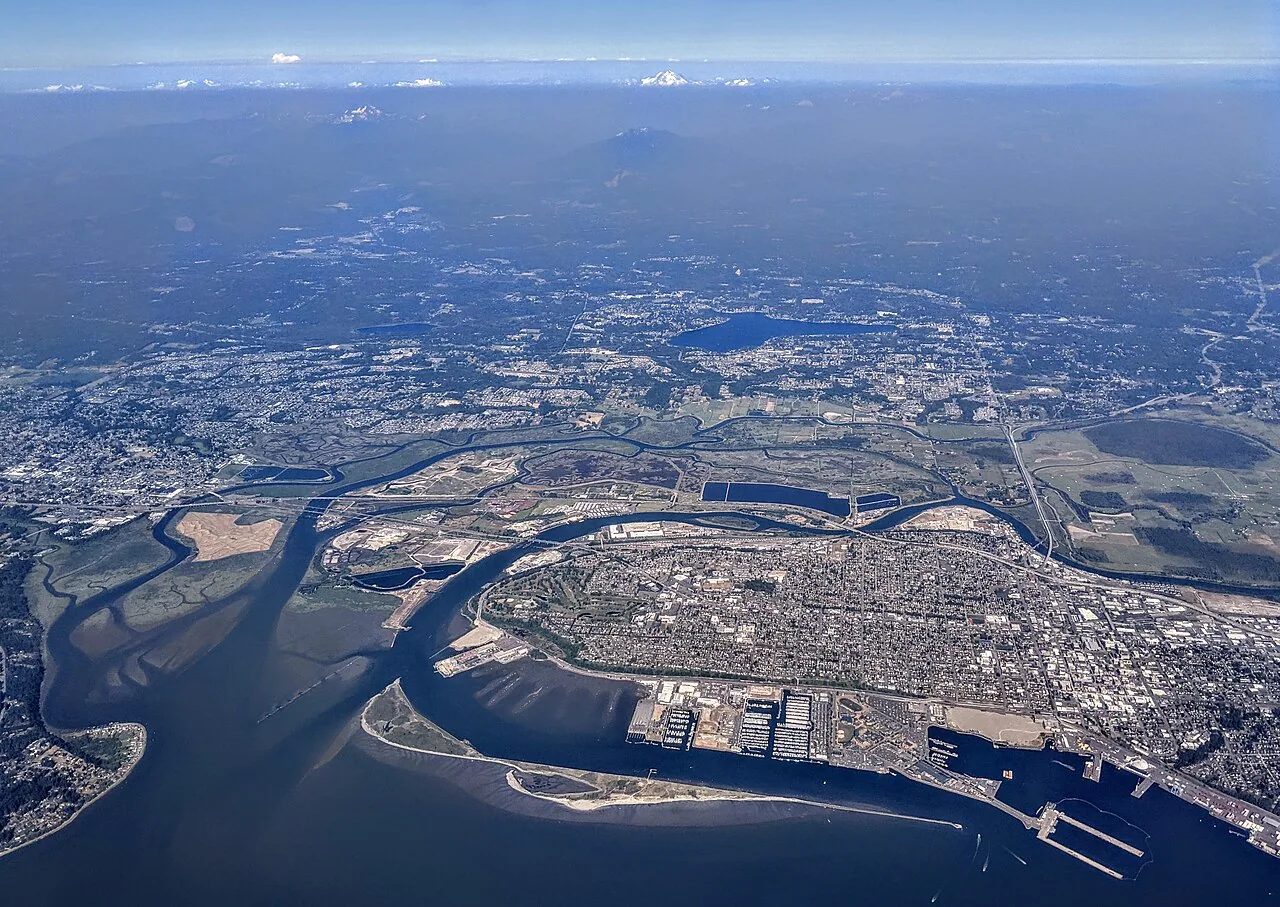

Commercial Roof Repair, Replacement & Maintenance
Storm Damage Roof Repair in Everett, WA
A lifted metal edge after a wind event is a visible change; the repair decision depends on whether fasteners, membrane termination, and the substrate beneath them still hold. Storm response starts with safe access and a record of the reported weather, interior symptoms, debris, and affected roof zones. We compare what the owner observed with physical evidence on the building, then separate new damage from earlier wear or repairs when the facts allow. Everett's late-fall and winter rain makes a dependable dry-in window important, so a storm assessment also checks whether water has moved through the damaged detail. Snow is occasional rather than a defining local condition, but freezing nights can affect exposed transitions and drainage. Around the Port of Everett, Paine Field, and Metro Everett, facilities range from industrial and aviation properties to mixed-use commercial buildings, each with different access and operating limits. A storm report should show the roof condition, evidence, and repair boundary without assuming a claim outcome. For an active opening, request emergency protection; when a suspected entry point is unclear, schedule leak tracing.
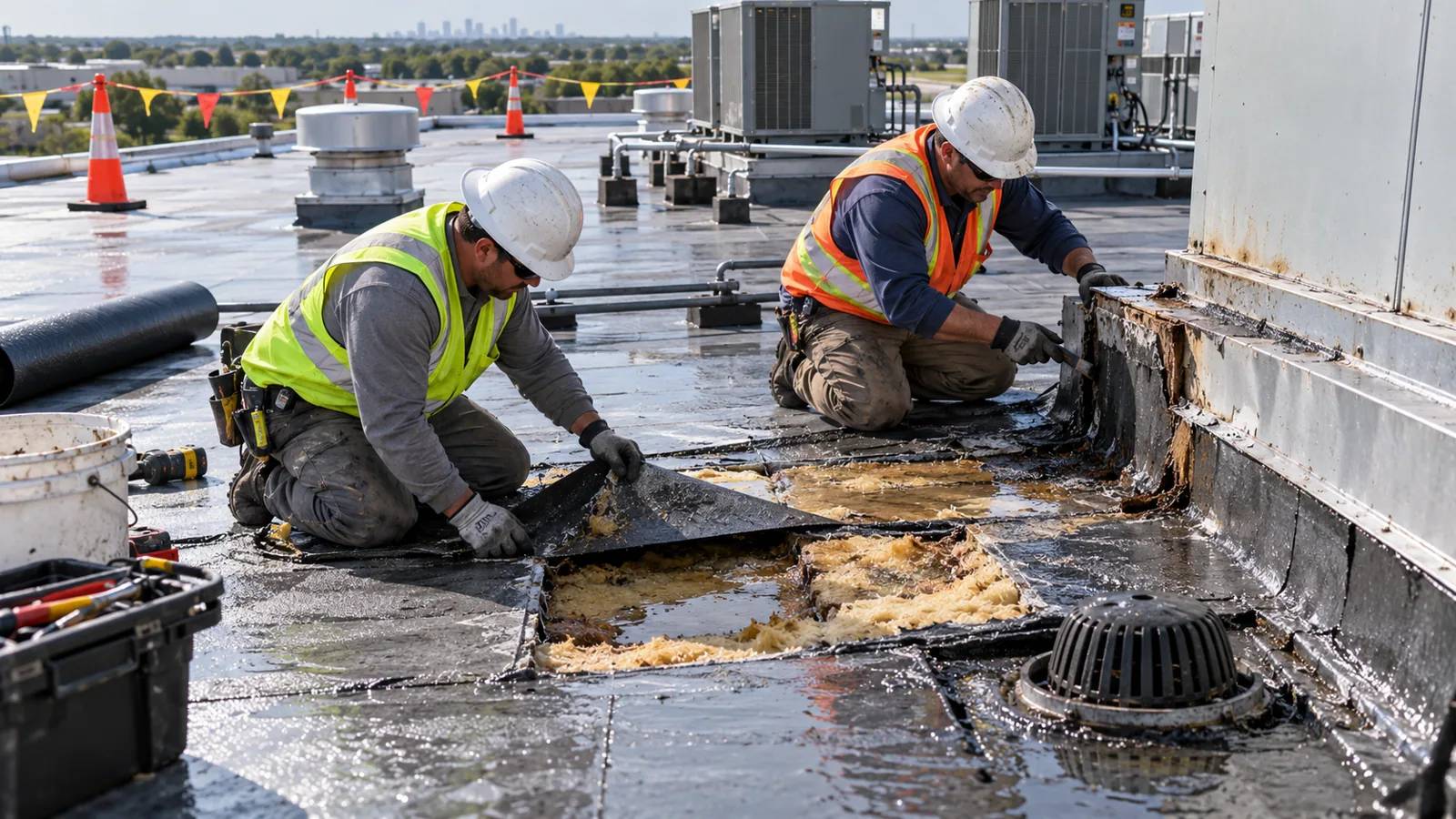
Make the site safe before surveying
After wind, falling debris, or heavy rain, the first question is whether the roof and affected rooms can be accessed safely. We review water near electrical systems, ceiling movement, loose metal, unstable rooftop equipment, and debris that could shift underfoot. A roof that remains wet or has displaced components may need an interior control zone and temporary protection before a full walk. The report states which areas were safe to reach and which require a return when conditions improve.
Facility staff can identify when the event began, where water appeared, and whether the symptom changed during the storm. Those notes help prioritize the first inspection but do not establish cause. We document active drips, ceiling damage, and equipment exposure separately from rooftop findings. Where ongoing operations continue, a site contact helps define vehicle routes, restricted areas, and safe material staging so emergency work does not interfere with critical building use.
Compare the reported event with roof evidence
On the roof, we inspect likely exposure points: perimeter metal, corners, terminations, seams, penetrations, curbs, skylights, drains, and previous repairs. Wind can move edge components or place pressure on a loose detail; debris can puncture a membrane; rain can expose an opening that was not visible in dry conditions. Each observation needs a location, photograph, and description of what changed. A mark, stain, or loose surface granule alone does not identify the event or prove that the entire roof needs repair.
We look for fresh displacement, torn or lifted material, impact damage, and a water path that connects to an interior report. If the roof has earlier patches or corrosion, we note those conditions without assigning them to the recent weather absent supporting evidence. Everett's industrial waterfront and aerospace building stock includes long roof runs, equipment, and varied transitions, so the inspection records the particular assembly and zone rather than applying one generic damage description to the whole property.
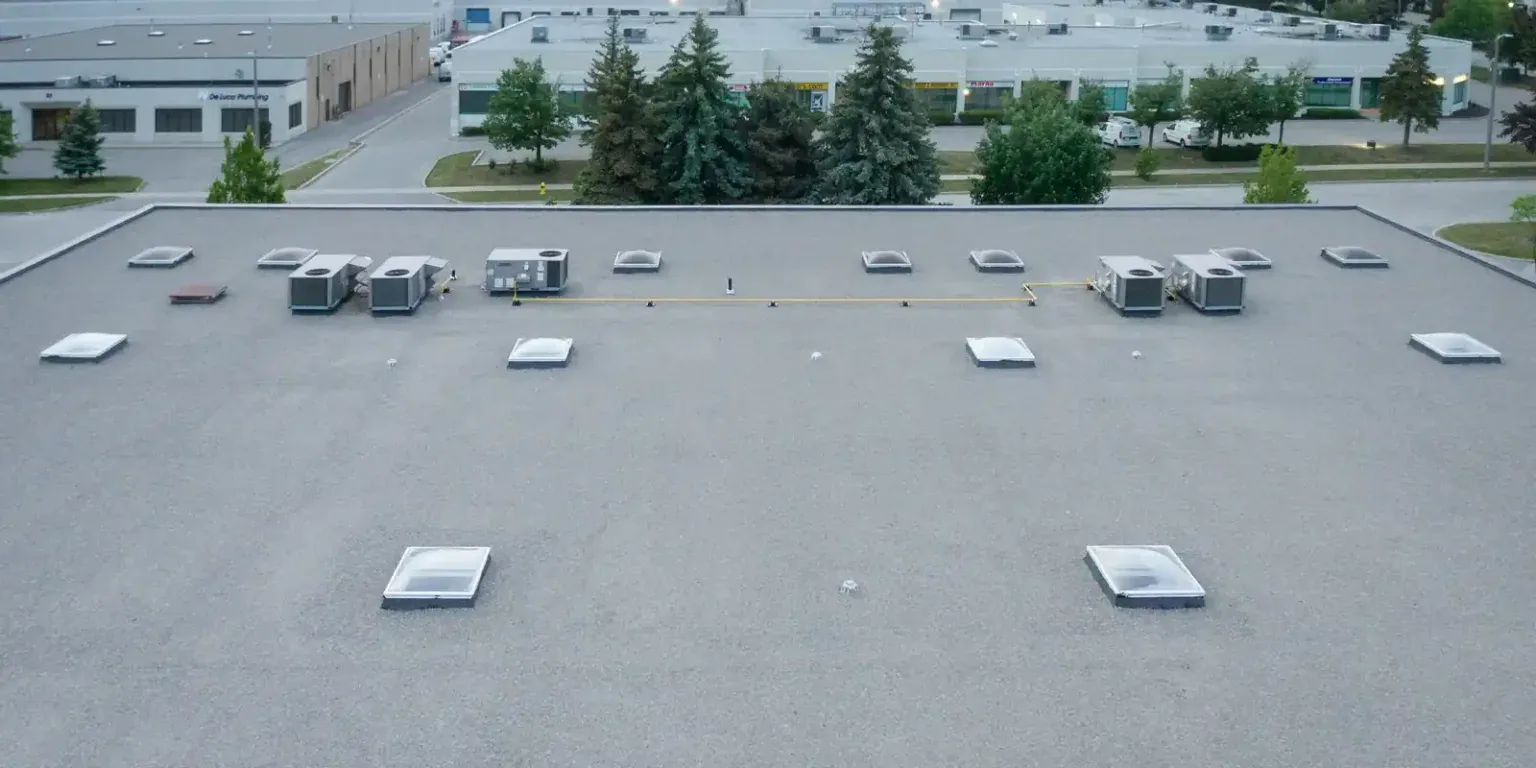
Trace water through the assembly
When a storm report includes a leak, the visible ceiling point may not align with the roof opening. Water can travel along a deck, insulation joint, framing member, or equipment support before it appears indoors. We follow the drainage plane from the symptom toward seams, curbs, wall transitions, and outlets, then identify whether the route is confirmed or remains a working hypothesis. Targeted probing or an opening may be needed when the membrane looks intact but the interior evidence persists.
Rain exposure matters in Everett because the local normal includes sustained wet-season precipitation. A displaced edge can admit water during wind-driven rain, while blocked drainage can prolong wetting after the weather passes. We distinguish an active entry detail from a condition that only warrants monitoring. A wind damage assessment can record displaced material and test attachment; a ponding review addresses retained water and outlet behavior as separate mechanisms.
Control exposure without hiding damage
Temporary protection should reduce active water entry while preserving the evidence needed for permanent repair. We select a dry-in method that suits the surface, wind exposure, roof geometry, and time before the return visit. A temporary cover should not block drains, load a weak deck, or trap water beneath an unstable layer. We photograph its edges and note the area it protects, how it is secured, and what weather or movement calls for another check.
If the surface is wet or temperatures prevent a reliable bond, the crew records that limitation and schedules permanent work for a suitable window. A tarp or sealant bead is not treated as a rebuilt flashing or secured membrane termination. For a building near the Port, freight, marine, and rail activity can affect access; around Paine Field, operating tenants and equipment may constrain staging. Those are coordination needs, while the repair method remains tied to the actual damaged roof detail.
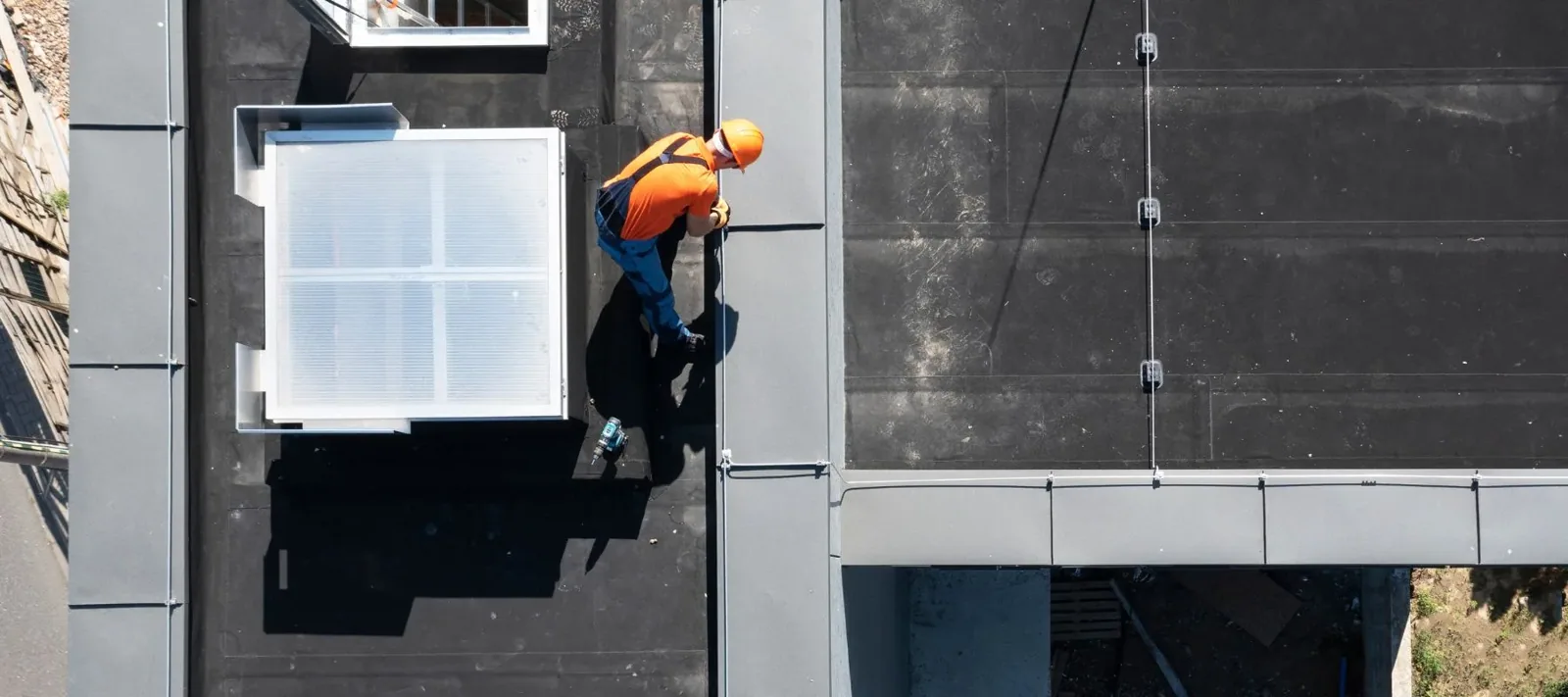
Define repair from the affected detail
The permanent scope identifies the layer and transition that failed. A puncture may need compatible patching after cleaning; a lifted perimeter may require resetting metal and restoring attachment; a damaged curb flashing may require removal and rebuilding around the penetration. If moisture reached insulation or deck, selective removal can be necessary before the opening is closed. The proposed repair describes preparation, material tie-in, and any adjacent condition that remains outside the boundary.
Storm findings can also reveal older deterioration or a broader drainage problem. We separate new, event-related evidence from pre-existing conditions when the inspection can support that distinction, and we label uncertainty when it cannot. Owners can compare a localized repair scope with a broader inspection when several zones show symptoms. If the assessment is being assembled for a claim, a claim documentation review can organize dated photos and repair evidence.
Keep the evidence usable
A storm record should connect the reported time, weather, interior symptom, roof location, and observed change. We label photographs by zone and explain whether the conclusion is confirmed, probable, or unresolved. Repair invoices, temporary work, and later observations should remain connected to the same roof area. This lets an owner compare the state before and after correction without treating one event report as proof about unrelated sections.
For properties supporting trade or industrial operations, downtime and access windows are part of the repair sequence. Snohomish County's economy includes international trade and Port exports alongside Everett aerospace, freight, and maritime activity. Coordinate safe entry and work timing with the facility contact. We coordinate with the facility contact on safe entry and work timing, then keep those logistics separate from the technical finding. A condition report can preserve the evidence and roof asset management can track follow-up across a portfolio. Request an Everett storm assessment with the affected room, event timing, and prior roof history so the inspection begins with the right area.
Commercial Roofing Questions
Does every loose edge mean the storm damaged the roof?
Not by itself. We look for displacement, attachment failure, fresh damage, and a path connecting the condition to the reported event, while recording uncertainty.
Can temporary protection be installed during rain?
Only when roof access and the method are safe and suitable. A wet surface may prevent lasting repair, so the record separates dry-in work from the permanent correction.
What should we document after a storm?
Record the time, affected rooms, active water, visible debris, and any temporary work. Photos from below can help direct the roof inspection but do not replace it.
Can the inspection distinguish new damage from old wear?
It can when physical evidence and prior records support that distinction. When they do not, the report identifies what is known and leaves causation unresolved.
What if water appeared but no opening is visible?
We trace the likely water path across seams, penetrations, transitions, and drainage. Targeted testing may be needed where the membrane looks intact.
Questions Owners Ask
Does every loose edge mean the storm damaged the roof?
Not by itself. We look for displacement, attachment failure, fresh damage, and a path connecting the condition to the reported event, while recording uncertainty.
Can temporary protection be installed during rain?
Only when roof access and the method are safe and suitable. A wet surface may prevent lasting repair, so the record separates dry-in work from the permanent correction.
What should we document after a storm?
Record the time, affected rooms, active water, visible debris, and any temporary work. Photos from below can help direct the roof inspection but do not replace it.
Can the inspection distinguish new damage from old wear?
It can when physical evidence and prior records support that distinction. When they do not, the report identifies what is known and leaves causation unresolved.
What if water appeared but no opening is visible?
We trace the likely water path across seams, penetrations, transitions, and drainage. Targeted testing may be needed where the membrane looks intact.
Document the damage before selecting repairs
Schedule an Everett commercial storm assessment. We will connect the reported event to roof evidence, note access limits, and define safe temporary and permanent work.
Related Roofing Work
- Emergency Commercial Roof Repair
- Commercial Roof Leak Repair
- Everett Industrial Waterfront
- Wind Damage Roof Repair
- Ponding Water Roof Repair
- Commercial Roof Repair
- Commercial Roof Inspection
- Roof Insurance Claim Assistance
Browse every page in Commercial Roofing Services, or request a roof assessment and we will walk the roof with you.
Questions about this roof? Call 555-555-5555.