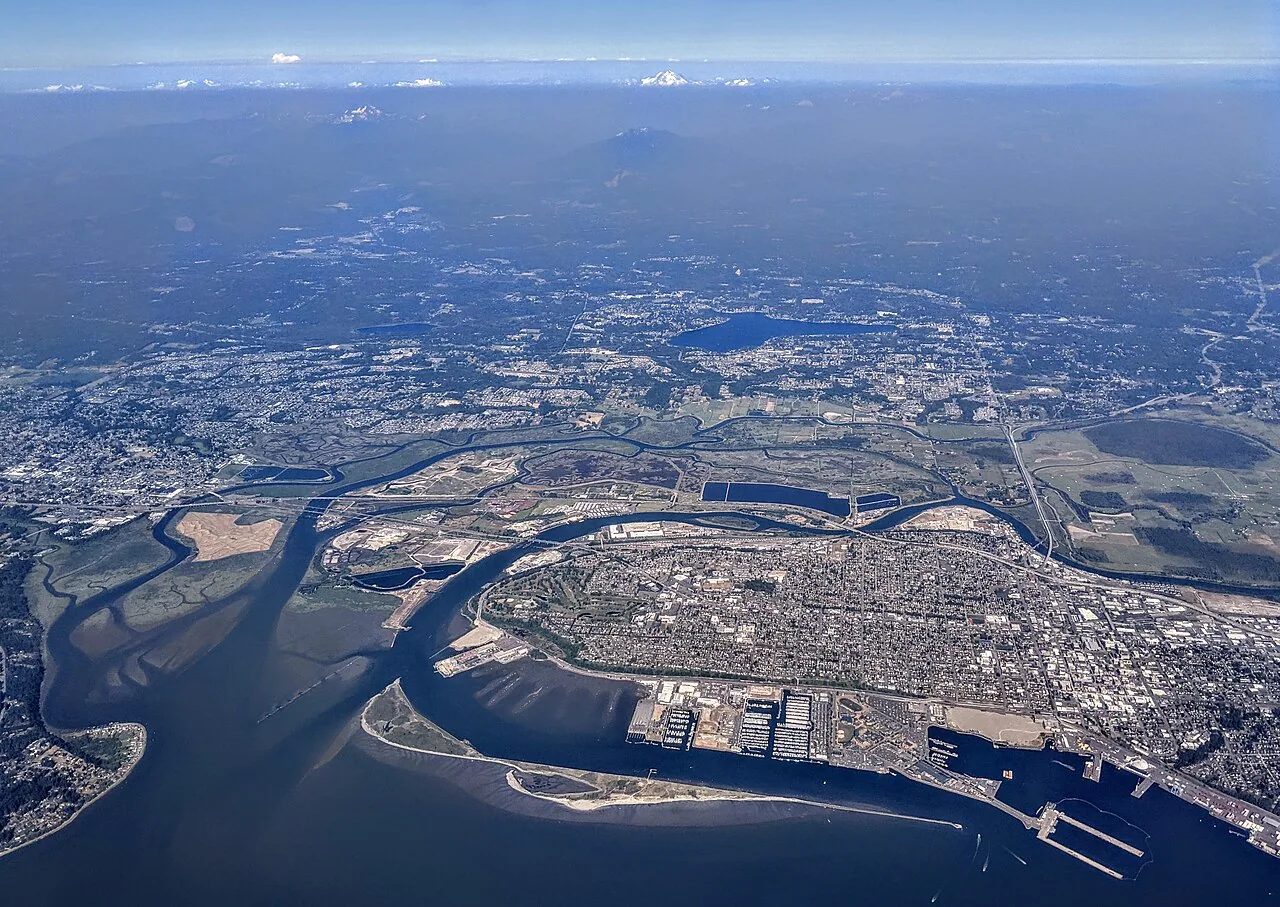

Commercial Roof Repair, Replacement & Maintenance
Ponding Water Roof Repair in Everett, WA
A shallow pool that remains after surrounding areas have drained points to a roof condition worth measuring, not an automatic replacement call. We locate the low area, check the outlet and overflow route, and look for membrane stress, open seams, or moisture beneath the surface. Everett receives 40.25 inches of precipitation in the long-term annual normal, with wet months in late fall and winter, so drainage performance is a useful inspection priority. The weather statistic does not tell us whether one roof is ponding. A roof inspection maps the field condition, and flashing evaluation can separate a perimeter leak from standing water in the roof field.
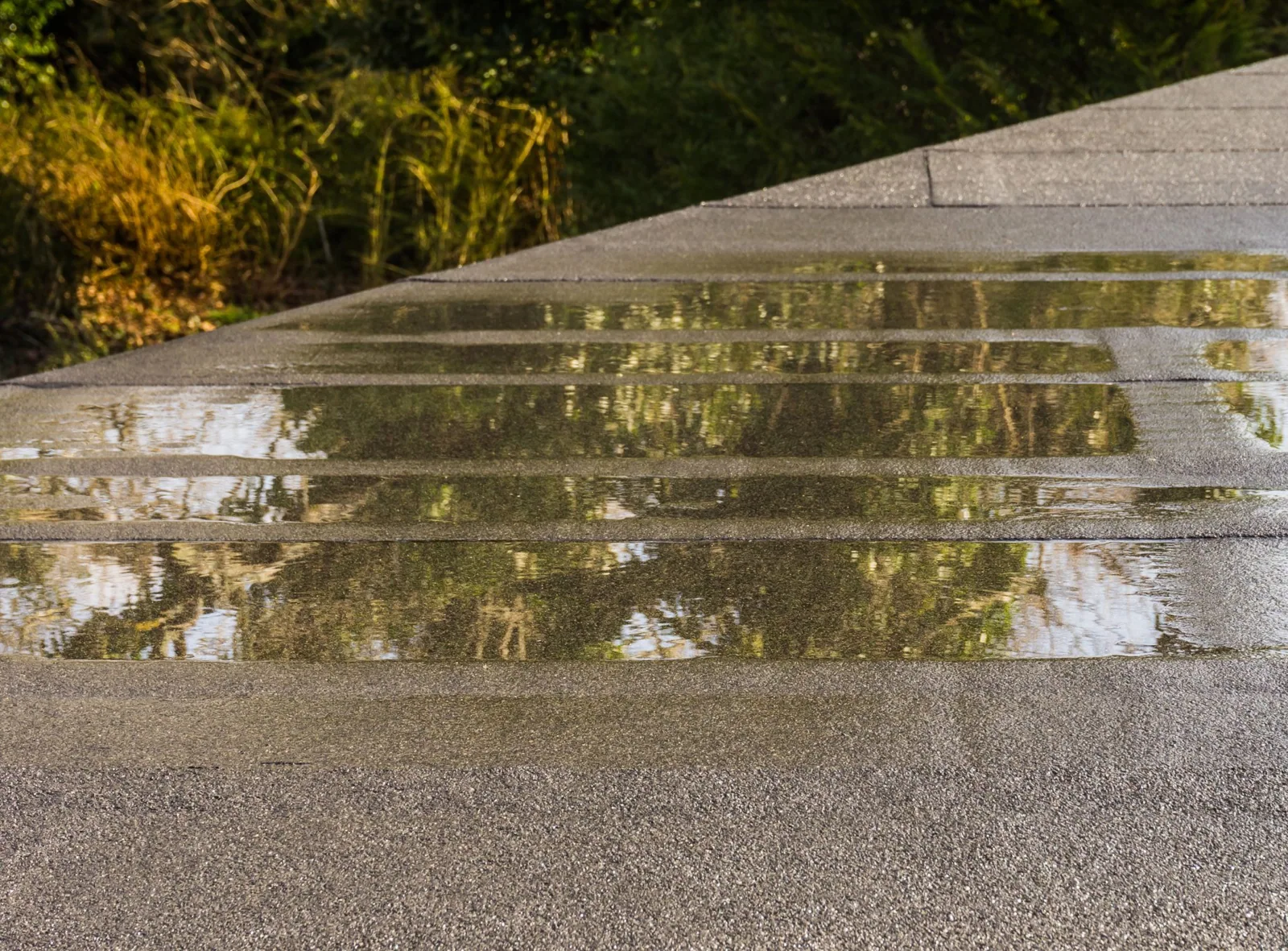
Measure the low area and follow the drainage plane
First note where the water sits, how broad the area is, how long it remains after rain, and whether it touches a seam, curb, wall, or drain. A roof plan can show whether the depression lines up with a deck span, addition, tapered insulation transition, or an outlet path. We check accessible drains and scuppers for debris or damage, then record the apparent direction of flow. Surface water alone does not establish a structural problem or the cause of the depression.
If the owner has earlier photos taken after rain, comparison may show whether the pool is new, persistent, or shifting. We avoid using a single dry-day inspection to infer how much water accumulated. An outlet inspection can identify maintenance needs; where the roof shape itself appears to hold water, a measured elevation survey or design review may be needed before proposing new slope. Any correction should address the route to discharge, not simply cover the visible low point.
Check drains, scuppers, and overflow paths
A strainer clogged with leaves is different from a drain set too high, a damaged bowl, or an undersized system. We record what is visible, verify whether water can reach the outlet, and note any overflow path that appears obstructed. On a roof with internal drains, check the bowl and surrounding membrane transition. At a scupper, the opening and exterior discharge should be considered together. If safe access does not permit clearing, the report states that the outlet remains untested.
Everett's wet season includes November, January, and December. Regular rain can reveal a slow outlet or uneven drainage, while freeze-thaw exposure can affect a trapped water path in colder intervals. Those conditions inform timing; they do not prove that debris or ice caused a particular leak. A seam repair may be needed at a failed drain detail, while the maintenance action remains separately described. The owner can then authorize cleaning, repair, or a broader drainage review on its own terms.
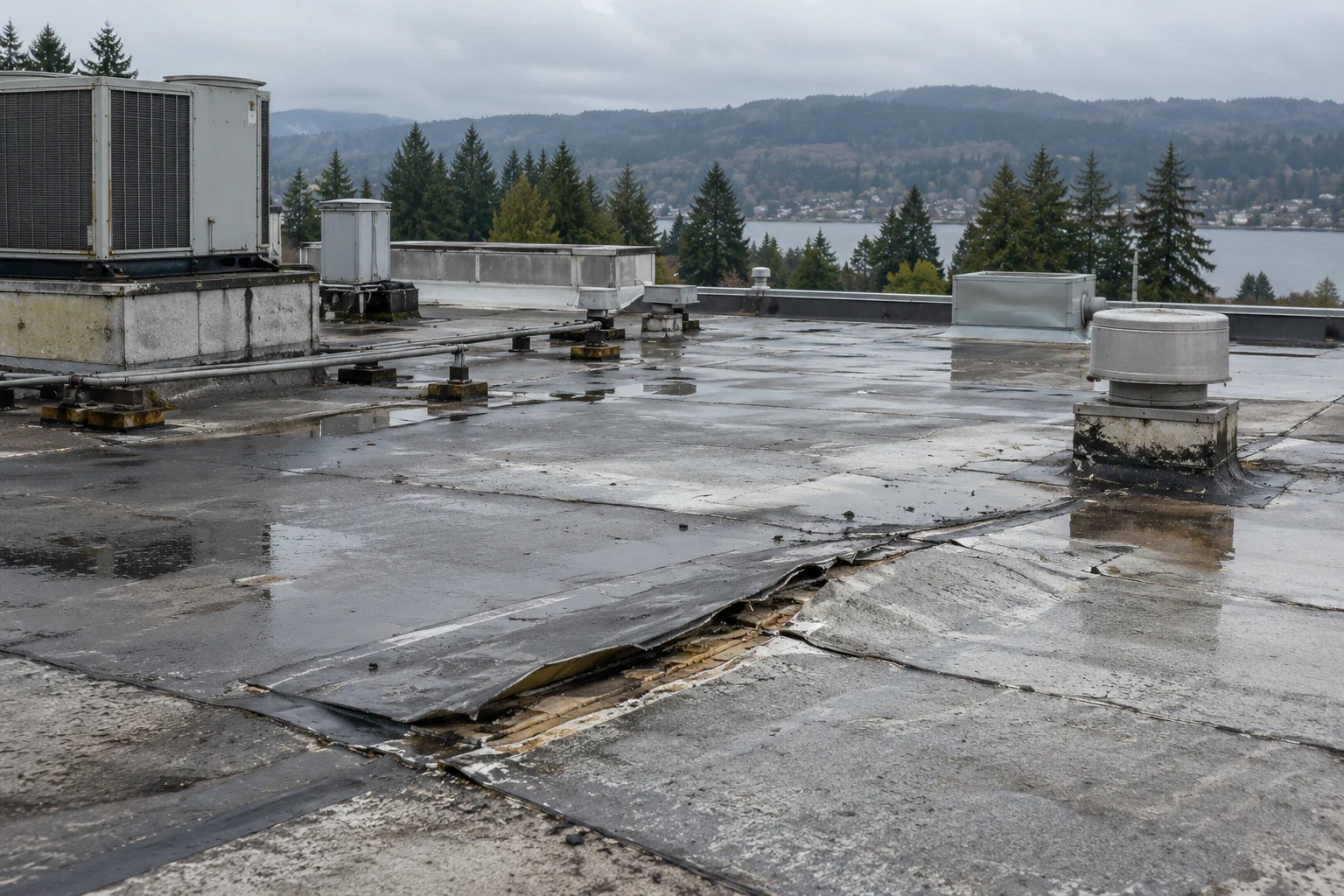
Distinguish water depth from deck movement
Deflection in the roof deck can contribute to a low spot, but a pond does not by itself establish a structural failure. We note whether the surface depression appears to follow a structural bay, whether the membrane shows stress, and whether nearby interior finishes have changed. Any concern about load capacity or framing should go to a qualified structural professional. The roofing scope can document the observed roof surface and avoid presenting a structural conclusion that the inspection cannot support.
Additional roof layers, compressed insulation, repairs, and an uneven substrate can also alter local drainage. If replacement or recover work is being considered, verify the existing assembly and the condition below before adding material. A built-up assembly review may be relevant where that system is confirmed; other systems need their own details. We identify the test needed to resolve uncertainty and avoid treating a product choice as a drainage fix when the low area remains.
Test materials before extending the repair
Water on the surface and water inside the assembly are separate findings. A membrane may remain intact under a shallow pool, or an open seam may allow moisture into insulation. We inspect seams and transitions around the low area, review interior reports, and use targeted testing when wet material would change the scope. A test cut identifies the layers at that point but does not establish conditions across an entire roof unless the samples support that conclusion.
Infrared readings can help prioritize sample locations when surface temperature and weather conditions make the comparison meaningful. They do not confirm concealed moisture alone. An infrared moisture survey can support a test plan; direct sampling may still be needed. The report marks dry, wet, and untested zones separately so the owner can see whether localized repair, selective removal, or further evaluation is warranted.
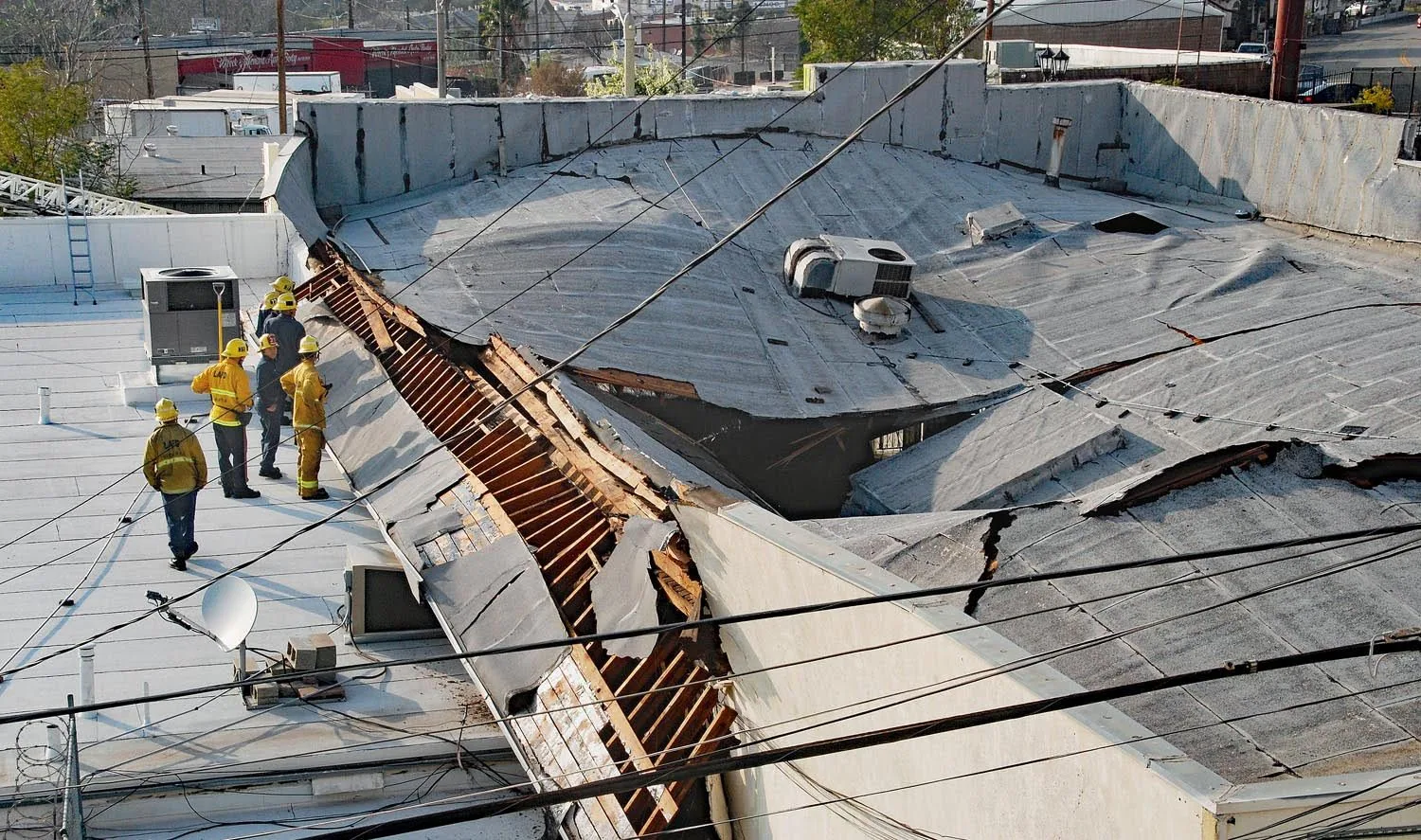
Choose a correction that reaches the cause
If debris blocks an outlet, clearing it may restore the designed drainage route, but a damaged drain bowl or flashing transition requires repair. If the roof lacks a workable path to discharge, a durable correction may involve tapered insulation, an added drain, or another design change subject to the building's drainage and structural requirements. We define the observed problem and the work boundary before pricing. A coating over a low spot is not a correction if water still has no route off the roof.
Everett Industrial Waterfront and Southwest Everett Industrial Center include warehousing and manufacturing activity in the local building mix; operations and roof access differ by property. A broader waterfront service-area assessment can account for the district context without tying the page to one facility. Where a commercial site has active inventory or equipment, staging and shutdown needs affect the sequence. We specify the closure point, materials, and any operational coordination with the owner.
Use repeated observations to set a maintenance plan
Photographs after rain can help a facilities team see whether a previously noted pool drains within the expected period, but the record should note the observation time and weather. Recheck after outlet cleaning or repair when the result would confirm the correction. If the low area persists, retain the measurements and discuss whether a drainage design review is appropriate. That creates a decision trail rather than repeating emergency visits without resolving the cause.
For multiple buildings, compare ponding locations and outlet types but keep measurements and repair histories tied to each roof. A property-management program can schedule inspections and work orders; a capital review can rank verified needs. The roof report should identify which sites have standing water, where it was measured, what changed after work, and which questions remain. Those distinctions matter more than a generalized statement that an entire portfolio has drainage issues.
Record the water boundary and follow-up trigger
The closeout names the low area, drain or scupper, repair detail, materials, photos, and any test location. It notes whether the outlet was cleaned, whether a membrane opening was repaired, and what could not be inspected. If a structural review or design change is recommended, it states the observed reason and leaves that separate professional scope to the appropriate discipline. Any temporary patch remains clearly labeled until replaced by permanent work.
Provide roof plans, photos after rain, outlet history, interior leak dates, and any past slope or structural work before the inspection. We will measure what is visible, trace the drainage path, and identify whether maintenance, repair, or design review is the next step. Everett's annual rainfall normal and winter pattern make outlet access worth planning, while the actual roof condition sets the scope. A concise record lets the owner compare the site after the next storm and decide whether the correction worked.
Commercial Roofing Questions
Does standing water mean the roof needs replacement?
Not by itself. The inspection should determine whether the cause is debris, outlet geometry, membrane damage, insulation compression, or another condition.
How long should water remain after rain?
That depends on the roof design and conditions. Record the depth and observation time, then compare with the applicable drainage requirements.
Can a roof coating fix a low spot?
Coating alone does not create a drainage route. The slope or outlet condition must be evaluated before selecting a lasting correction.
Does ponding prove a structural problem?
No. A roof depression may have several causes. Structural capacity questions require a qualified structural review.
What should be checked after drain cleaning?
Revisit the outlet and low area after rain, record the timing and water extent, and confirm whether the drainage path improved.
Questions Owners Ask
Does standing water mean the roof needs replacement?
Not by itself. The inspection should determine whether the cause is debris, outlet geometry, membrane damage, insulation compression, or another condition.
How long should water remain after rain?
That depends on the roof design and conditions. Record the depth and observation time, then compare with the applicable drainage requirements.
Can a roof coating fix a low spot?
Coating alone does not create a drainage route. The slope or outlet condition must be evaluated before selecting a lasting correction.
Does ponding prove a structural problem?
No. A roof depression may have several causes. Structural capacity questions require a qualified structural review.
What should be checked after drain cleaning?
Revisit the outlet and low area after rain, record the timing and water extent, and confirm whether the drainage path improved.
Measure the roof condition before choosing a ponding repair
Schedule an Everett drainage inspection. We will map the low area, check outlets and membrane details, and identify the next repair or test.
Related Roofing Work
- Commercial Roof Inspection
- Commercial Roof Flashing Failure Repair
- Commercial Roof Drains and Scuppers
- Commercial Roof Seam Failure Repair
- Built-Up Roofing
- Infrared Moisture Survey
- Everett Industrial Waterfront
- Commercial Roofing for Property Management Companies
Browse every page in Roof Damage Repair, or request a roof assessment and we will walk the roof with you.
Questions about this roof? Call 555-555-5555.