
Commercial Roof Repair, Replacement & Maintenance
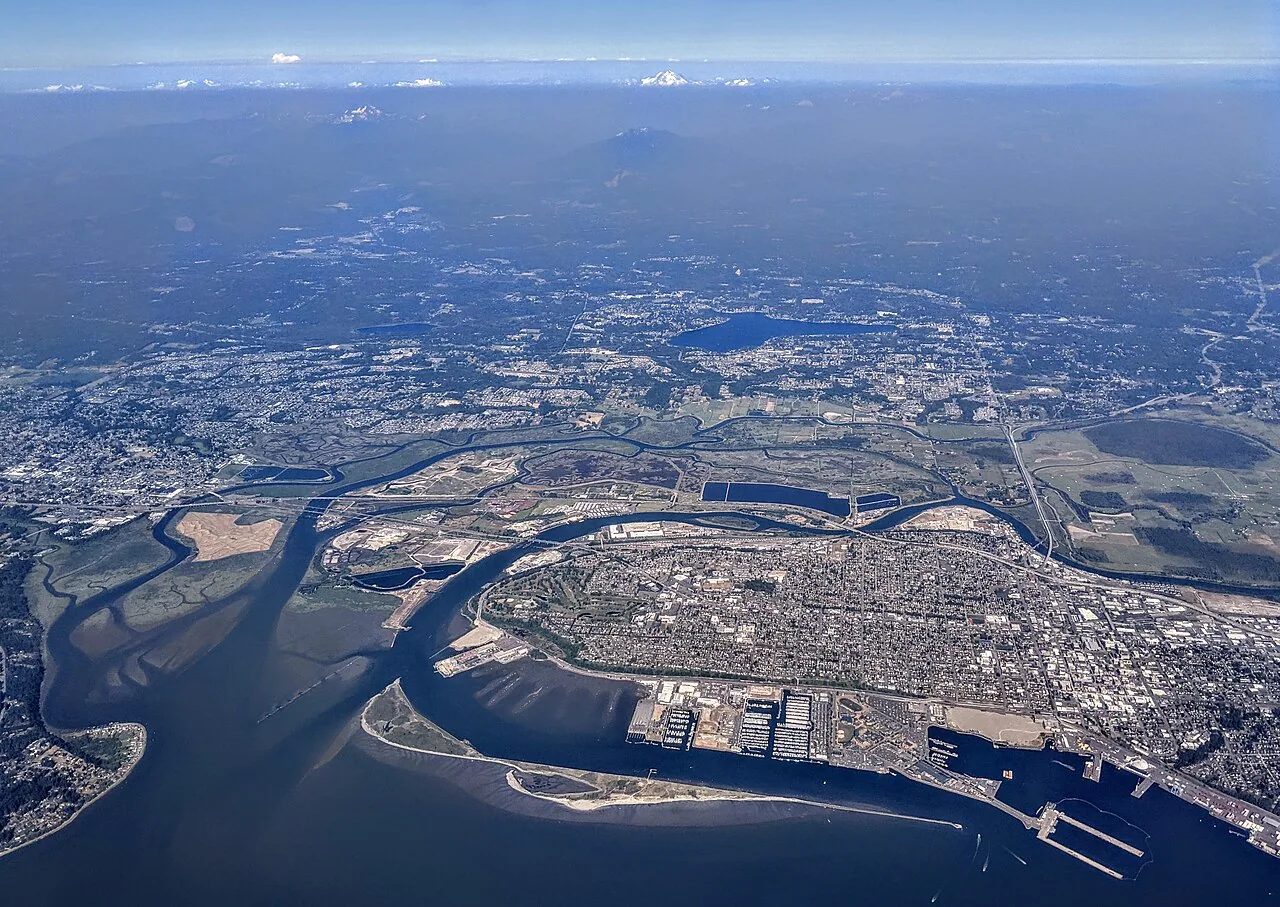
Silicone Roof Coatings in Everett, WA
A silicone coating can remain exposed to water, but it should not be used to hide a roof defect or an unstable substrate. Before restoration, we inspect the existing membrane or coating, confirm adhesion, locate moisture, and check drainage and flashing. Silicone's resistance to water exposure is useful only when the coating is bonded, applied at the specified coverage, and continuous around details. Frequent fall and winter rain makes continuous film coverage, fully cured edges, and clear drainage central to a silicone restoration evaluation. Industrial waterfront buildings, Paine Field facilities, and Metro Everett properties have different access and operating needs, but suitability depends on each roof's field condition. For eligibility, schedule a roof inspection; if the existing coating is damaged, compare a restoration assessment with a system replacement review.
Verify the substrate and existing coating
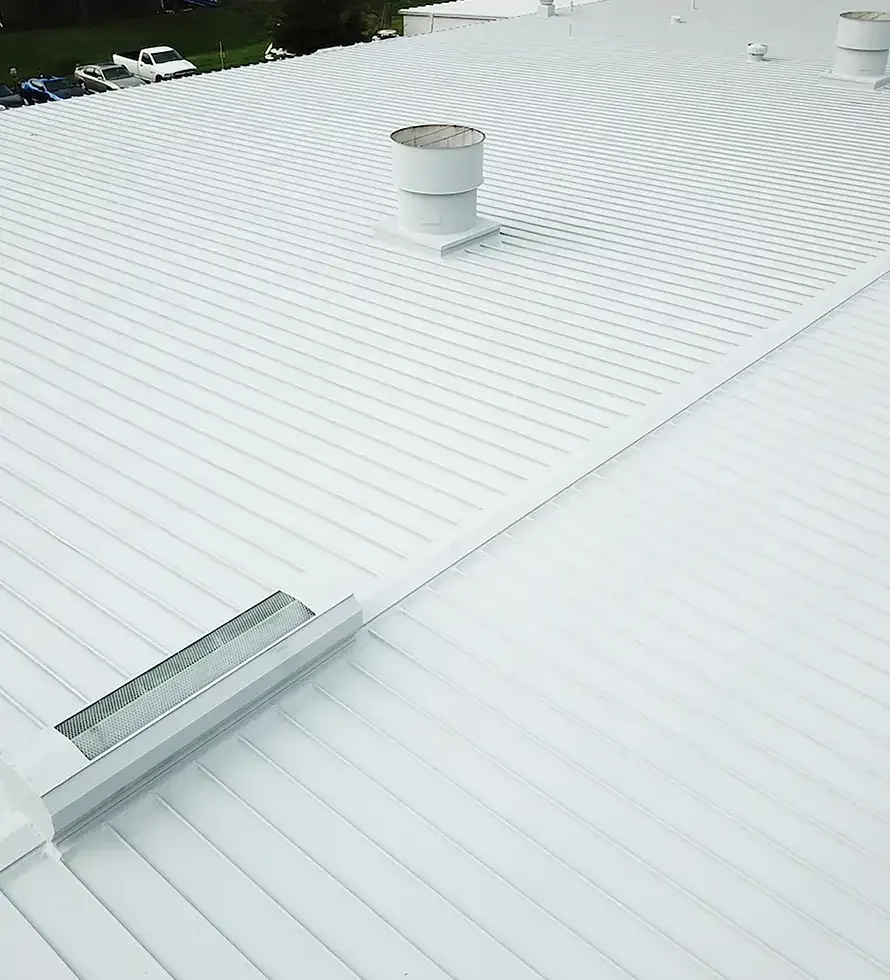
Silicone can be applied over some compatible roof surfaces, but the existing assembly must be sound. We inspect for open seams, loose membrane, wet insulation, failing previous coatings, trapped debris, and areas where the substrate has deteriorated. A coating test can confirm adhesion on a representative prepared area. If the test fails or the old product is unknown, we identify the required cleaning, primer, or removal before defining field application.
Moisture below the membrane is a separate issue. A surface layer may seal the roof visually while wet insulation continues to affect the assembly. We map leak history, inspect interior evidence, and use targeted testing where the repair boundary depends on concealed conditions. The report separates confirmed moisture from suspected areas and states which roofs zones remain inaccessible.
Review standing water and drainage
Silicone's water tolerance does not create slope or restore a blocked drain. We check low points, drain bowls, scuppers, crickets, and surrounding flashing to determine why water remains. Debris can be removed, but a deflected deck, low insulation, or incorrect outlet elevation may require a designed correction. We mark the ponding boundary and inspect the coating and membrane at its edges.
Everett's wetter months make water-retention patterns worth documenting before coating. A coating layer can reduce the exposure of a sound assembly, yet standing water may affect surface cleanliness, service access, and recoat conditions. If slope or outlet geometry is the cause, a drainage review or ponding assessment should define the correction before restoration is applied. The Diligence Notes identifies the basin edge, outlet, overflow route, and any curb or repair that may redirect flow.
Rebuild transitions before coating the field
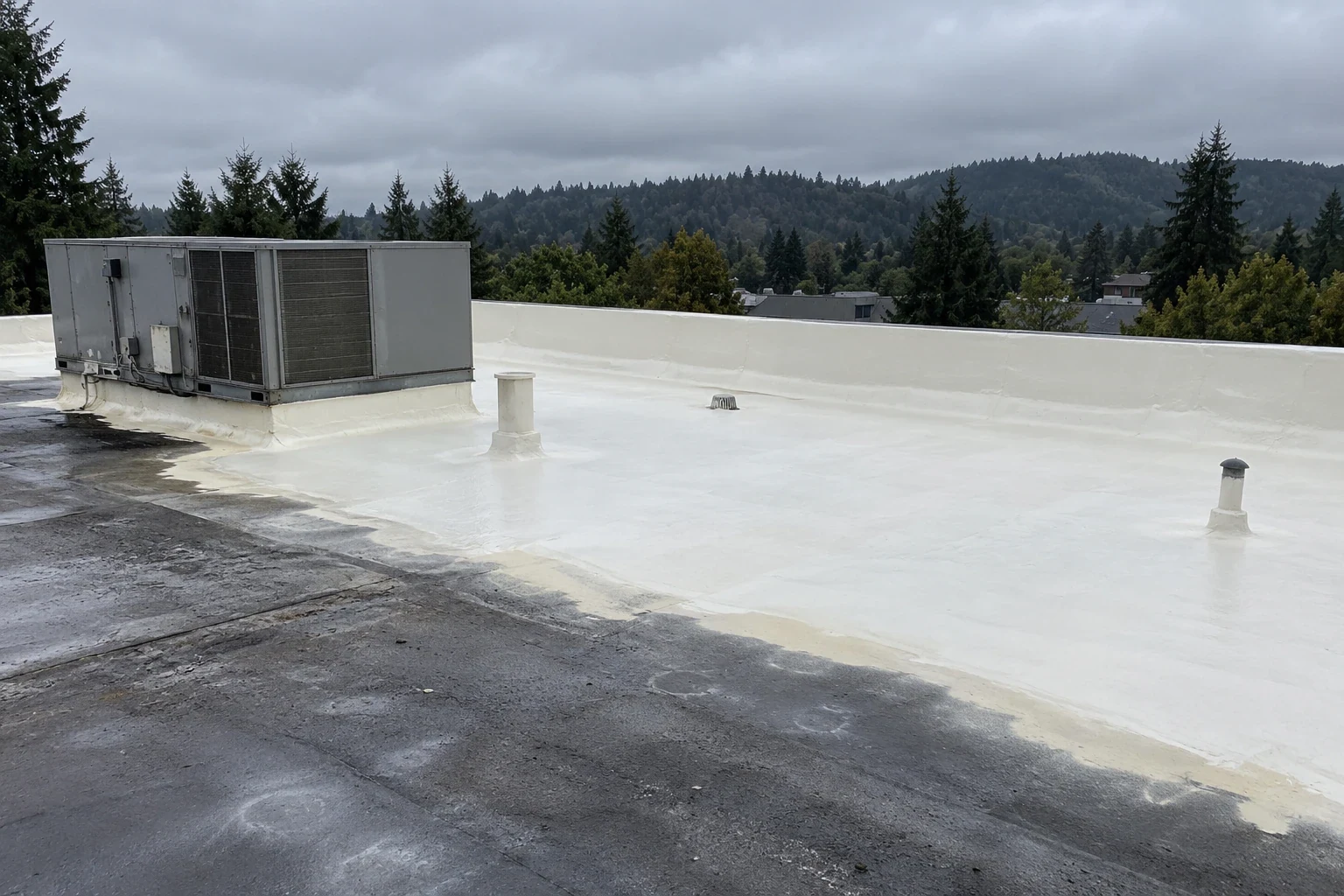
Curbs, penetrations, parapets, expansion joints, and drains need reinforced details that remain bonded and allow intended movement. We inspect corners, terminations, existing sealants, and metal interfaces before applying the field coating. A coating stretched over a failed seam or open joint can split again. We reinforce corners and changes in plane only after confirming the underlying material can accept the new layer. Where old sealant is incompatible or loose, it is removed to a stable edge before the detail is rebuilt. The scope should name each transition repair, reinforcement material, and any section where substrate removal is necessary.
On industrial and aviation roofs near the Port or Paine Field, rooftop service access can wear coating at walk paths and equipment supports. We map those locations and consider whether separate walk pads or protection are needed. An equipment curb review can coordinate flashing around operating units, while a penetration inspection can address skylight and pipe transitions.
Control preparation and coating coverage
Application begins with cleaning, removal of loose material, and repair of membrane or flashing defects. The surface must be dry and compatible with the selected primer and silicone product. We protect drains, equipment intakes, skylights, and adjacent finished surfaces, then stage work so each area can be completed within the forecast window. Coverage rate, reinforcement, and thickness follow the specified system and manufacturer requirements; the record should identify any area where application was deferred. We inspect substrate adhesion before field application and use the product requirements to define primer coverage, reinforcement fabric, and wet-film checks. At drains and scuppers, masking prevents material from narrowing the opening. Equipment bases, expansion joints, and wall terminations are prepared as separate details, then checked before the field coating proceeds. If a test patch fails, we revise preparation or remove incompatible material rather than coating over the failed bond.
Rain, dew, cold surfaces, and wind can affect preparation or cure. Everett's wet-season timing requires daily condition checks and a temporary closure plan for unfinished edges. A roof near the Port may require coordination around freight movement, while a Paine Field facility may have access rules for aircraft support areas. Those constraints affect sequence and staging; the coating still has to meet the product's surface and weather criteria.
Compare silicone with other restoration paths
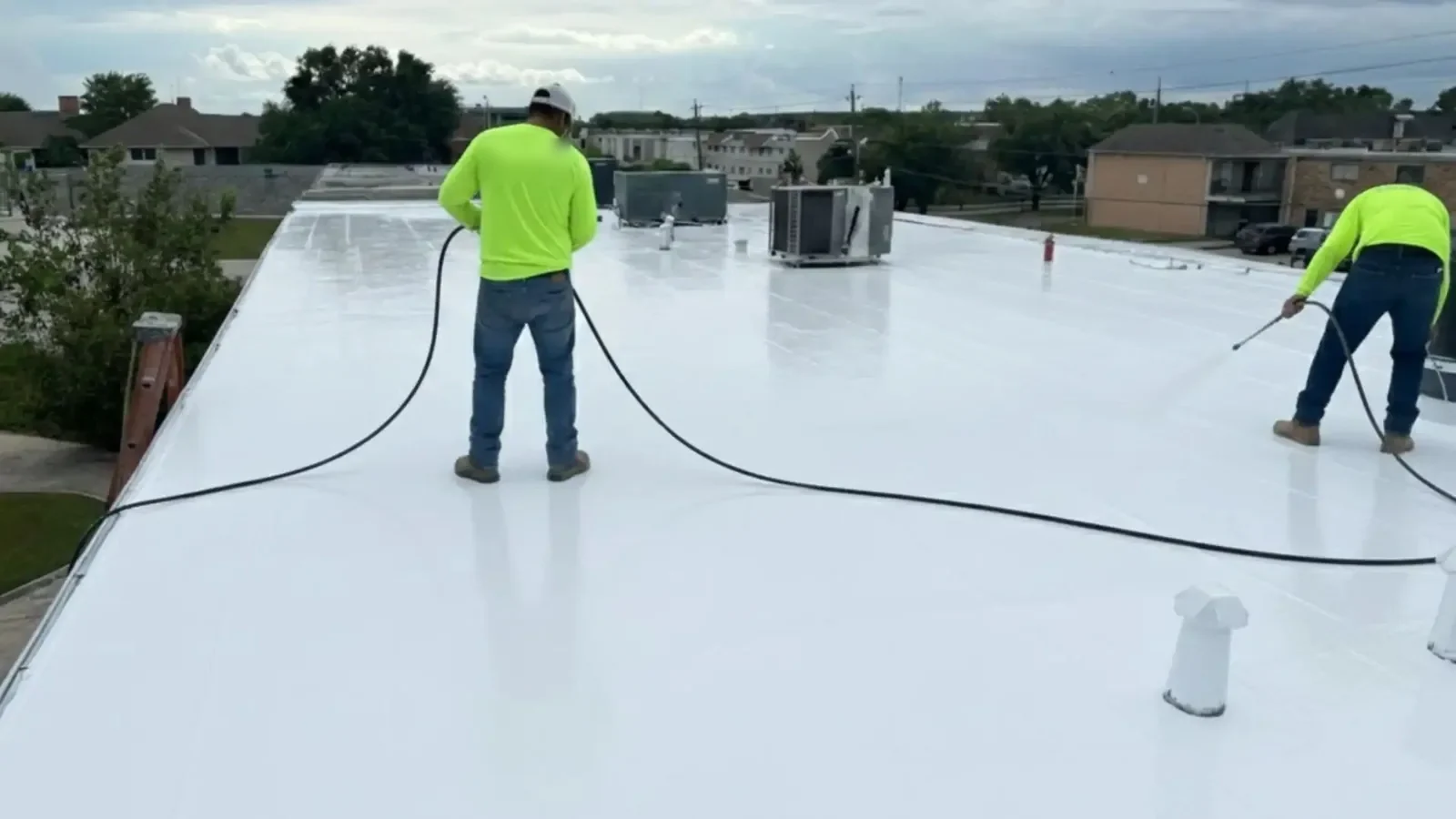
A local coating repair may suit a stable roof with isolated surface wear. A full recoat may be considered when adhesion and substrate condition support it; widespread wet insulation, loose attachment, or failing membrane can require removal or replacement. Silicone may tolerate intermittent water exposure within its product limits, but accumulated dirt and standing water can still affect maintenance and inspection. We identify the expected cleaning and detail checks instead of describing a coating as maintenance-free. The proposal identifies the existing layer, preparation, reinforcing details, and maintenance requirements. It also states what the coating will not correct, such as inadequate slope or damaged structure.
Acrylic coatings have different water exposure and recoat characteristics, so compare acrylic systems with silicone only after checking the roof and intended service. A spray foam assembly has a different substrate and protective surfacing role. Owners may also request a localized repair or replacement review when the condition extends beyond coating eligibility.
Record coating scope and maintenance needs
The closeout lists surface preparation, primer, coating system, repaired details, application conditions, and treated roof zones. Photos show the substrate before coating where opening work occurred and the completed membrane transitions. We note adhesion testing, areas excluded from work, and any drainage limitation that remains. A reflective or uniform finish is not proof that concealed material is dry. The record should also identify the date, surface condition, weather window, and product lot where project procedures require it, along with the maintenance interval or inspection trigger recommended by the system documentation.
For properties in the Everett industrial waterfront or Metro Everett commercial and civic core, roof access and operations are coordinated with each building. A condition report can retain the application boundary, testing, and future maintenance priorities. Schedule a silicone coating evaluation with prior coating records, leak notes, and any moisture test so restoration is tied to verified substrate conditions.
Commercial Roofing Questions
Can silicone coating be applied over any existing roof?
No. The membrane, prior coating, moisture, attachment, and surface preparation must be compatible. Testing may be needed before the system is selected.
Does silicone correct standing water?
It does not create slope or clear a drain. The source of ponding and the condition of the surrounding membrane should be assessed first.
Can wet insulation stay under a new coating?
A coating should not be assumed to correct concealed moisture. Testing can define whether insulation is wet and whether removal is required.
How is coating thickness checked?
The project follows the specified product and coverage requirements. The record notes preparation and field checks used to verify application.
When is replacement better than recoating?
Loose or wet assemblies, failing attachment, widespread membrane defects, or damaged substrate can move the work beyond restoration. The inspection establishes that boundary.
Questions Owners Ask
Can silicone coating be applied over any existing roof?
No. The membrane, prior coating, moisture, attachment, and surface preparation must be compatible. Testing may be needed before the system is selected.
Does silicone correct standing water?
It does not create slope or clear a drain. The source of ponding and the condition of the surrounding membrane should be assessed first.
Can wet insulation stay under a new coating?
A coating should not be assumed to correct concealed moisture. Testing can define whether insulation is wet and whether removal is required.
How is coating thickness checked?
The project follows the specified product and coverage requirements. The record notes preparation and field checks used to verify application.
When is replacement better than recoating?
Loose or wet assemblies, failing attachment, widespread membrane defects, or damaged substrate can move the work beyond restoration. The inspection establishes that boundary.
Verify the roof before applying silicone
Schedule an Everett silicone coating evaluation. We will document the existing substrate, moisture boundary, drainage, transitions, and preparation requirements.
Related Roofing Work
- Commercial Roof Inspection
- Commercial Roof Coating Restoration
- Ponding Water Roof Repair
- Acrylic Roof Coatings
- Spray Polyurethane Foam Roofing
- Everett Industrial Waterfront
- Metro Everett
Browse every page in Roof Systems, or request a roof assessment and we will walk the roof with you.
Questions about this roof? Call 555-555-5555.