Commercial Roof Repair, Replacement & Maintenance
Commercial Roof Coating Restoration in Everett, WA
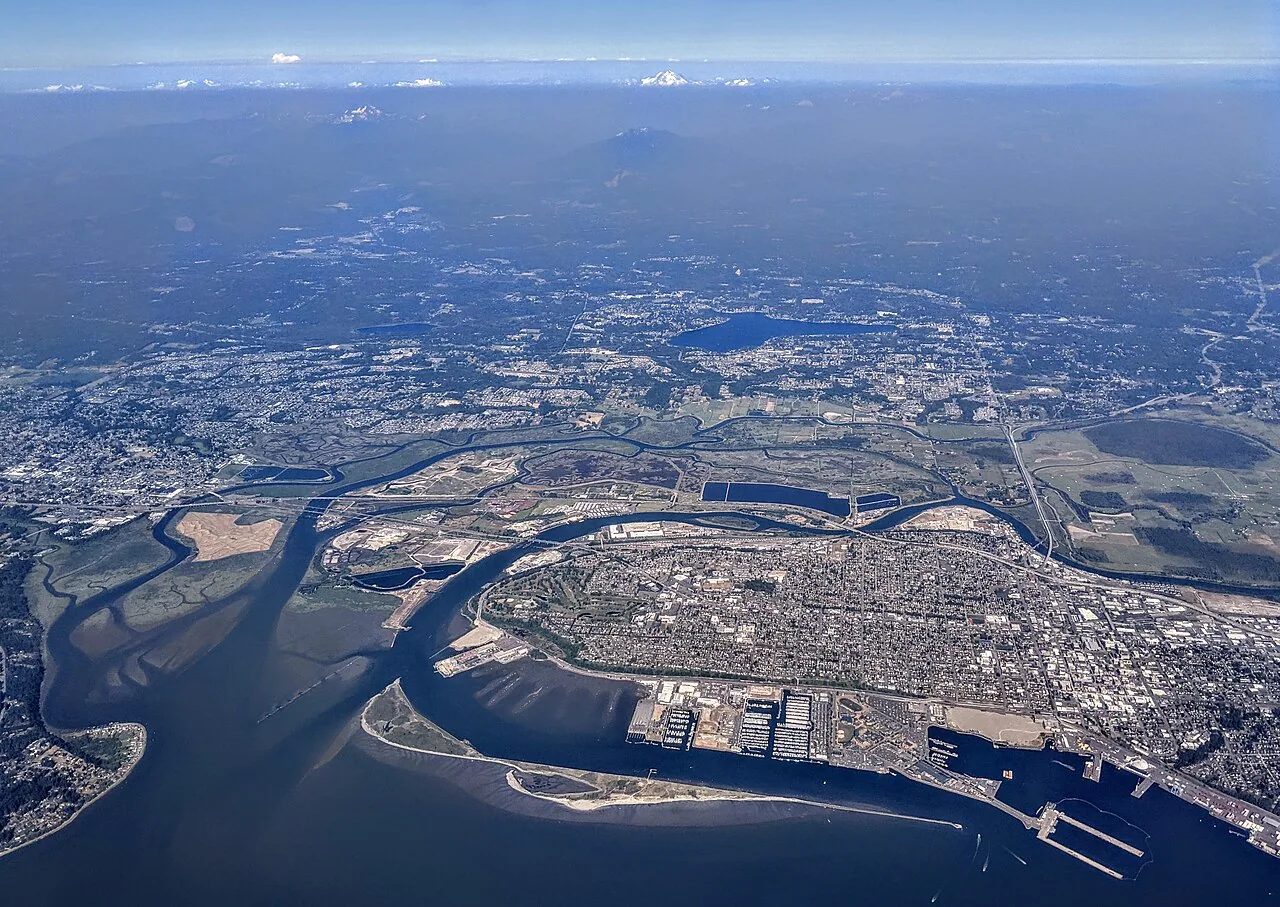
A coating is only as reliable as the roof beneath it. Before restoration, we check whether the existing membrane or metal surface is sound enough to receive another layer, whether wet insulation or failed attachment needs removal, and whether details can be rebuilt to accept the coating. A liquid-applied system can renew a suitable surface and protect prepared transitions, but it cannot correct trapped moisture, unstable substrate, poor drainage, or an open seam by covering it. Everett's annual precipitation normal is 40.25 inches, with November through January among the wettest months, so the work needs a surface and drying window that allow proper preparation and cure. We map the roof zones, test adhesion where specified, and separate restoration from replacement when the existing assembly cannot support coating. Industrial roofs near the Port, aviation facilities around Paine Field, and commercial properties in Metro Everett have different access and operating constraints. The survey records the actual roof assembly and decision boundary. For an initial eligibility review, schedule a commercial roof inspection; if a suspected area may hold water below the membrane, consider an infrared moisture survey before a coating scope is selected.
Confirm the existing assembly
Eligibility begins with the condition of the roof surface, seams, penetrations, edges, and substrate. We look for loose or brittle membrane, split flashing, failed patches, corrosion, open laps, and areas where attachment has shifted. A coating can bridge and protect prepared surfaces within its system limits, but it does not restore structural capacity or bond reliably to dirt, standing water, incompatible residues, or loose material. The inspection notes each defect that must be repaired before coating and whether the existing layer can remain.
We also check for evidence of wet insulation or deck damage. Discoloration, a soft area, recurring interior leak, or trapped moisture may require a targeted opening or survey. Applying a coating above a wet assembly can conceal the condition and make later access more difficult. The proposed boundary should identify confirmed repair zones separately from areas that appear suitable, with verification methods stated where needed. If moisture is widespread or attachment is uncertain, we compare restoration with a recover or replacement scope rather than presuming the coating path is appropriate.
Prepare the surface and repair boundary
Surface preparation controls adhesion. The crew removes dirt and debris, addresses biological growth where present, and cleans the substrate using a method compatible with the roof system and coating manufacturer instructions. Loose coating or membrane is removed to stable material; seams, fasteners, penetrations, and transitions are repaired with compatible components before the field coating begins. A preparation log should describe what was cleaned, cut back, primed, reinforced, or left outside the scope.
Drain bowls, scuppers, overflow outlets, and perimeter metal need deliberate treatment because coating can obstruct drainage or end at a moving edge. We mask or protect components that should remain clear and detail each termination so water cannot track behind the new layer. At a large roof near the Port of Everett, staging and debris control may need coordination with active cargo or vehicle operations. Around Metro Everett buildings, tenant access and sidewalk protection can shape where materials are loaded. These site conditions affect sequence, not the coating's suitability.
Match coating chemistry to the roof
Coating selection depends on the existing substrate, exposure, drainage, repair detail, and intended service role. Silicone and acrylic systems differ in how they handle water exposure, dirt pickup, recoat conditions, and compatibility with underlying materials. The system must be evaluated against the actual surface and manufacturer requirements, not selected by color or a generalized promise. We identify the chemistry, primer if needed, reinforcement at details, and application limits in the scope.
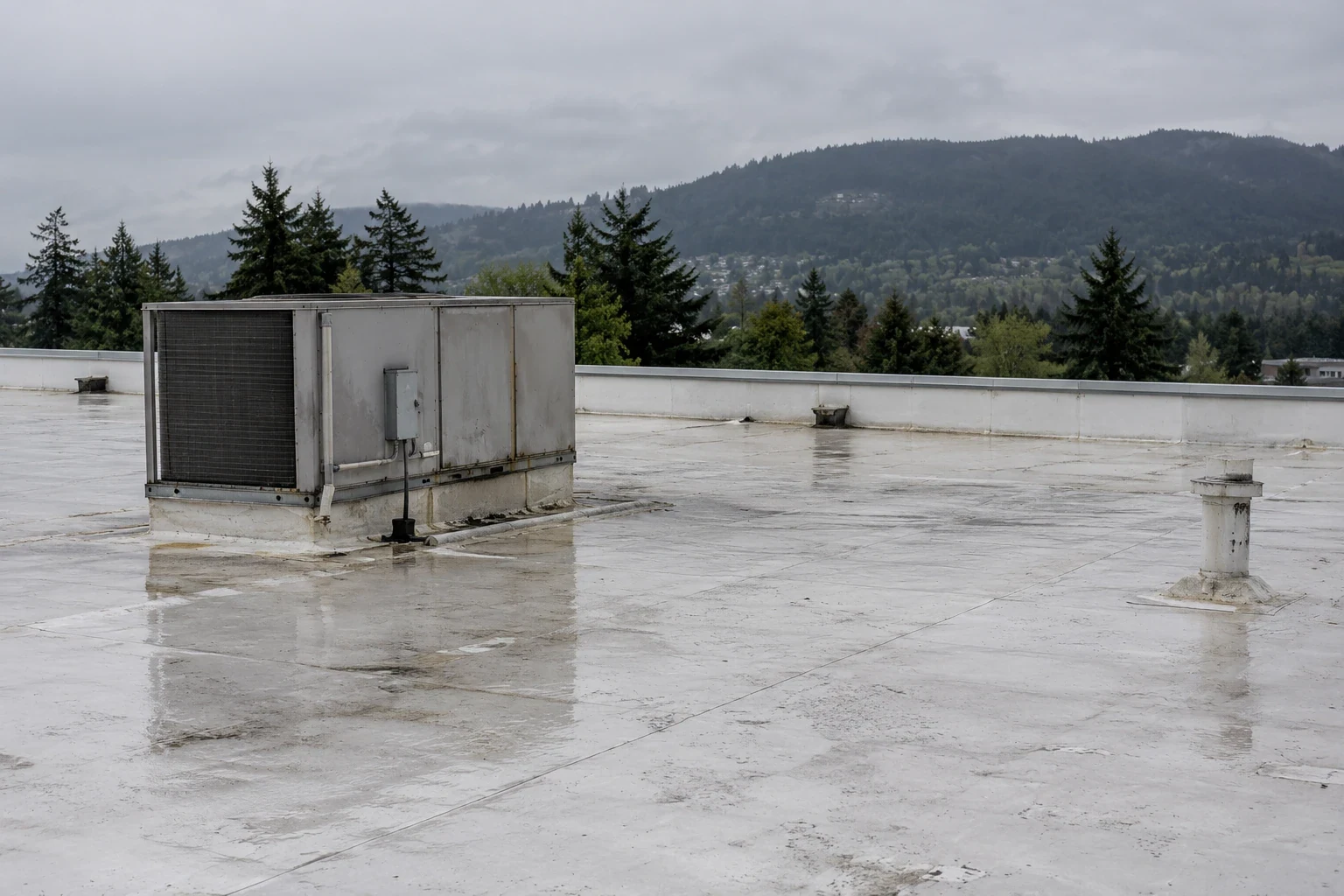
Where ponding persists, the first question is whether the water results from debris, a restricted drain, slope, or deflection. A coating may protect an eligible surface but will not create slope or remove a drainage obstruction. Everett's wet season makes open outlets and properly finished transitions useful priorities, while regular freezing nights make movement at dissimilar materials worth checking when the field condition supports it. A silicone coating system or acrylic system should be matched to these findings and the roof's drainage behavior.
Control weather, thickness, and access
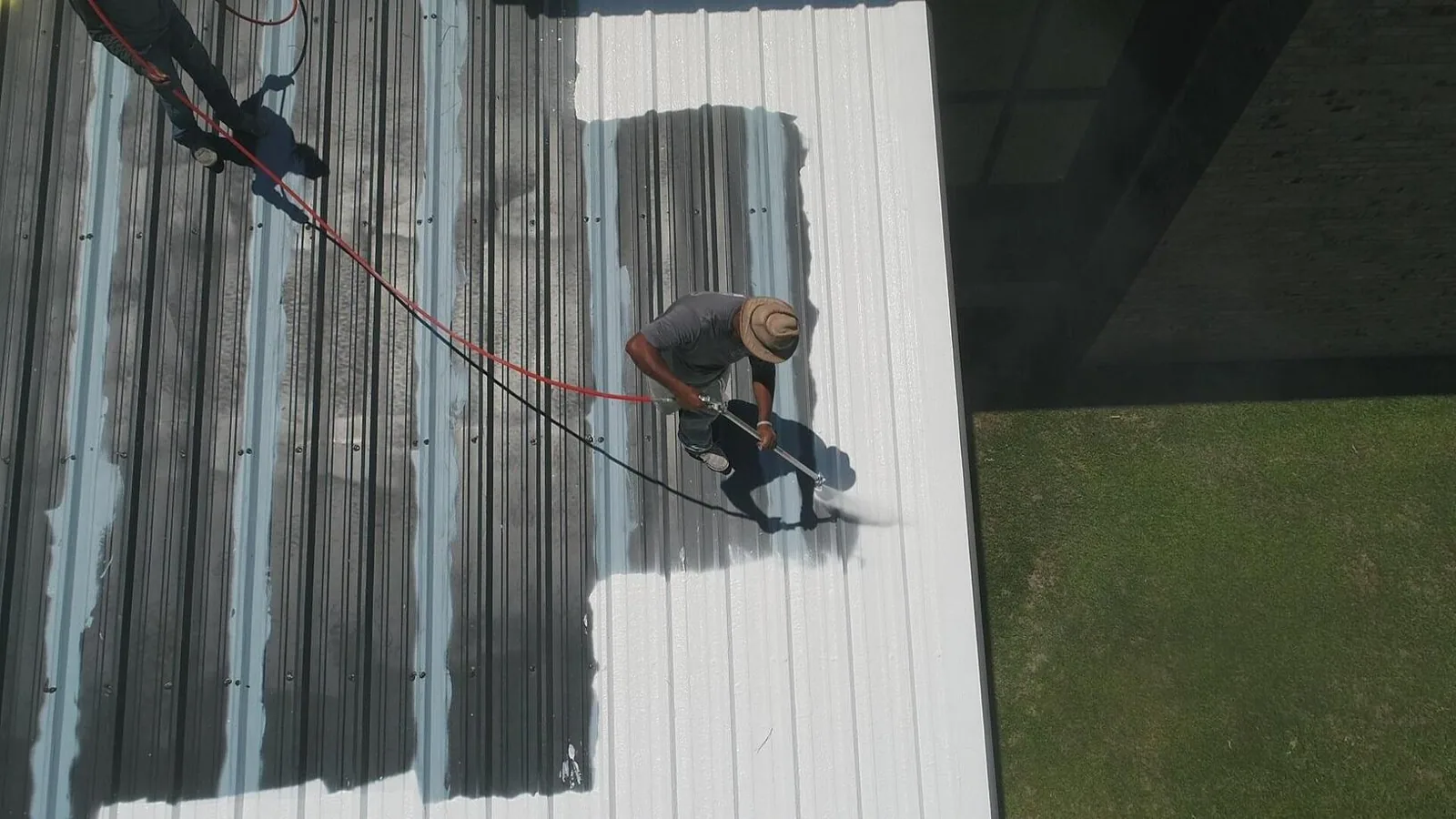
Application requires clean, dry surfaces and conditions within the selected system's temperature, humidity, and cure limits. We divide the work into areas that can be completed without trapping moisture or exposing unfinished edges to rain. The plan identifies protection of drains, HVAC equipment, skylights, walk pads, and active tenant areas. Wind and precipitation can affect spray or roller application, while a cold surface can slow cure. If conditions move outside the product limits, the crew pauses and documents the remaining work rather than thinning or stretching the material.
Everett's wettest monthly normals arrive during the late fall and winter period, so scheduling a coating job requires attention to forecast and drying time. Near Paine Field, equipment movement and aviation operations may constrain staging; port-side sites may have access windows tied to freight activity. We coordinate these constraints with building management and keep material storage, hose routes, and fall-protection boundaries clear. The actual roof surface must meet the system's criteria on each workday, even when the calendar was selected for a drier season.
Inspect details before field application
The roof field may be continuous while transitions remain vulnerable. Before coating, we review pipe boots, curb flashings, expansion joints, parapet walls, skylights, metal edges, and equipment supports. A moving joint may require reinforcement or a different detail; simply extending coating across it can cause a split. We confirm that repair materials are compatible and cured, then check that reinforcement lies flat without fishmouths or bridging gaps. These details are recorded separately from field coverage because they require different preparation and inspection.
For a building with repeated leaks, a coating should follow a diagnosis rather than substitute for one. We map openings and repairs, verify suspect moisture where necessary, and state the roof zones excluded from restoration. An owner can compare this boundary with a localized repair or a recover option. If the detail is a skylight curb or penetration, a flashing assessment may define the work that must precede field coating.
Record coverage and future checks
At closeout, the report should identify preparation completed, coating type, repaired details, application conditions, and roof zones treated. Photos show the field and transitions, and the record notes areas withheld because of moisture, access, weather, or substrate condition. The owner should know which roof sections received restoration and which remain under separate repair or monitoring. Coating is a maintenance and restoration choice for an eligible assembly, not evidence that the entire roof has a new underlying system.
Follow-up can focus on drainage outlets, seams, reinforced details, and areas where future equipment work could damage the surface. We document conditions that call for inspection after major work or when water returns. For facility teams maintaining buildings around the Everett industrial waterfront, Paine Field, or Metro Everett, the roof zone and access conditions remain property-specific. Schedule a coating evaluation with repair history, system records, and leak locations so the recommendation can distinguish viable restoration from a roof that needs a different scope.
Commercial Roofing Questions
How can we tell whether the roof is a coating candidate?
The surface, seams, attachment, moisture condition, drainage, and compatibility must be checked. The inspection defines areas needing repair or verification before a coating is considered.
Can coating correct ponding water?
It can protect a suitable surface but does not create slope or remove a blocked outlet. Drainage cause and assembly condition need review before restoration.
What delays coating work in Everett?
Rain, surface moisture, temperature, and the cure window can limit application. Access, tenant activity, and equipment staging can also affect sequence.
Will coating cover wet insulation?
That should not be assumed. Suspected moisture needs a suitable verification method, and confirmed wet material may require removal before the assembly is closed.
What is included in the closeout?
The record identifies roof zones, preparation, coating and repair details, application conditions, excluded areas, and follow-up items for drainage or transitions.
Questions Owners Ask
How can we tell whether the roof is a coating candidate?
The surface, seams, attachment, moisture condition, drainage, and compatibility must be checked. The inspection defines areas needing repair or verification before a coating is considered.
Can coating correct ponding water?
It can protect a suitable surface but does not create slope or remove a blocked outlet. Drainage cause and assembly condition need review before restoration.
What delays coating work in Everett?
Rain, surface moisture, temperature, and the cure window can limit application. Access, tenant activity, and equipment staging can also affect sequence.
Will coating cover wet insulation?
That should not be assumed. Suspected moisture needs a suitable verification method, and confirmed wet material may require removal before the assembly is closed.
What is included in the closeout?
The record identifies roof zones, preparation, coating and repair details, application conditions, excluded areas, and follow-up items for drainage or transitions.
Verify the assembly before coating
Request an Everett roof coating evaluation. We will document surface condition, moisture concerns, transitions, and preparation needs before defining restoration scope.
Related Roofing Work
- Commercial Roof Inspection
- Infrared Moisture Survey
- Silicone Roof Coatings
- Acrylic Roof Coatings
- Commercial Roof Repair
- Commercial Roof Recover
- Commercial Skylight and Penetration Flashing
- Everett Industrial Waterfront
Browse every page in Commercial Roofing Services, or request a roof assessment and we will walk the roof with you.
Questions about this roof? Call 555-555-5555.