

Commercial Roof Repair, Replacement & Maintenance
Commercial Roof Snow and Ice Damage Repair in Everett, WA
A winter leak or refrozen pool deserves a roof inspection, but Everett is not a sustained high-snow market. Everett averages about 0.9 inches of snowfall annually, while freezing nights occur regularly. The practical roof concern is often water that collects, freezes, then moves through a seam, drain, or flashing transition. We record the actual condition and do not infer snow-load damage from an interior stain. A roof inspection can locate the opening and drainage route; a ponding-water review can evaluate a low area that holds water before or after a freeze.
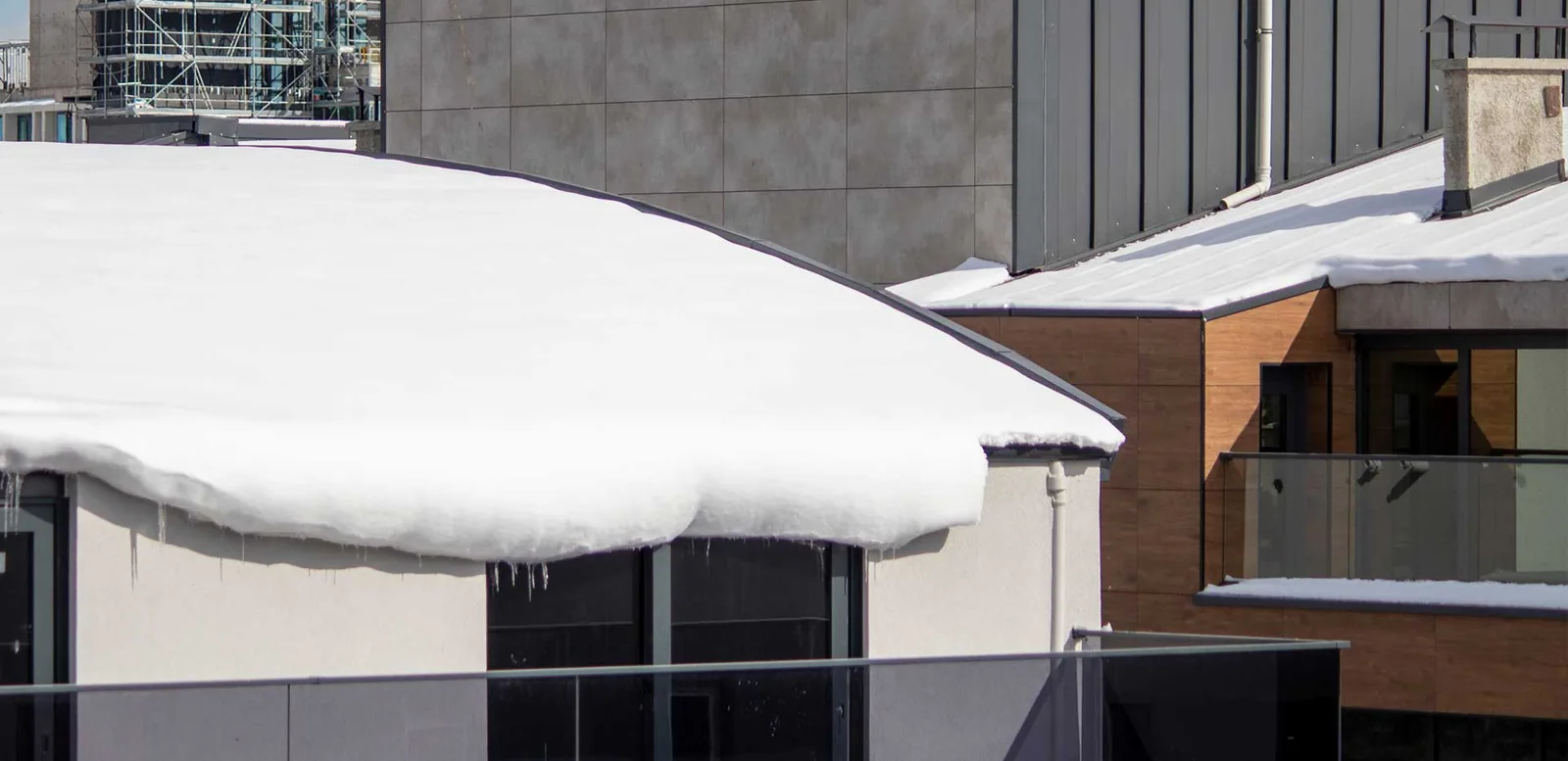
Separate snow exposure from freeze-thaw effects
Snow accumulation and overnight freezing do not create the same roof condition. A shallow wet snow can melt during the day and refreeze at a cold edge, while an outlet may be blocked by debris or ice. We inspect the roof after safe access is established, note the surface temperature and visible water path, and review the leak timing. Everett's occasional snowfall does not support a broad claim that every roof needs snow-load work; a structural concern requires a qualified professional and building-specific evidence.
At a curb, parapet, drain, or metal transition, thermal movement can work at a weak detail as materials cycle between wet and frozen conditions. We look for open seams, split sealant, loose flashing, and cracks where water can pass. The repair should address the observed opening, not treat winter weather as a diagnosis. An open-seam inspection may be useful when a lap has separated, while an edge or curb review addresses the transition itself.
Check outlets before treating an ice line
An ice line near a roof edge may indicate where meltwater refroze, but it can also sit below a drain path or a low area. We inspect accessible strainers, drain bowls, scuppers, overflows, and nearby membrane details. If snow or ice makes the roof unsafe, the inspection waits until access is appropriate. We do not chip ice or apply heat without an approved method that protects the membrane and building.
Everett receives more rain in late fall and winter and has about 51 nights a year when the low reaches freezing or below; inspect wet edges and drainage after cold, damp periods. That pattern makes outlet maintenance and closure details worth monitoring. It does not prove that ice caused a specific leak. A drain and scupper inspection can document blockage or damage, while perimeter review can assess the metal transition where meltwater crosses the roof edge.
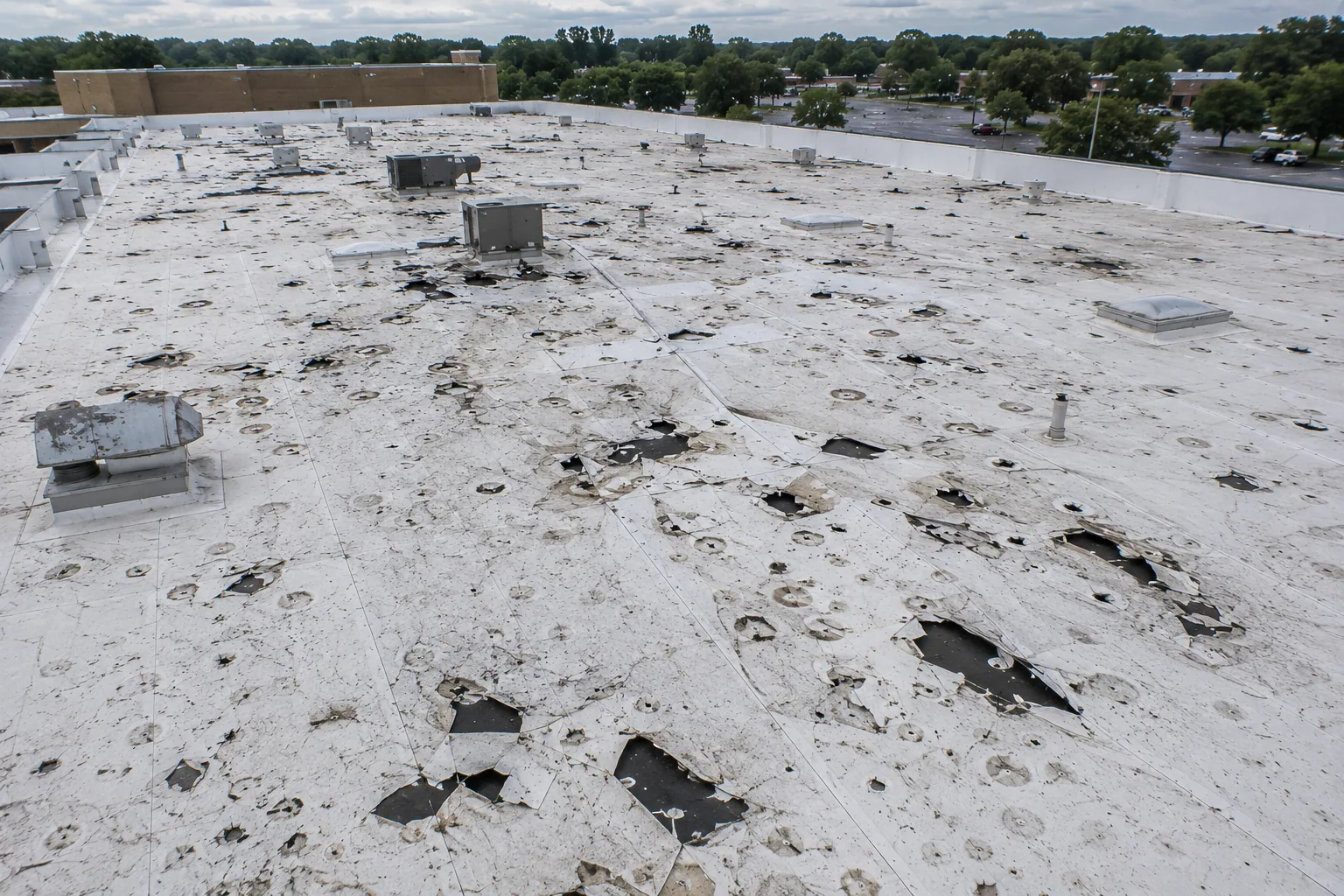
Trace interior water to the roof layer
Water from melting snow or ice can travel under a membrane, along a deck flute, or around a penetration before reaching the ceiling. We compare interior location and timing with the roof plan and check nearby drains, seams, curbs, and wall transitions. If the roof is dry during inspection, we state that fact and use earlier photos or leak notes as context. The visible stain alone does not identify the opening or the amount of insulation affected.
Where a hidden wet area changes the recommended scope, sample at targeted points and mark the test locations. An infrared image may help select a sample area under suitable surface conditions but does not confirm water in the assembly by itself. A moisture survey can guide additional testing. If no destructive test is authorized, the repair price should state the assumption for concealed materials, and the report should not call the untested area dry.
Restore the detail and clear the intended drainage route
A winter repair may involve more than replacing a wet ceiling tile or sealing a visible crack. We remove failed material as needed, prepare the membrane, restore the seam or flashing, and verify that water can reach the designed outlet. If insulation is wet, replace it within the approved boundary and maintain a compatible tie-in to dry material. A temporary measure can protect the opening until the surface and product conditions support permanent work, but the record should say when that measure will be revisited.
Everett Industrial Waterfront and Paine Field include different industrial, maritime, and aviation property uses, yet they share no roof condition by implication. At each site, the owner identifies equipment, access, and any operations affected by staging. A temporary winter response can secure an active leak; a permanent repair follows after the detail and material are verified. We document the closure standard before a crew leaves an exposed area.
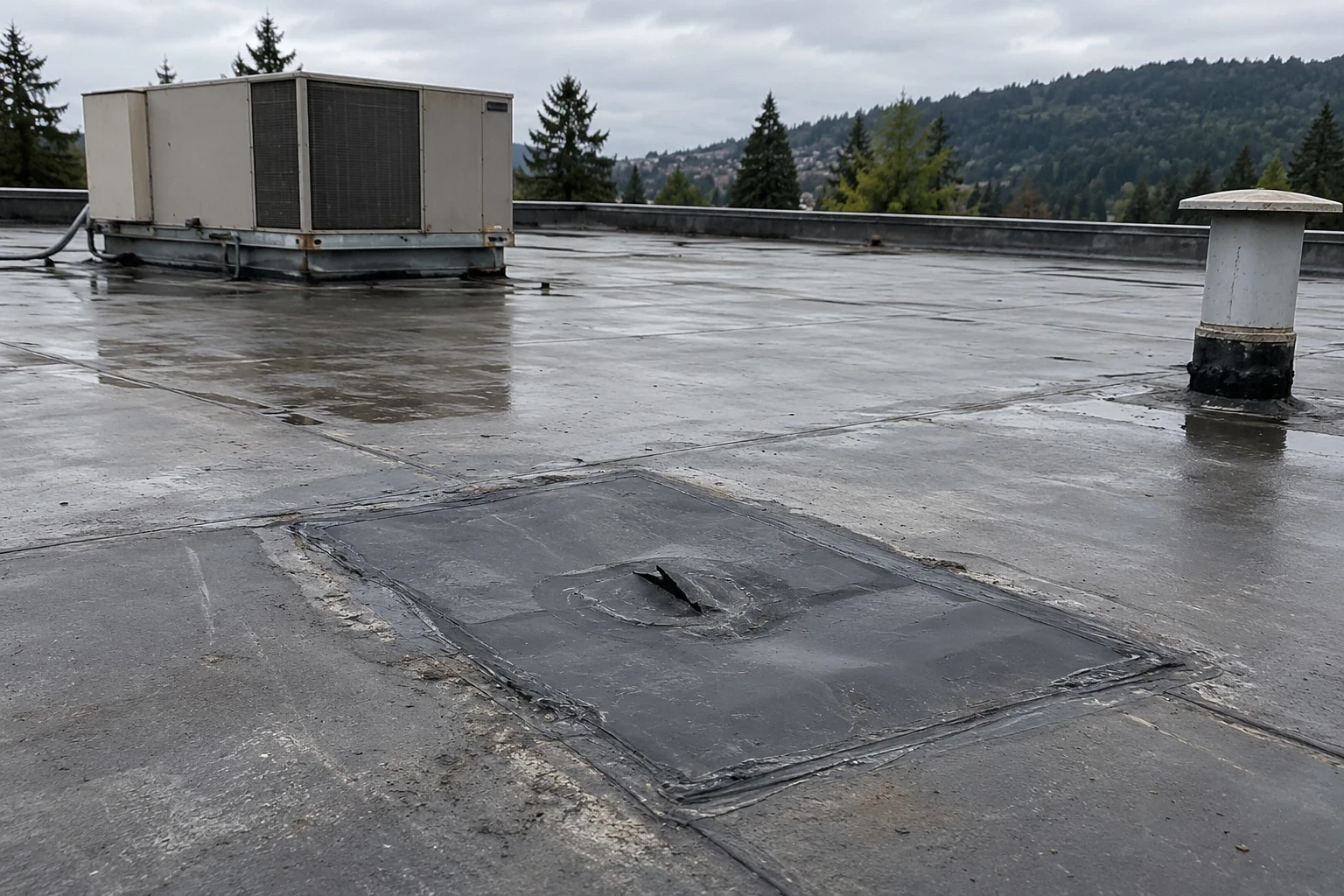
Use inspection history instead of a snow-load assumption
Keep photos from each visit, the observation date, recent weather, water depth, and any drain maintenance. If the same area holds water after thaw, compare it with earlier records and determine whether the outlet or roof elevation changed. Repeated freeze-thaw exposure can reveal a weak transition, but the roof's history and test results set the repair decision. A structural loading question belongs with an engineer who can review the building and applicable criteria.
For multi-building owners, record snow or ice observations by property and roof zone. Note which drains were checked, whether water remained after thaw, the time elapsed before the follow-up photo, and whether access was limited. Those repeatable observations help determine whether an outlet needs maintenance, a detail needs repair, or the site simply experienced a temporary freeze. If a low spot persists after conditions normalize, compare the measurements with the roof plan and prior visits before changing the drainage design. Facilities tracking can assign the next inspection, while agency portfolios can organize work across different operating buildings. Do not copy one property's ice event onto another roof. An owner can use the history to set a winter access plan, reserve emergency response, and schedule outlet checks when safe conditions allow. The plan should identify who can authorize roof entry and which building operations must continue during a response when weather permits. That keeps safety and service continuity visible alongside the technical findings.
Leave winter findings ready for the next thaw
The closeout should note whether snow or ice remained during the visit, which drains and details were accessible, where moisture was tested, and what repair was completed. Photos should show the location and surrounding roof so the next inspection can compare the same surface. If a test or structural review remains open, state who needs to authorize it and which area has not been evaluated.
Everett's low snowfall normal and regular freezing nights call for measured inspection language: document actual ice, water, and roof movement rather than a generic snow-load label. Provide leak timing, roof plans, drain history, prior repairs, and access restrictions before scheduling. We will map the observed condition, repair the verified opening or drainage detail, and identify any test still needed. That gives the owner a practical record for the next wet period without overstating what the weather alone can establish.
Commercial Roofing Questions
Is Everett a heavy-snow roofing market?
Everett averages about 0.9 inches of snowfall a year. Freezing nights and wet-season rain are more relevant routine inspection context.
Can ice at a roof edge prove an ice dam?
No. Inspect the meltwater path, drains, insulation, and edge detail before naming the cause.
Should a contractor remove roof ice with heat?
Only an approved method that protects the membrane and building should be used. Unsafe access or uncontrolled heating can create additional damage.
Does winter ponding require structural repairs?
Not by itself. A structural concern needs building-specific review by a qualified engineer.
What should be recorded after a freeze-related leak?
Document timing, weather, roof zone, outlet condition, photographs, tests, and any repair or temporary protection.
Questions Owners Ask
Is Everett a heavy-snow roofing market?
Everett averages about 0.9 inches of snowfall a year. Freezing nights and wet-season rain are more relevant routine inspection context.
Can ice at a roof edge prove an ice dam?
No. Inspect the meltwater path, drains, insulation, and edge detail before naming the cause.
Should a contractor remove roof ice with heat?
Only an approved method that protects the membrane and building should be used. Unsafe access or uncontrolled heating can create additional damage.
Does winter ponding require structural repairs?
Not by itself. A structural concern needs building-specific review by a qualified engineer.
What should be recorded after a freeze-related leak?
Document timing, weather, roof zone, outlet condition, photographs, tests, and any repair or temporary protection.
Inspect winter water paths without overstating snow exposure
Arrange an Everett roof inspection after safe access is available. We will check drains and transitions, trace reported moisture, and document the repair boundary.
Related Roofing Work
- Commercial Roof Inspection
- Ponding Water Roof Repair
- Commercial Roof Seam Failure Repair
- Commercial Roof Flashing Failure Repair
- Everett Industrial Waterfront
- Emergency Commercial Roof Repair
- Commercial Roof Repair
- Commercial Roofing for Property Management Companies
Browse every page in Roof Damage Repair, or request a roof assessment and we will walk the roof with you.
Questions about this roof? Call 555-555-5555.