

Commercial Roof Repair, Replacement & Maintenance
Commercial Roof Seam Failure Repair in Everett, WA
A seam that has lifted, split, or lost bond gives water a path through the roof field even when nearby membrane looks intact. The repair begins with identifying the system, checking the seam geometry, and seeing whether movement or moisture extends beyond the visible opening. Everett's wet fall and winter conditions make an exposed seam worth closing promptly; inspect the roof to establish whether the seam opened and whether water reached the assembly. A roof inspection maps the opening; a flashing review can distinguish a field seam from a nearby curb or wall transition.
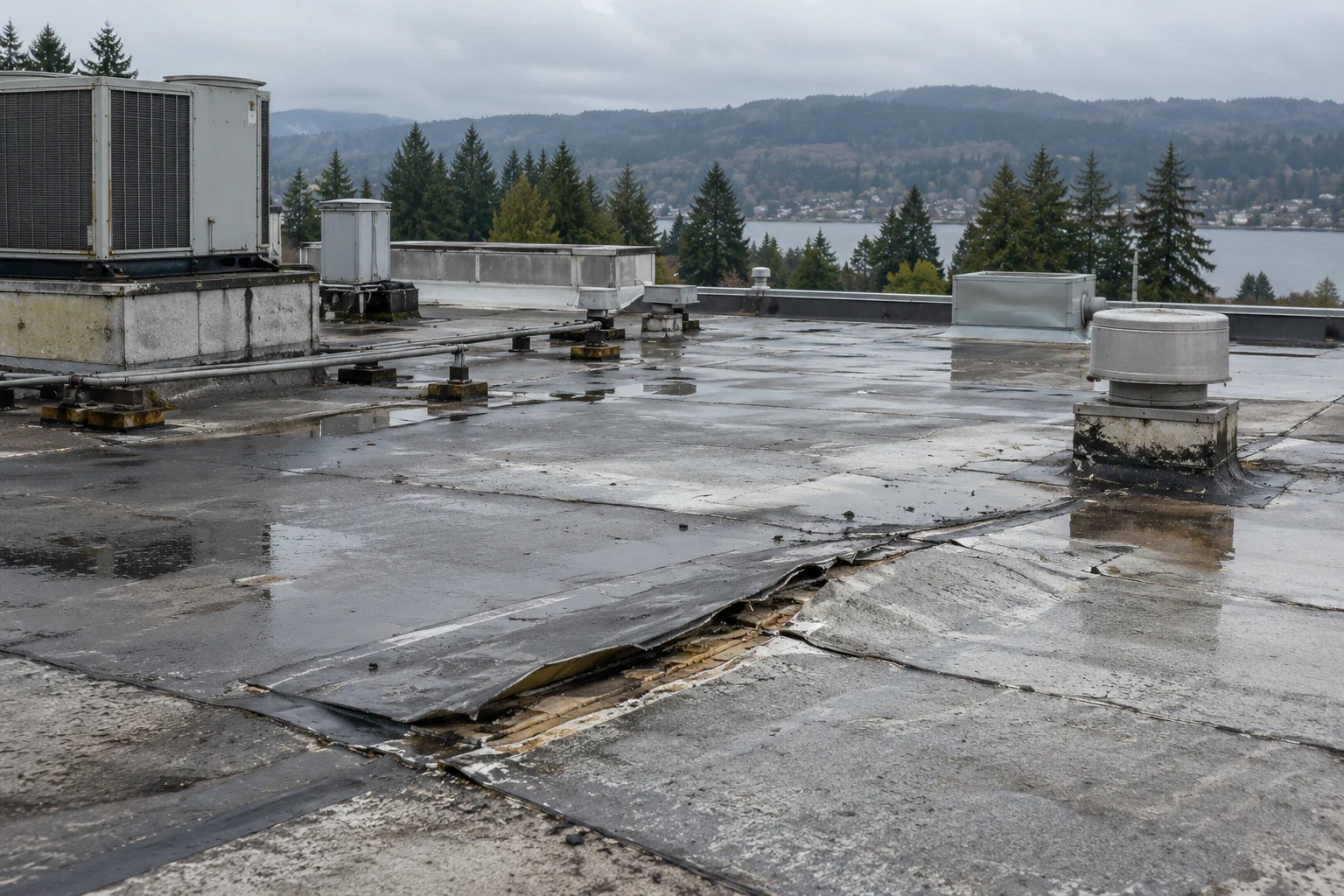
Identify the membrane before choosing a seam detail
TPO and PVC seams are typically heat-welded, while EPDM may use adhesive or tape; built-up and modified-bitumen assemblies have different lap details. The repair method follows the material present, not the name on an old invoice alone. We inspect a clean sample area where practical, look for reinforcement or surfacing, and review prior repair layers. If the membrane cannot be identified confidently, the report states what additional verification is needed before materials are ordered.
At Everett Industrial Waterfront, manufacturing and maritime buildings add a range of roof assemblies and operational constraints, but that regional building mix is not evidence of a system at any one address. On site, we document membrane type, seam orientation, width, contamination, and adjoining details. A TPO system assessment is relevant only if that material is confirmed; EPDM seam work follows a different preparation and lap procedure.
Find out why the seam opened
An open lap can result from poor preparation, a skipped weld, age, contamination, movement, or a repair that did not bond to the existing surface. We examine whether the opening runs continuously, whether corners or terminations are involved, and whether the seam has pulled from insulation or substrate. A few inches of separation may be isolated, while a long split can point to a wider attachment or material concern. Where a roof has a recent coating or overlay, check whether the repair must pass through more than one layer and how each bond will be verified. The photographs and roof plan should show the extent rather than only a close-up.
Thermal movement cycles can work on seams and adjoining metal as temperatures change. A failed lap at a curb or wall may need flashing work rather than a field-seam patch. If wind or foot traffic may have contributed, record that condition separately and avoid assigning a cause without evidence. A wind-related roof review can address nearby displaced details; a puncture inspection may be needed where a seam was cut or struck.
Check the seam boundary for concealed water
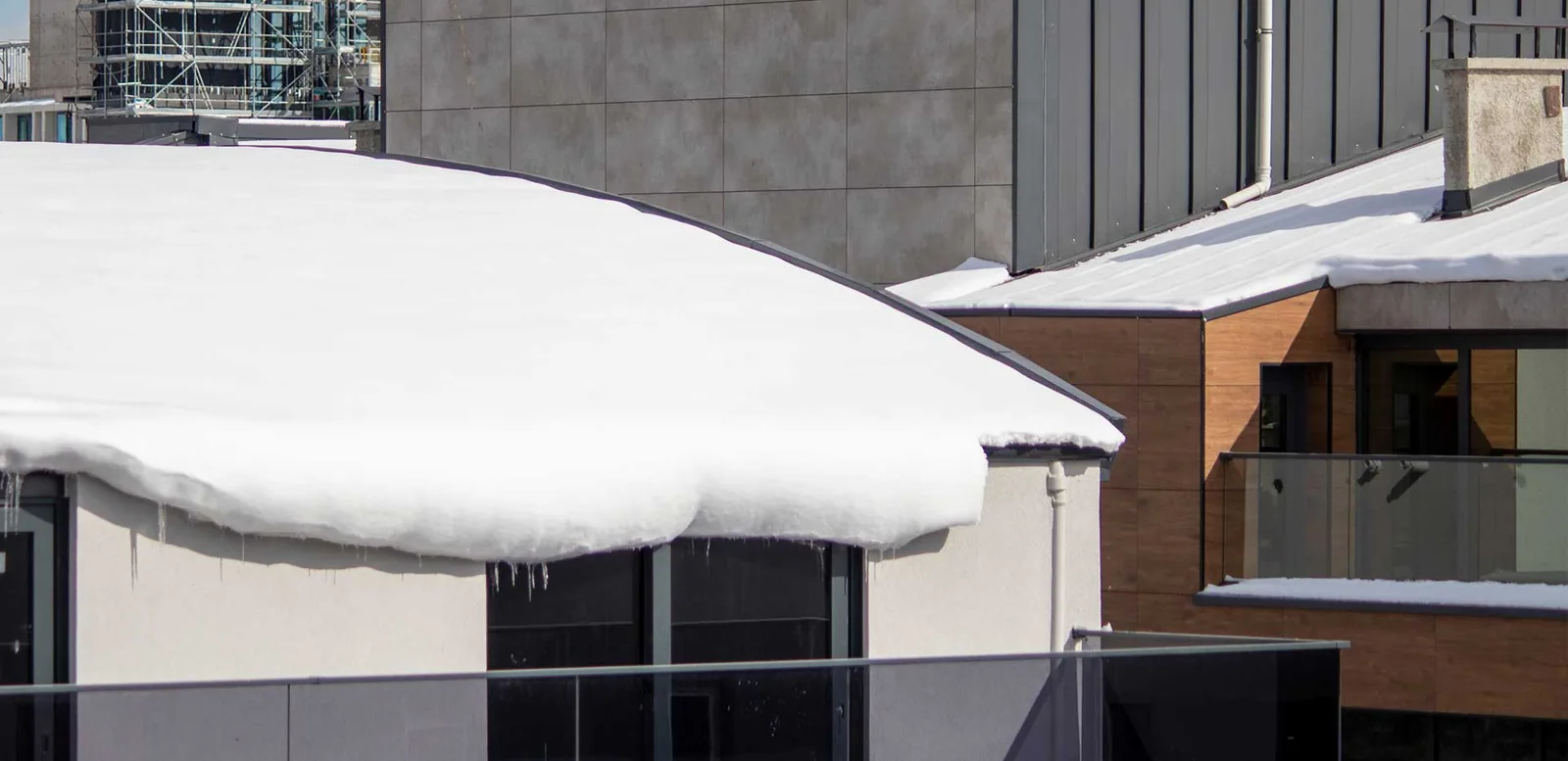
Water can pass through a short opening and travel beneath the membrane before reaching a room. We compare the seam location with interior reports, slope, drains, penetrations, and adjacent insulation. If the repair decision depends on whether material is wet, use targeted testing at representative points and mark the sample locations. One test confirms only what was exposed there; the rest of the roof should remain unclassified until there is evidence.
Infrared readings may help identify areas for direct sampling when surface conditions support the method. They do not show seam continuity or verify wet insulation on their own. A moisture survey can refine the test plan, and a controlled test cut can show the layers beneath the seam. The owner should approve the method, sample quantity, and repair of each opening. We keep tested wet, tested dry, and untested areas distinct in the report.
Prepare and restore the full lap
Before a heat weld, the surface must be clean and the material must accept the selected detail. We remove incompatible or loose patch material as needed, prepare the lap, and use a test weld to confirm settings for the actual field conditions. The seam is then welded or bonded to sound material, with corners and terminations addressed so water does not bypass the repair at its ends. A bead over contamination or a loose edge is not a substitute for a prepared lap. The final repair also depends on what lies below the seam. If insulation is dry and the deck is sound, restore the lap with the compatible method and check the finished bond. If wet material or corrosion is exposed, remove it only to the approved limit, replace affected layers, and carry the new seam into stable existing material. The scope should show how that tie-in will be inspected before it is covered.
Everett's long wet season makes same-day closure important when repair work exposes the assembly. We limit the opening to the area that can be restored and inspect the completed seam before leaving. A commercial repair visit can cover localized separation, while a replacement evaluation may be more appropriate when failures recur across several zones or the assembly has widespread moisture. The recommendation should show why that broader scope is warranted.
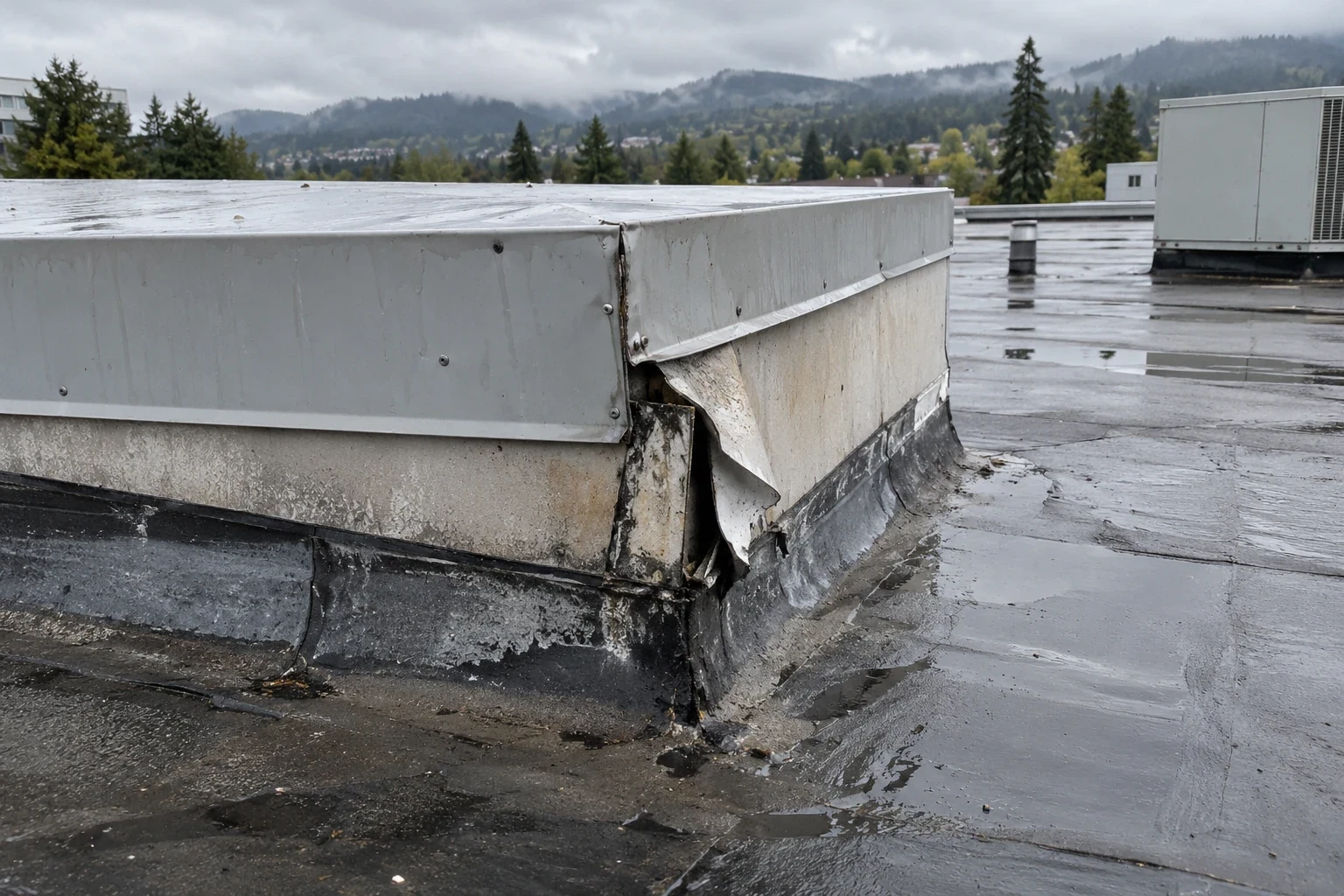
Compare repair with broader roof work
If the seam is isolated and the surrounding membrane remains sound, a local repair can restore the lap without disturbing unrelated areas. If seams are opening across roof zones, the next step may include a broader condition survey, moisture mapping, or replacement planning. We identify the location, number of affected details, test results, and any substrate work that changes the price. A repair scope should not describe an entire roof as failed when only one section was inspected.
For owners with several buildings, maintenance tracking can record which roof details were corrected and when to revisit them. Portfolio planning can compare repair needs without transferring a finding from Everett Industrial Waterfront to a different municipality. Each building retains its own assembly and inspection history. The owner can then choose routine monitoring, targeted repair, or a capital project with a documented basis.
Record the seam and the material tested
Closeout identifies the seam direction and roof zone, the system observed, preparation performed, repair material, and photographs before and after work. It states whether wet insulation was removed and what areas remain untested. If a temporary repair was installed, label it and record when a permanent detail should be reviewed. These notes let maintenance staff revisit the same lap rather than searching across the roof.
Provide the roof plan, membrane records, leak dates, previous patches, and access requirements before inspection. We will verify the system, inspect the seam ends and adjoining transitions, and establish the moisture boundary where needed. Everett's wet-season exposure, including commercial activity near Metro Everett, guides the closure plan; the observed roof condition determines the repair. A careful record gives the owner a clear basis for keeping the roof in service or comparing broader options as conditions change.
Commercial Roofing Questions
Can a short seam split be repaired without replacing the whole roof?
Often, when surrounding membrane and substrate remain sound. The inspection should check the seam ends and any moisture beneath the opening.
Can a patch bond to an unidentified membrane?
Material identification matters. If the assembly is unclear, verify it before selecting a compatible repair and preparation method.
Does an infrared scan confirm an open seam?
No. It can suggest moisture-test locations under suitable conditions. Seam continuity and concealed material need direct evaluation.
What causes roof seams to open?
Preparation, contamination, aging, movement, or damage can contribute. The field inspection documents the condition without guessing at cause.
When is a broader replacement review warranted?
Consider one when seam failures recur across several zones, moisture is widespread, or the existing system cannot support reliable repairs.
Questions Owners Ask
Can a short seam split be repaired without replacing the whole roof?
Often, when surrounding membrane and substrate remain sound. The inspection should check the seam ends and any moisture beneath the opening.
Can a patch bond to an unidentified membrane?
Material identification matters. If the assembly is unclear, verify it before selecting a compatible repair and preparation method.
Does an infrared scan confirm an open seam?
No. It can suggest moisture-test locations under suitable conditions. Seam continuity and concealed material need direct evaluation.
What causes roof seams to open?
Preparation, contamination, aging, movement, or damage can contribute. The field inspection documents the condition without guessing at cause.
When is a broader replacement review warranted?
Consider one when seam failures recur across several zones, moisture is widespread, or the existing system cannot support reliable repairs.
Inspect the seam before closing over it
Schedule an Everett seam evaluation. We will identify the membrane, map the opening, test concealed conditions as needed, and define a compatible repair.
Related Roofing Work
- Commercial Roof Inspection
- Commercial Roof Flashing Failure Repair
- Wind Damage Roof Repair
- Commercial Roof Membrane Puncture Repair
- Infrared Moisture Survey
- Commercial Roof Repair
- Commercial Roofing for Property Management Companies
- Commercial Roofing for Real Estate Investors
Browse every page in Roof Damage Repair, or request a roof assessment and we will walk the roof with you.
Questions about this roof? Call 555-555-5555.