
Commercial Roof Repair, Replacement & Maintenance
Commercial Roof Flashing Failure Repair in Everett, WA
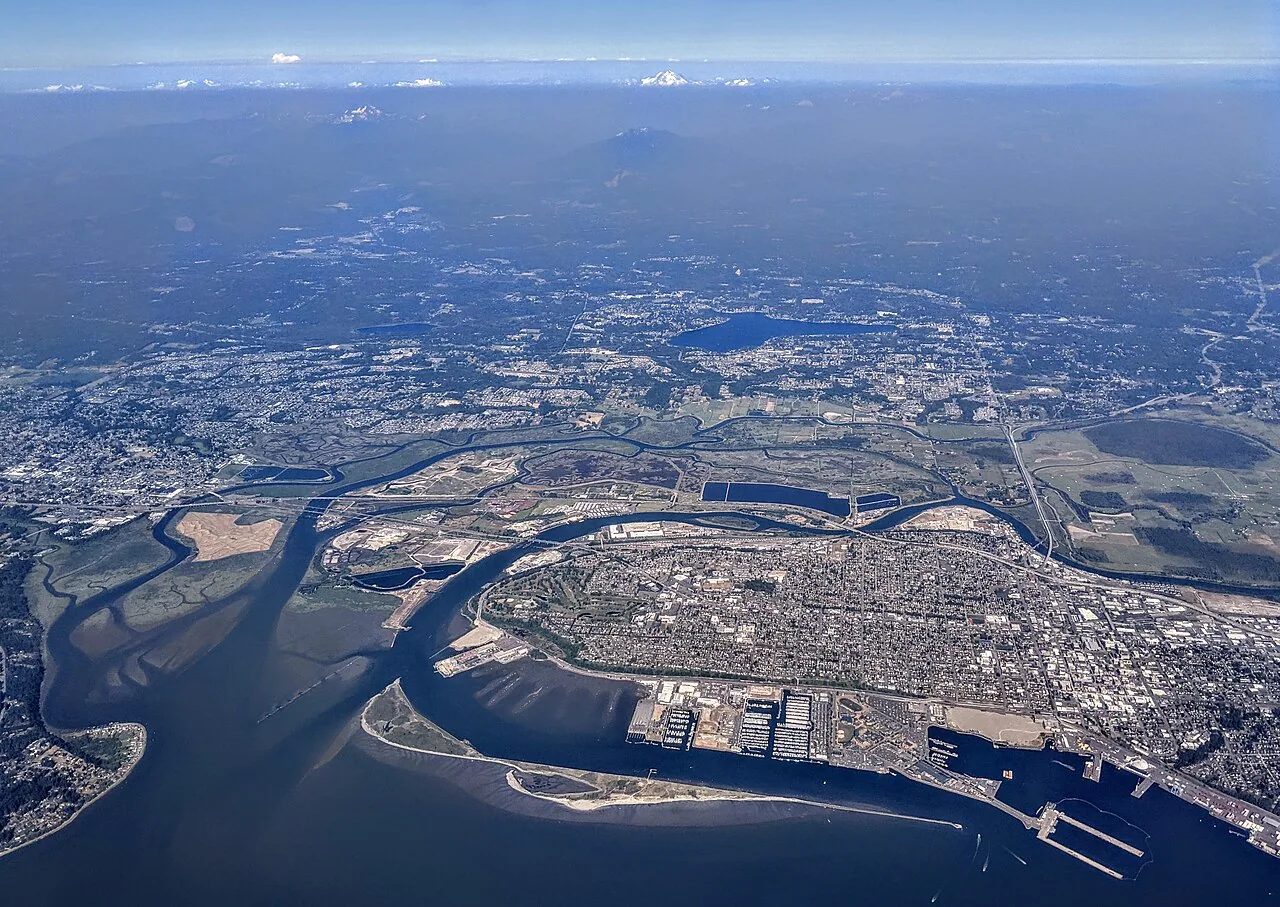
A dark water line below a parapet or a loose counterflashing leg points to a transition that needs a closer look. We inspect how the roof membrane meets the wall, curb, drain, or metal edge, then follow the water path to see whether the flashing is open, damaged, or simply showing a surface stain. Everett's wet months run from late fall through winter, and the city has a large maritime, aerospace, and industrial building base with varied roof transitions. A roof inspection records the detail and nearby assembly; when the opening is confirmed, seam repair or flashing work can be scoped to the actual boundary.
Inspect the wall termination and counterflashing
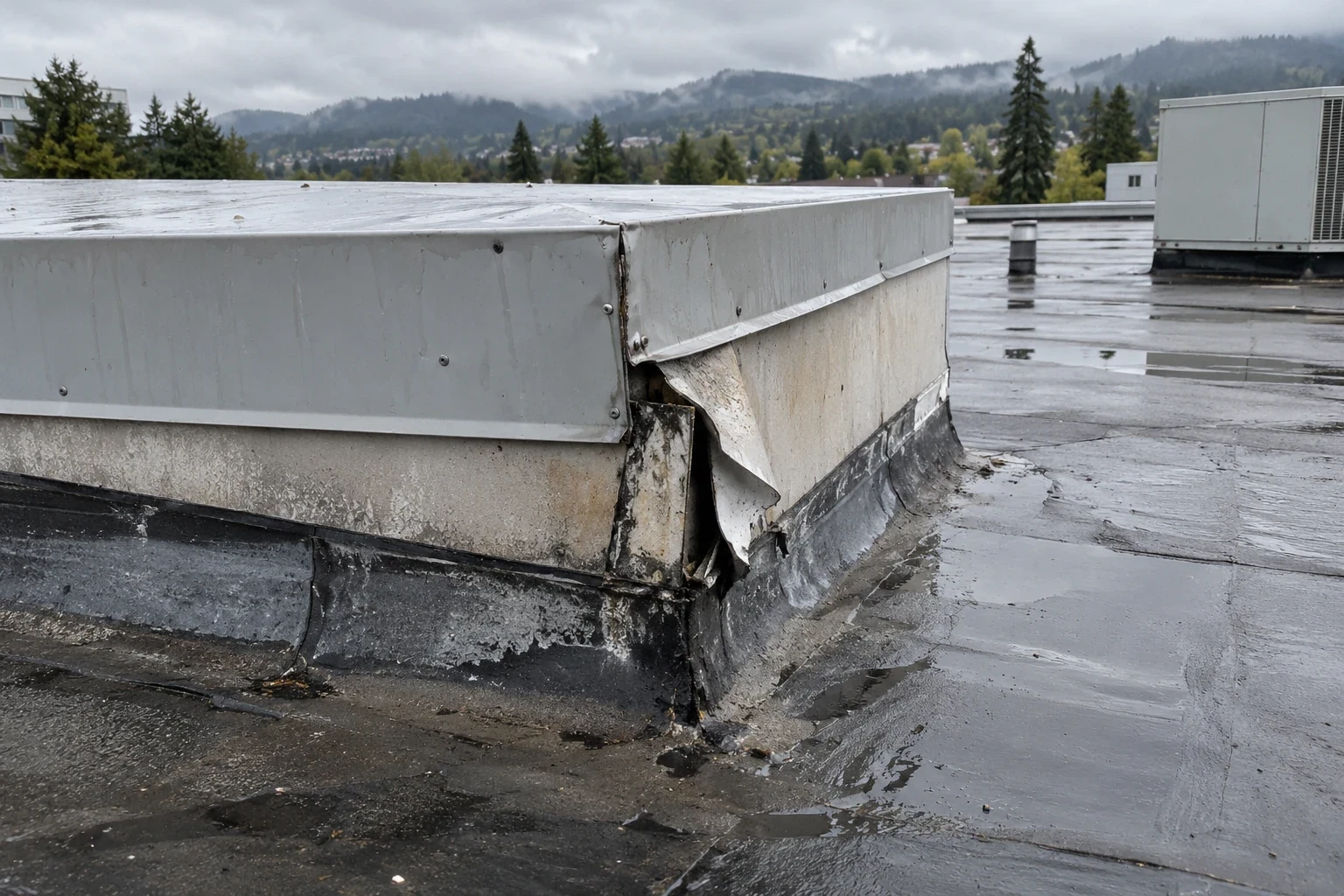
At a parapet, the membrane may turn up the wall and finish beneath a counterflashing or coping. We check whether the termination is secure, whether the metal laps and joints remain closed, and whether a crack or open return gives water a path behind the system. A wall stain can also come from masonry or a window above the roof line, so we compare the roof detail with the location and timing of the interior report before assigning cause.
Photos should show both the close-up and the roof zone so the repair can be located later. If the metal is loose, replacing one fastener may not restore the lapped joint or termination. The scope identifies which pieces can remain and which must be reset or replaced. A coping and edge-metal inspection can evaluate the perimeter assembly, while a a modified-bitumen detail review may help where that membrane is confirmed.
Check curbs and penetrations for movement
Rooftop units, exhausts, pipes, and conduit create several transitions in a small area. Metal curbs can move with equipment vibration or thermal change; the membrane and flashing need to remain tied together as those materials move. We inspect corners, pitch pockets, support feet, and abandoned openings for splits, open edges, fastener pull-through, or incompatible patch layers. The mechanical unit is not assumed to be defective simply because the roof detail has failed.
Paine Field supports aircraft operators, maintenance businesses, hangars, and airport operations, which reflects one part of Everett's equipment-intensive property mix. It does not indicate conditions at a specific building. At the property under review, the owner identifies equipment schedules and access limits so roof work does not conflict with servicing. A curb and support review can define the roof-side repair; any unit movement is coordinated as a separate approved operation.
Follow water around drains and roof edges
Flashing at drains, scuppers, gutters, and overflow openings must connect to the surrounding membrane without a gap or loose transition. We check the bowl, flange, clamping ring where present, scupper corners, and nearby surface for movement or trapped debris. If the opening appears sound but water remains near it, the issue may be elevation or drainage rather than a flashing failure. Those conditions should not be combined into one repair description.
Late fall and winter are Everett's wettest periods, so inspect open flashing joints and drainage transitions before the next prolonged rain. Rainfall makes outlet and perimeter details useful inspection points, while the roof evidence determines whether repair is needed. A drain and scupper inspection can document outlet condition. When a low area is the main concern, a ponding-water evaluation addresses the drainage path and material beneath it, rather than assuming the flashing alone is responsible.
Test concealed materials where the scope depends on them
Flashing may look open at the surface while water has already reached insulation or a deck. We compare the repair detail with ceiling reports and inspect accessible material at the transition. If moisture extent affects whether the work is localized or broader, targeted sampling can define the boundary. We record the location and layers exposed, and avoid extending the finding to a separate roof section that was not tested.
An infrared survey may suggest where to sample under suitable conditions, but it cannot verify concealed material on its own. A moisture survey can help select the test area; the repair estimate should say whether direct confirmation is included. If wet insulation is confirmed, we identify removal and replacement extent and explain how the new flashing ties into dry, sound substrate. If tests are not authorized, the scope states the assumption that remains.

Restore the complete transition, not only its visible edge
A durable flashing repair restores the path from membrane to curb or wall and closes the relevant laps, corners, and terminations. We remove failed material far enough to reach a sound bond or fastening zone, prepare the substrate, and install a compatible detail for the confirmed system. A surface bead may stop water temporarily but cannot replace a loose termination or a split corner. If different membrane layers have accumulated, the sequence should account for their compatibility and avoid burying loose edges. At a parapet, identify how far the membrane turns up, where the termination is held, and how the cap joint sheds water. At a curb, show all corners and the uphill side, where water can collect against the detail. Those notes make the scope measurable and help a field inspector confirm that the replacement follows the existing roof geometry. A wall that appears dry on the day of inspection may still need a controlled water test if the path remains uncertain; the owner approves that test and its limits before it is performed.
Everett Industrial Waterfront and Metro Everett contain distinct industrial and commercial settings, yet the correct detail is dictated by the roof itself. A waterfront-area visit supports local service planning without tying the content to one facility. For a system-specific assembly, TPO seam and flashing work follows the membrane requirements; the material should be verified before installation. We document the completed transition and any nearby condition left outside the approved scope.
Keep the repair history tied to each roof zone
The closeout should identify the wall, curb, drain, or edge detail, show pre- and post-repair photos, list materials, and state whether concealed material was opened. If the repair used a temporary measure, mark it as temporary and record the follow-up needed. That helps facilities staff compare a later leak with the right transition instead of treating every ceiling mark as a new failure.
For owners with several Everett properties, retain each roof plan and moisture finding with its own site file. Property managers can coordinate recurring inspections; an asset review can compare capital needs across buildings. Provide prior flashing repairs, equipment work, leak dates, roof assembly, and access rules before the inspection. We will document the observed transition and define the next repair or test so the owner can decide with a clear record.
Commercial Roofing Questions
Can a stain below a parapet prove that flashing failed?
No. The roof transition should be inspected, and water from a wall or opening above the roof should also be considered.
Does new sealant repair loose counterflashing?
Not if the metal or termination remains loose. The repair must restore the connection and laps that control the water path.
Should wet insulation be included in a flashing repair?
Include confirmed wet material within the approved boundary. If moisture extent is unknown, define the test or the estimate assumption.
Can equipment be moved during curb flashing work?
Only with owner approval and coordination with the mechanical contractor. The roofing scope should identify the curb detail and any separate unit movement.
What information helps plan a flashing inspection?
Share the roof plan, leak location, past patches, equipment work, roof system, and any access restrictions around the transition.
Questions Owners Ask
Can a stain below a parapet prove that flashing failed?
No. The roof transition should be inspected, and water from a wall or opening above the roof should also be considered.
Does new sealant repair loose counterflashing?
Not if the metal or termination remains loose. The repair must restore the connection and laps that control the water path.
Should wet insulation be included in a flashing repair?
Include confirmed wet material within the approved boundary. If moisture extent is unknown, define the test or the estimate assumption.
Can equipment be moved during curb flashing work?
Only with owner approval and coordination with the mechanical contractor. The roofing scope should identify the curb detail and any separate unit movement.
What information helps plan a flashing inspection?
Share the roof plan, leak location, past patches, equipment work, roof system, and any access restrictions around the transition.
Inspect the transition before patching the surface
Schedule an Everett flashing evaluation. We will trace the water path, document the affected wall or curb detail, and define a compatible repair boundary.
Related Roofing Work
- Commercial Roof Inspection
- Commercial Roof Seam Failure Repair
- Rooftop Equipment Curbs and Supports
- Commercial Roof Drains and Scuppers
- Ponding Water Roof Repair
- Infrared Moisture Survey
- Everett Industrial Waterfront
- Commercial Roofing for Property Management Companies
Browse every page in Roof Damage Repair, or request a roof assessment and we will walk the roof with you.
Questions about this roof? Call 555-555-5555.