Commercial Roof Repair, Replacement & Maintenance
Commercial Roof Fire and Smoke Damage Repair in Everett, WA
After a roof fire or rooftop equipment incident, a blackened surface does not show the full extent of damage. Heat can affect membrane, insulation, deck, flashing, and penetrations differently, while firefighting water can enter through openings or collect in the assembly. We inspect only after the property is released for safe access, map the affected zone, and document what can be observed. Everett's industrial base includes aerospace, marine cargo, manufacturing, and warehousing, where roof work may intersect active operations. A emergency roof response can secure an opening after access is approved; a condition inspection records the roof and restoration boundary.
Wait for site clearance and define access
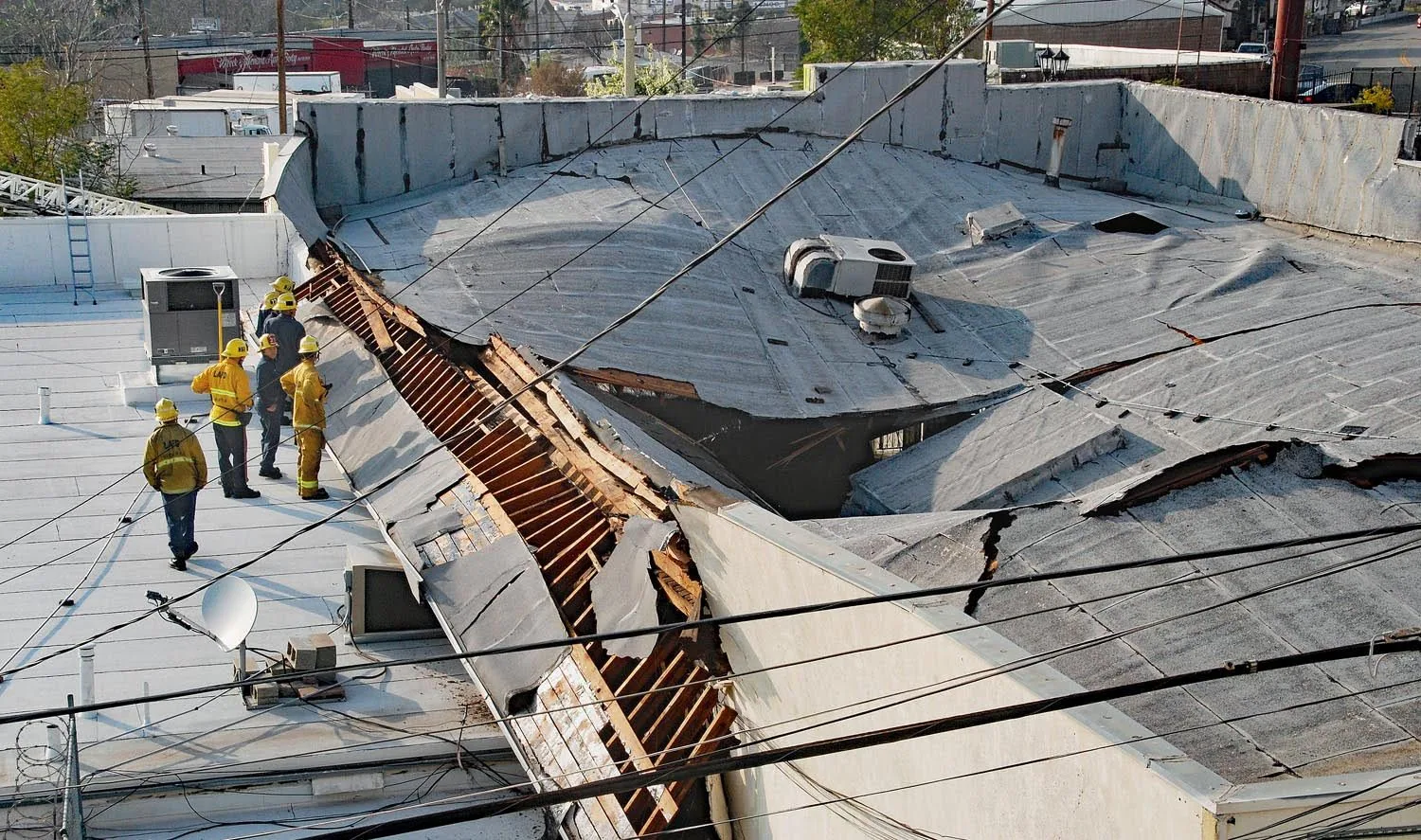
Fire-damaged buildings can contain unstable materials, hot surfaces, electrical hazards, smoke residue, or restricted zones. The owner and emergency responders determine when the site can be entered. Before roofing begins, the property contact identifies safe access, required protective measures, and any area that remains off limits. The inspection record should say which roof areas were not reached rather than treating them as unaffected.
Industrial operations near the Port of Everett, BNSF Delta rail yard, and Paine Field include different security, delivery, and equipment requirements. Those regional uses do not tell us the status of a particular building. The site representative provides current clearance and escort rules. If the roof requires a lift, crane, or temporary enclosure, coordinate that work with the incident command and owner schedule. A roof contractor should not remove debris or disturb structural material until the responsible party authorizes the task.
Map heat exposure across roof layers
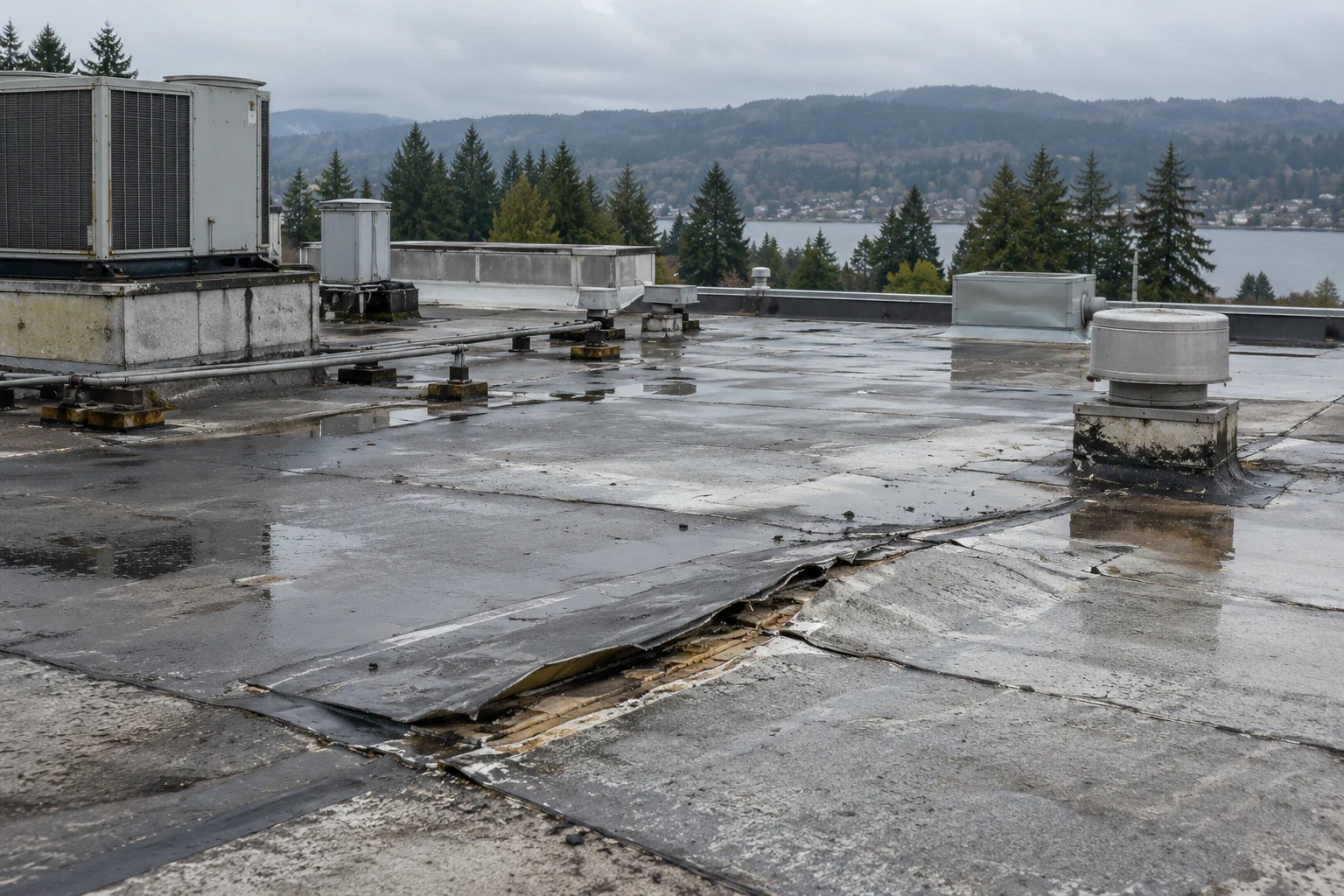
Heat can soften, blister, shrink, or char roofing materials, but the affected depth depends on duration, assembly, and proximity to the source. We document visible change across the membrane, insulation, deck, edge, and penetrations. A discolored surface does not automatically mean every layer has lost function; conversely, a small visible burn can sit above concealed damage. If layers need opening, agree on test cuts and safe restoration before disturbing them.
For a metal deck or structural component, the owner may need a qualified engineer to evaluate damage. Our assessment identifies the roof materials and interfaces observed, and any structural question is kept separate. At Paine Field and Everett Industrial Waterfront, local building uses include aviation support, marine facilities, manufacturing, and storage. That mix makes clear trade boundaries useful, but only the inspected assembly informs the repair. We do not infer a roof rating or fire resistance from its appearance.
Account for water used during suppression
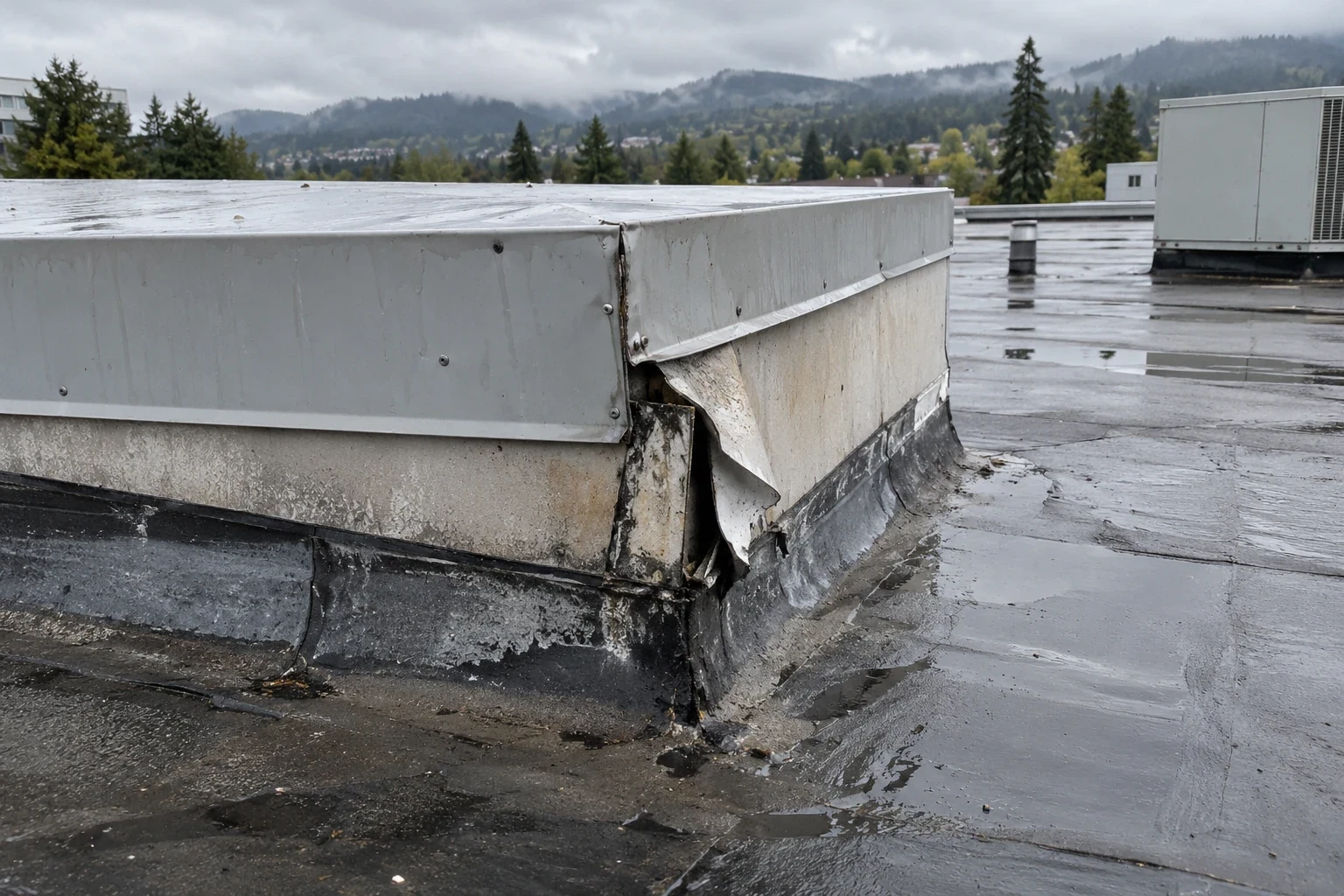
Fire suppression can add water to an assembly even when the original fire opening is limited. We look for wet insulation, trapped water, displaced materials, and new interior leaks near the incident zone. Water may travel laterally before reaching a ceiling, so the roof plan and interior observations should be compared. A test cut may be needed to determine whether insulation or deck requires removal; one sample should not be treated as a survey of the whole building.
Moisture readings, photos, and sample locations belong in the record with the date and conditions. An infrared survey may help identify test locations, but direct confirmation may still be necessary. The owner decides which destructive tests are approved and how temporary closures should be restored. We keep fire-affected material, water-affected material, and pre-existing roof conditions distinct when the evidence allows.
Protect the building before permanent restoration
If the roof is open, first define a safe temporary enclosure or weather closure. The work plan states the area covered, attachment method, access, and inspection interval. A temporary measure should be photographed and labeled so later crews know what was done and what must be replaced. Do not cover unstable or unassessed material without the owner's direction.
Permanent repair depends on the confirmed assembly and the boundary of heat or moisture damage. The estimate identifies tear-off, substrate work, insulation replacement, membrane tie-in, flashing, and testing as separate elements where appropriate. A membrane repair review can address a localized opening, while flashing restoration may be needed at a curb or perimeter transition. Adjacent undamaged areas should remain outside the work limit unless inspection shows a reason to include them.
Build a restoration file from dated observations
A useful file includes the event and discovery times supplied by the owner, the areas released for inspection, roof-zone photographs, test results, temporary measures, and completed repairs. It distinguishes observed heat effects from conclusions that require another discipline. If a component was concealed or access was limited, state that clearly. A clean chronology helps project staff see how the roof changed during emergency response and later restoration.
Restoration documentation can organize field evidence for review; the insurer and policyholder make coverage decisions. A general contractor may coordinate multiple trades and schedules, but the roofing report should identify its own scope. The owner controls record distribution and approvals. We supply descriptions, images, test boundaries, and a work plan that can be compared against the approved restoration documents.
Plan permanent work around weather and operations
Everett has 40.25 inches of annual precipitation in its long-term normal, and the wettest monthly periods fall in late autumn and winter. The schedule needs a closure strategy if permanent work exposes the roof to rain. We check current substrate conditions and product requirements before installation, and do not count a temporary cover as final roof restoration. Occasional freezing nights can affect preparation and cure time.
The property may need phased access if production, cargo, or public service resumes before all roof work is complete. The owner identifies critical equipment, intakes, inventory, and access routes so each zone can be protected. A Port Gardner area visit can frame local service routing, while the building's operating plan sets the sequence. We confirm who can authorize a change if opening the roof exposes more damage than the initial assessment could see.
State what was restored and what remains open
Final documentation names the roof zone, materials removed and installed, substrate findings, photographs, inspections, and any remaining limitation. It records whether temporary protection was taken off and whether affected systems were tested by the responsible trade. Include the date each area returned to normal service and any maintenance inspection that should follow the first period of wet weather and after material changes. If the roof was partially repaired pending structural or environmental work, define the boundary and next approval needed. That prevents an incomplete phase from being mistaken for a complete restoration.
Before the inspection, provide the event chronology, response records, roof plan, assembly information, access clearance, and any safety restrictions. We will document observable roof conditions and coordinate the repair boundary with the owner. Everett's industrial and aviation corridors add a varied property context, but each roof is assessed on its own evidence. A clear closeout supports maintenance planning after the building returns to use and gives future inspectors a reference for the repaired area.
Commercial Roofing Questions
Can a roof inspection happen during fire response?
Only after the responsible authority and owner clear the area for access. Safety and incident operations take priority.
Does a darkened membrane need full replacement?
Not automatically. Heat extent, material condition, substrate, and test results determine the repair boundary.
Can suppression water damage roof insulation?
It can enter through openings or disturbed details. Targeted sampling may be needed to verify affected layers.
Who determines whether fire damage is covered?
The insurer and policyholder interpret the policy. The roofing inspection documents conditions and repair needs.
What should temporary roof protection include?
Document the covered area, attachment, inspection plan, and conditions that trigger permanent restoration.
Questions Owners Ask
Can a roof inspection happen during fire response?
Only after the responsible authority and owner clear the area for access. Safety and incident operations take priority.
Does a darkened membrane need full replacement?
Not automatically. Heat extent, material condition, substrate, and test results determine the repair boundary.
Can suppression water damage roof insulation?
It can enter through openings or disturbed details. Targeted sampling may be needed to verify affected layers.
Who determines whether fire damage is covered?
The insurer and policyholder interpret the policy. The roofing inspection documents conditions and repair needs.
What should temporary roof protection include?
Document the covered area, attachment, inspection plan, and conditions that trigger permanent restoration.
Document the roof after the site is released
Arrange an Everett commercial roof assessment after access is cleared. We will map visible heat and moisture effects and define the next restoration step.
Related Roofing Work
- Emergency Commercial Roof Repair
- Commercial Roof Inspection
- Infrared Moisture Survey
- Commercial Roof Membrane Puncture Repair
- Commercial Roof Flashing Failure Repair
- Commercial Roofing for Insurance Restoration
- Commercial Roofing Partner for Everett General Contractors
- Port Gardner Waterfront
Browse every page in Roof Damage Repair, or request a roof assessment and we will walk the roof with you.
Questions about this roof? Call 555-555-5555.