Commercial Roof Repair, Replacement & Maintenance
Big-Box Retail Roofing in Everett, WA
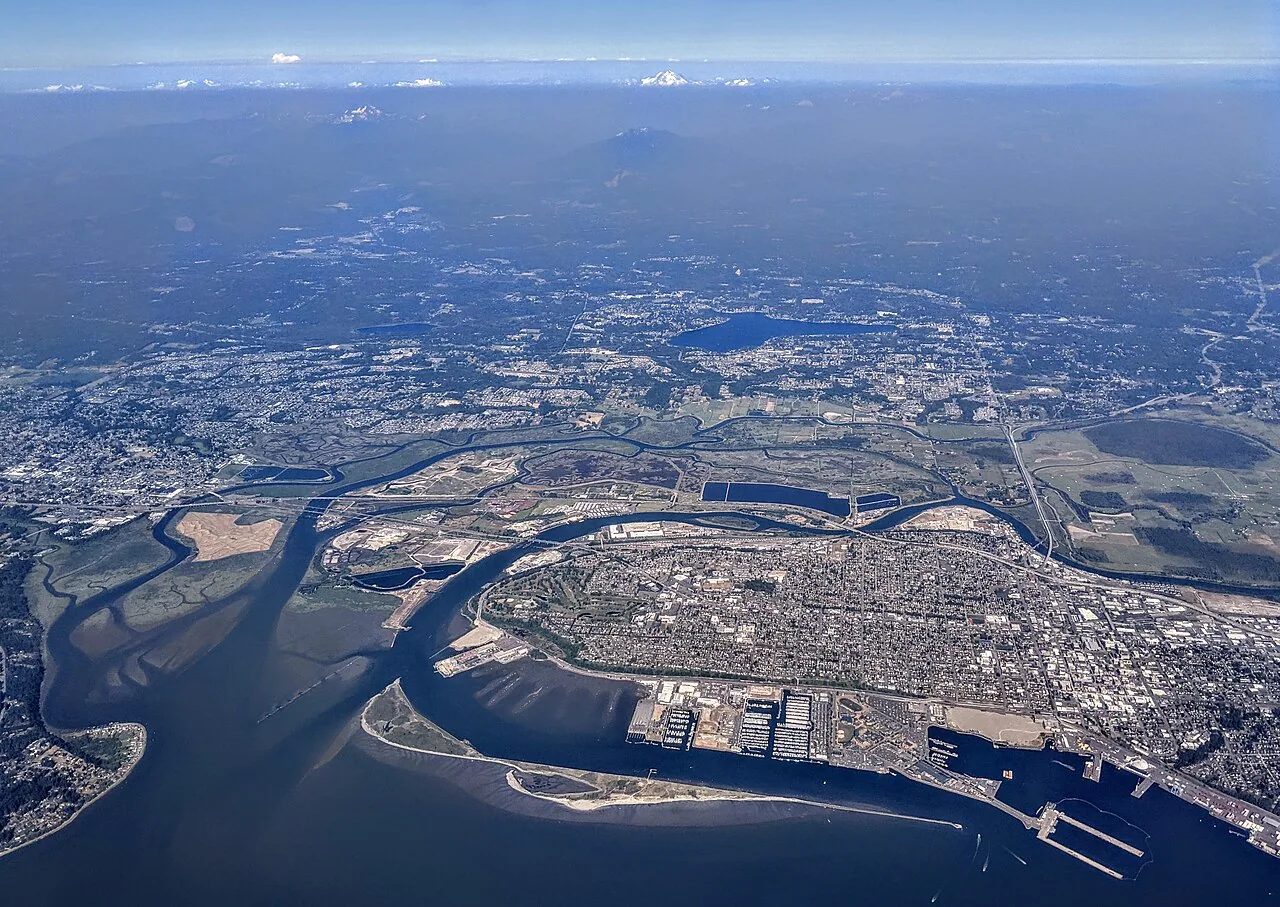
A wet spot above a sales aisle can sit beneath a roof opening several bays away, with merchandise, lighting, or a tenant display below the route. We trace the report across the roof field, checking seams, penetrations, drains, and equipment transitions before choosing a repair. Everett Mall Area and Evergreen Way are established commercial corridors, while Cascade Industrial Center serves manufacturing and freight-connected uses in the wider area. The district names give local context for access, not a roof diagnosis. We verify each store's assembly and operating schedule. A roof inspection maps visible conditions, and multi-site reporting helps portfolio teams compare separate stores without treating them as identical.
Inspect the field from drain to parapet
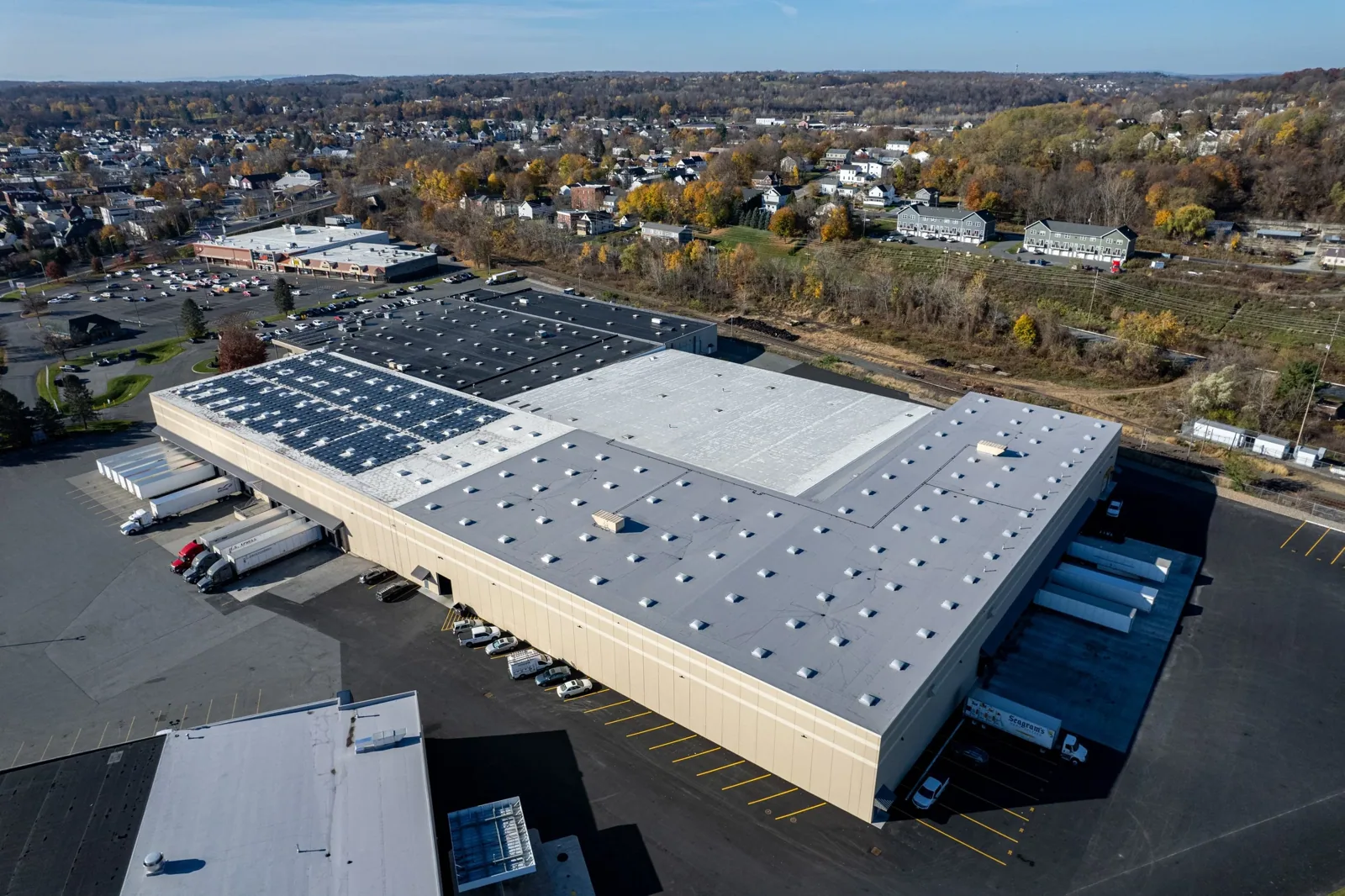
A broad sales floor can conceal the point where water crosses the roof, so we begin with the interior report and follow the roof's slope toward seams, low areas, and outlets. We inspect membrane condition, prior patches, parapet flashings, penetrations, and transitions between different roof levels. Skylights and smoke-control openings need their own flashing review, and any nearby repair should leave the drainage route open. We mark which area was inspected and what remained inaccessible.
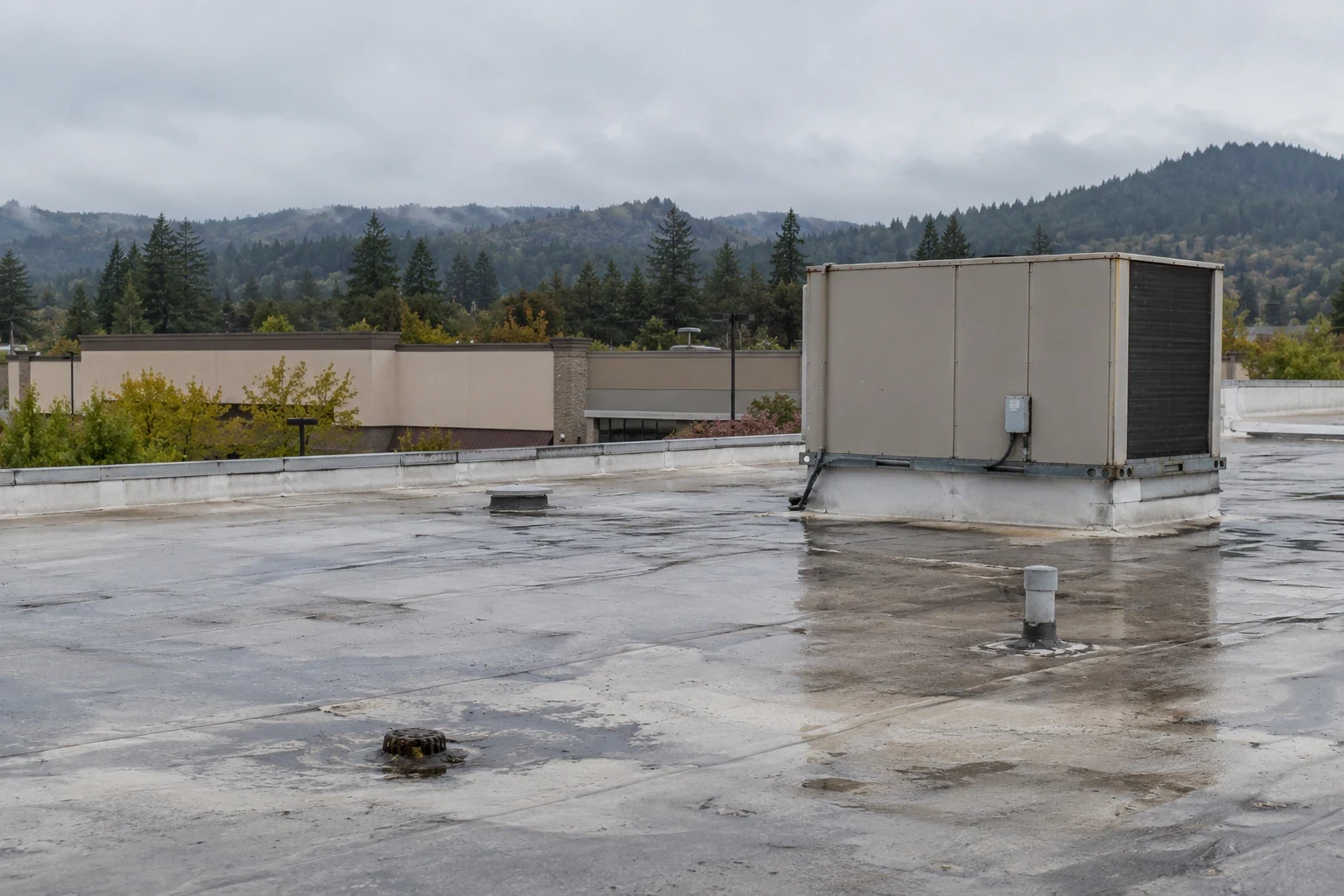
Everett's wet season is concentrated in late fall and winter, increasing the value of clear drains and secure temporary closures before rain returns. We inspect the drain and scupper details without assuming a visible puddle proves membrane failure. If the low point remains wet after outlets are cleared, we document the slope and adjacent seams before choosing correction. For a center with multiple tenant bays, shopping-center roofing considers shared roof and tenant access, while a grocery-store evaluation addresses food delivery and refrigeration equipment.
Review HVAC, skylight, and lighting details
Rooftop units, exhaust fans, conduits, skylights, and signage supports can interrupt the membrane and concentrate service traffic. We inspect curb corners, fasteners, flashing, sealant, and protection along the path technicians use to reach equipment. A replacement unit can leave an obsolete curb or open fastener holes beside a new detail. We record whether the issue is at the unit, the flashing, or the field membrane so a repair does not stop at a bead of sealant.
Store operations can include early deliveries, overnight restocking, and customer hours that shape access to the roof and interior. The manager confirms which entrance, dock, or sales area must remain open, and we plan staging away from drains and air intakes. If equipment work accompanies reroofing, the curb and support scope should be sequenced with flashing. We do not route carts or materials over newly completed work until the system has reached the required condition.
Protect merchandise and occupied aisles
Water over cartons, displays, point-of-sale equipment, or electrical pathways can require fast coordination even before a permanent roof cause is known. We document the reported zone, establish temporary protection below when needed, and inspect the roof above before setting a permanent repair. Interior staff can move vulnerable goods or clear a safe work boundary; we identify where roof access and overhead protection are needed. A short-term tarp or seal does not prove that wet insulation has dried.
When a store remains open, the work sequence needs a defined route for customers, staff, and deliveries. We agree on noise periods and area limits with the property contact, then close each roof zone before moving to another. Emergency work for an active leak is distinct from replacement planning. A temporary response can reduce immediate exposure while the inspection maps the damage and identifies the permanent boundary.
Check concealed layers before approving a recover
A recover may reduce disruption, but it can also conceal wet insulation, deck deterioration, or incompatible layers. We inspect visible edges, membrane attachment, drains, and past repairs, then use moisture readings or test cuts when the answer affects the scope. Infrared screening can identify a zone for confirmation under suitable conditions, but a test opening is needed to confirm the materials beneath. We record the boundary of what was examined and any area that still needs access.
If moisture is confined near a curb or drain, selective removal may be practical. When wet materials cross several zones, broader replacement can offer a more reliable repair boundary. Existing drawings help locate roof sections, but additions and patches may have changed the current assembly. The owner receives separate options for repair, recover, or tear-off when evidence supports comparison. A replacement evaluation can include insulation, edge details, phasing, and work limits without assuming the whole store roof needs the same treatment.
Coordinate material delivery and dry-in
Retail work may require a lift, crane, or staged material delivery that affects parking and loading areas. We confirm access, traffic routes, roof hatch limits, and any time when public entry must remain unobstructed. Materials should be placed away from drains and secured against wind, and any open section needs a planned tie-in before the crew leaves. The daily report identifies the roof area closed and any temporary protection that remains.
Near Everett Mall Area, Evergreen Way, or freight corridors serving Cascade Industrial Center, local movement can affect delivery timing. The store contact provides property-specific restrictions and tenant hours. Everett's wettest period falls in November, January, and December, so a winter project needs an explicit weather stop plan and ready-to-use temporary closure materials. If one zone cannot be finished before a forecast change, it stays unopened until the crew can protect it properly.
Make each store roof easy to revisit
The closeout records system type, repairs, drain findings, moisture tests, exclusions, and photos tied to a store roof map. A facility team can then compare the same curb, skylight, or roof zone on the next inspection. We list maintenance items separately from structural or membrane work, and identify any temporary repair that needs confirmation. Clear records help portfolio staff distinguish a repeated failure from a new opening at another store.
For properties near Everett Mall Area, retail access and staging can vary by tenant mix. Share roof drawings, leak locations, equipment changes, prior replacement records, and delivery restrictions with the inspection request. We will map the condition and set a repair or replacement scope that protects current operations while leaving the roof watertight at each phase. The follow-up plan names who can approve access, where photos should be stored, and which details need a return visit after the next storm. That helps store staff distinguish a completed repair from a maintenance task such as clearing a strainer or protecting a service path.
Commercial Roofing Questions
Can you locate a leak above a large sales floor?
We start at the interior symptom and compare it with roof slopes, drains, seams, and penetrations. The entry point may be offset, so the repair follows the physical route rather than the ceiling mark alone.
Can the store stay open during replacement?
Work may be phased around sales, deliveries, and interior protection if the roof layout allows safe tie-ins. We set the access limits with management before the first section is opened.
Does a puddle mean the membrane must be replaced?
Not by itself. We check outlet condition, slope, membrane seams, and duration of water retention, then test hidden materials when moisture could change the decision.
How do you protect merchandise below a roof repair?
We map the work area with store staff and agree on any temporary clearance or protection before the roof is opened. The repair record identifies the affected zone and closure time.
What records should a chain keep between stores?
Store-specific roof maps, photos, repair materials, moisture findings, and unresolved access areas help compare conditions. Each location should retain its own assembly and maintenance history.
Questions Owners Ask
Can you locate a leak above a large sales floor?
We start at the interior symptom and compare it with roof slopes, drains, seams, and penetrations. The entry point may be offset, so the repair follows the physical route rather than the ceiling mark alone.
Can the store stay open during replacement?
Work may be phased around sales, deliveries, and interior protection if the roof layout allows safe tie-ins. We set the access limits with management before the first section is opened.
Does a puddle mean the membrane must be replaced?
Not by itself. We check outlet condition, slope, membrane seams, and duration of water retention, then test hidden materials when moisture could change the decision.
How do you protect merchandise below a roof repair?
We map the work area with store staff and agree on any temporary clearance or protection before the roof is opened. The repair record identifies the affected zone and closure time.
What records should a chain keep between stores?
Store-specific roof maps, photos, repair materials, moisture findings, and unresolved access areas help compare conditions. Each location should retain its own assembly and maintenance history.
Inspect the roof before a store-wide scope is set
Schedule an Everett big-box retail roof inspection. We will map the leak path, check equipment and drainage details, and plan repairs around store operations.
Related Roofing Work
- Commercial Roof Inspection
- Multi-Site Commercial Roof Programs
- Commercial Roof Drains and Scuppers
- Shopping Center Roofing
- Grocery Store Roofing
- Everett Mall Area
Browse every page in Property Types We Roof, or request a roof assessment and we will walk the roof with you.
Questions about this roof? Call 555-555-5555.